Would God Command Genocide?
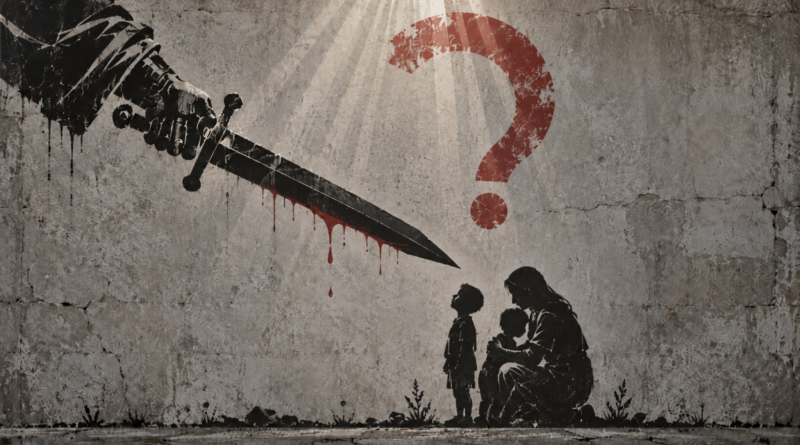
The Hebrew Bible contains a handful of passages that are hard to read and harder to defend. Moses orders that no one among the Midianites be spared except the young girls (Numbers 31). Joshua devotes whole cities to destruction, “man and woman, young and old” (Joshua 6). Saul is told to strike Amalek and kill “man and woman, infant and nursing child,” down to the livestock (1 Samuel 15). The old term for this is herem—the total devotion of a population to destruction.
Some scholars read the conquest language of the ancient Near East as conventional exaggeration—the boastful “we destroyed them utterly” of a victory monument. Perhaps that fits some texts. It does not fit these. A text that itemizes exactly who dies—man, woman, infant, nursing child, even the livestock—and then carves out an exception for the virgin girls is not exaggerating. Exception clauses are the mark of legislation, not of a figure of speech. These passages specify. They mean what they say.
What they say is that God commanded human beings to slaughter the innocent, children included. This essay argues that He did not, and the argument comes down to two simple claims:
- God does not command injustice.
- So a command to kill the innocent cannot have come from God.
Everything that follows defends those two claims and shows why the usual objections leave them standing.
Why God does not command injustice
God is good. Not good the way a person is good, by living up to a standard outside himself, and not good in the empty sense that whatever He happens to want gets the label “good.” Goodness is simply what God is, the way light is what the sun is. His commands come out of His nature.
So a command to do evil would not be a hard order from a good God. It would be God acting against His own nature. When a text puts an evil command in God’s mouth, the text is wrong about God.
There is an immediate reply: God has authority over life and death, so who are we to call any killing He commands unjust? The reply is true and beside the point. No one disputes that God is the author of life and death. The question is whether that authority can make injustice just—and it cannot, because justice is as much a part of who God is as power.
The distinction that carries the whole argument is this. God governs mortality as the Creator; the length of every life is His to set. But when one human being kills another, the act enters the moral order God established, where a person may use lethal force only where justice allows it—in defense against aggression, not against the harmless. These are two different things under two different rules. Death is God’s to govern. Homicide is a matter of justice between creatures. And a divine command cannot turn an unjust homicide into a just one, because that would require God to contradict His own nature twice over—to command evil, and to call it good.
One more distinction clears away half the objections before they start. That God causes an event tells us nothing about whether a human being is permitted to cause it. In the deepest sense, God causes every death that occurs; that is providence. Whether a human may take a particular life is a separate question, answered by justice. Confusing the two—treating “God brought it about” as “a human was allowed to do it”—is the mistake underneath nearly every defense of these texts.
“But if God commanded it, then it wasn’t evil”
This is the one reply that meets the argument head-on. If God really did command the killing, the reasoning goes, then it must have been good, because God is what makes things good.
The position is logically available. But it is available only at the cost of emptying the words “God is good” of any content. If an act becomes good the instant God is said to command it, then “good” means nothing more than “commanded,” and to call God good is to say only that God does what God does. It would also mean God could command the torture of children tomorrow and that too would be good. Once a person grants—as nearly everyone does the moment the example is concrete—that some acts stay evil no matter who orders them, he has conceded the point and is left defending a single text against his own moral sense.
So the burden falls on the defender of the text. He must explain how the deliberate killing of an innocent infant stops being an injustice, without reducing goodness to nothing more than whatever is commanded. If he cannot, the honest conclusion is not that the act was somehow good. It is that the command was never God’s.
“How is this different from God destroying a whole people?”
The Quran itself describes five peoples wiped out entirely: the people of Noah in the flood, the people of Hud by a violent wind, the people of Saleh by a seismic blast, the people of Lot under falling stones, and the people of Shuaib by an earthquake. If God ends whole nations Himself, why is a command to an army to do the same thing wrong?
The difference is not the sword versus the earthquake. It is moral agency. Wind owes no duty of justice to the people it kills; it cannot wrong them. A human being can. The moment a person intentionally kills another person, the act enters the field of guilt, innocence, justice, and aggression—and it must answer to all four. An earthquake answers to none of them, because it is not an agent at all. So God ending mortal lives through the forces of His creation, and a soldier putting children to the sword, are not two versions of one act. They are different in kind.
The five accounts underline it. Destruction comes only after a messenger has warned the people for years and been refused—the close of a long argument, not a raid. And God draws out those to be spared before the blow falls: Noah’s people on the ark, Lot and his family, the believers pulled clear first, because God alone knows every heart and can separate them. An army can do none of this. The herem command runs the other way: it strikes without warning, names the infant and the nursing child in the kill order, and parcels out the surviving girls as spoils. That is not the discriminating hand of justice. It is indiscriminate slaughter.
“What about the angel of death?”
The angel of death takes souls (32:11). But the angel decides nothing and wrongs no one. It delivers a death God has already decreed, at the term God already set—God’s governance of mortality reaching the appointed soul, not a moral agent choosing whom to kill. It falls on the providence side of the line, not the human-permission side. Nothing about God’s own act tells us a human may take an innocent life.
“What about the boy killed in Surah 18?”
A servant of God kills a boy who seems entirely innocent, and Moses is standing right there. This is the closest scripture ever comes to killing an innocent on God’s authority, and it protects the very point at issue.
Moses is horrified: “Have you killed an innocent person?” (18:74). Scripture never scolds him. His horror is presented as the right reaction—the ordinary moral judgment a person is meant to have. Then the one who acted explains himself: “I did not do this of my own accord” (18:82). He was carrying out God’s decree, not weighing the situation and choosing to kill.
The incident was not to condone the killing of children. Moses is never told, “Now you understand when you may kill a child.” No rule is handed down by which a human could repeat the act. It rests on extraordinary knowledge that ordinary moral agents do not have and cannot work out for themselves, and on a decree its executor did not originate. Far from licensing the human killing of innocents, the episode leaves ordinary moral judgment exactly where it found it—recoiling, and right to.
“Maybe God knew the whole people deserved it”
Suppose God knew something about that population we never could. Grant it in full. It still fails, and it fails at two separate points.
The first is knowledge. No human commander has what would be needed to pronounce hidden judgment on every soul in a city. He acts on a claim he cannot verify, and “God must know they deserve it,” once placed in a human hand, is the excuse behind every massacre in history.
But suppose even that were granted—suppose the knowledge were somehow perfect. The second barrier still stands, and this is the one that cannot be climbed. Perfect knowledge could establish the guilt of a guilty adult. It could never establish the right to kill an innocent child, because there is no crime to find. Guilt attaches to the deed done, not the deed foreseen—which is why even God, who knew what Adam and Satan would do, let the act become real and seen before it was judged, rather than punishing the intention He already knew. And guilt cannot be inherited: “none bears the burden of another” (6:164, 17:15, 35:18). Killing is permitted only in the course of justice (6:151, 17:33, 25:68), and there is no justice to be done upon a nursing child under any knowledge whatsoever. So the command that names the infant is not a case of God seeing what we cannot. It asks for the one thing no knowledge can supply—the guilt of the innocent.
“What about Abraham and his son?”
Abraham believes God has told him to sacrifice his son, and he does not refuse. Is this not the very thing God is said never to do?
In no version of the story does God have the child killed. Abraham receives a dream he must interpret—”I see in my sleep that I am sacrificing you” (37:102)—not a spoken, public command. No child dies. God forbids the killing and provides a ransom in the boy’s place, “a great sacrifice” (37:107). The one time a patriarch believes he must kill an innocent for God, his hand is stopped. The story ends human sacrifice; it does not authorize it.
There is more to say. The dream telling Abraham to kill his son was a test from Satan, not a command from God—as Satan tested Adam, and was permitted to test Job. This is in step with the Quran’s insistence that God “never advocates sin” (7:28) and its repeated prohibition on killing children (6:137, 6:151, 17:31). What God tests and honors is the surrender in Abraham’s heart; the content of the dream was never His, which is why He overturns it the moment that devotion is shown. And even setting the reading aside, the ending is the same: God does not carry through the death of an innocent.
This exposes what the herem texts get exactly backwards. The impulse to kill an innocent and call it obedience to God is the same impulse Satan pressed into Abraham’s dream. Its signature is the adversary’s, not God’s. To sign God’s name to the slaughter of children is to credit Him with the very thing His nature forbids.
“Faith means obeying even when it feels wrong”
The deepest objection is that faith means submitting to God even when the order offends your conscience—so conscience cannot sit in judgment.
But the argument here does not rest on private feeling, which differs between people and can be dulled. It rests on coherence. Revelation cannot authenticate itself by contradicting the very moral truths through which we recognize God in the first place. We know God as just, as the one who holds the innocent innocent, who assigns each soul its own responsibility, who forbids aggression. A command to butcher children asks us to throw all of that out in order to obey the God those truths reveal. That is not deeper faith. It is a text at war with itself—and self-contradiction is the mark of a claim that has gone wrong, not of a God who must be obeyed.
“Woe to those who call evil good, and good evil; who put darkness for light, and light for darkness; who put bitter for sweet, and sweet for bitter!” — Isaiah 5:20
The alternative devours everything. If a claimed command can switch off the moral order God built, then nothing can ever be ruled out in His name, and every zealot with a knife and a certainty is proven right in advance. Scripture refuses this. God provided innate knowledge to every human, showing it “what is evil and what is good” (91:8). It is why Moses’s horror is not reprimanded, and Abraham’s hand is stopped, and why even the prophet’s own authority is bounded by what is right—the believers pledge not to disobey him “in righteousness” (60:12). No human order to do wrong, from anyone, carries the weight of a command from God.
“But the Quran says ‘you did not kill them, God killed them’”
After the Battle of Badr, the Quran tells the believers who fought: “You did not kill them; GOD killed them. You did not throw when you threw; GOD threw” (8:17). Human hands killed, and God claims the act as His. Does this not erase the distinction?
No—and the permission-versus-causation line is exactly why. The men who died at Badr were combatants in an armed conflict they had marched out to wage, not civilians killed for belonging to a condemned people. The killing already fell within justice before any verse claimed it for God. And the verse’s purpose is to stop the believers from crediting their own strength for the victory: God is the true cause, so do not boast. That speaks to who ultimately brought the outcome about, not to who was permitted to act. God is the ultimate cause of every death, including the ones the enemy inflicted—so “God did it, not you” cannot be a grant of permission, or it would excuse the aggressor too. Permission still comes from justice. Badr meets it. The herem does not.
The Bible’s own “the LORD delivered them into your hand” does the same limited work. It can establish that God gave the victory. It cannot, by itself, settle whether every act that followed was just—and killing an infant was not.
“Doesn’t scripture allow war?”
It does—but only against attackers, only in answer to an attack, and never once the attack stops: “You may fight in the cause of GOD against those who attack you, but do not aggress” (2:190–193). Force is permitted to stop an aggressor, never as a good in itself, and never against those who did no harm. The herem commands the killing of the harmless by design. That is not war. It is the thing the law of war exists to forbid.
“But everything comes from God—so doesn’t evil come from Him too?”
This is a real question, but a different one. It asks why God permits evil to exist; this essay asks whether God commands human beings to commit it. The two are not the same, and the distinction is the one running through everything above: that God allows an outcome tells us nothing about whether a human was permitted to bring it about. God grants people the freedom in which wrong becomes possible—that is the price of moral agency—but the wrong that follows is ours, not His:
“Whatever good happens to you is from GOD, and whatever bad happens to you is from yourself.” (4:79)
And what we take for evil is not always so; we judge by a sliver of the picture while God sees the whole:
“You may dislike something that is good for you, and like something that is bad for you.” (2:216)
Permitting evil and commanding it are worlds apart. Only the second is the subject here.
“You’re just keeping the verses you like”
One fair worry remains: that this method simply keeps the agreeable verses and throws out the harsh ones as “corruption,” which would be no method at all.
But the test is not personal taste. It is scripture’s own standard. Scripture claims to contain no contradiction—”If it were from other than GOD, they would have found in it numerous contradictions” (4:82)—and that God, and therefore His morality, does not change. It also states plainly that earlier scriptures were altered by human hands: words moved “from their context” (5:13), and “those who write the scripture with their own hands, then say, ‘This is from GOD’” (2:79). A command that has God ordering what He says He never orders is not evidence that God changed His mind. It is the very tampering scripture warned against.
The Principle Goes Beyond Genocide
It is worth mentioning that while this article is focused on the genocide attributed to God in the Bible, it is not limited to that. Herem is simply the clearest case because the innocence of an infant leaves almost no room for moral ambiguity. The principle itself is broader: God does not command evil, and attaching His name to an evil act cannot change what the act is.
The same problem therefore appears elsewhere when scripture attributes morally indefensible commands to God. A man gathering sticks on the Sabbath is ordered to be stoned to death (Numbers 15:32–36). A person who worships another god is to be taken outside the city and stoned (Deuteronomy 17:2–5). If a brother, son, daughter, wife, or closest friend privately urges someone to worship another god, the hearer is commanded not merely to reject them but to kill them, casting the first stone himself (Deuteronomy 13:6–10). Adulterers are condemned to death, with some sexual offenses explicitly punished by stoning (Leviticus 20:10; Deuteronomy 22:22–24). Even a persistently rebellious son is brought before the elders and stoned by the men of the city (Deuteronomy 21:18–21).
Furthermore, Israelites are permitted to buy men and women from surrounding nations as permanent slaves and pass them on to their children as inherited property (Leviticus 25:44–46). Women captured in war may be taken by their captors as wives after their families have been destroyed (Deuteronomy 21:10–14), while Numbers 31 orders the killing of the Midianite males and non-virgin women but allows the virgin girls to be kept alive for the victors (Numbers 31:17–18). And Deuteronomy 22:28–29 requires a man who rapes an unbetrothed virgin to pay her father fifty shekels, and the daughter is forced to marry her rapist, and he is never permitted to divorce her.
These cases differ from genocide in scale, but not in the principle at stake. If killing a person for gathering sticks, changing his religion, speaking heresy, or being a disobedient son is unjust, then calling the order divine cannot make the injustice disappear. The question is not how God’s command transformed the act into goodness. The question is whether God gave the command at all.
This does not mean that every difficult or severe command attributed to God must be rejected because modern readers dislike it. Discomfort is not the test. The test is moral coherence. If an act genuinely contradicts justice, mercy, individual responsibility, or the innocence of the innocent, then the character of God gives us reason to question the attribution rather than redefine the vice. Genocide is the example examined here because it makes the contradiction impossible to miss, but the principle reaches wherever evil is placed in God’s mouth and called good.
The short of it
God does not command injustice, and no injustice can be attributed to God. Those two claims answer every case. When God ends a life, He is governing the creation that is His, at the hour He set, and wrongs no one. When the angel takes a soul, it delivers a death already decreed. The servant in Surah 18 carried out God’s own act and left ordinary moral judgment untouched. Abraham’s hand was stopped. Badr was combat within the bounds of justice, and calling it God’s act was about credit, not permission.
Only the herem texts ask a human being to murder a child and sign God’s name to the act. If God does not command evil, then the command bears the signature of the adversary rather than the character of God—which is the surest sign that it was never from Him.