Nigerian Military Runs a Fulani ‘Concentration Camp,’ Group Says
At least 150 members of the Fulani ethnic group in Nigeria’s northwestern region have died in a camp run by Nigeria’s military in recent months, according to a report released by Amnesty International on Thursday. Most of the dead were children, the group said.
Around 1,500 Fulani people have been detained for three months at the camp in the central state of Kwara, Amnesty said. The rights group said the children mostly died from starvation and diseases, and it called for an urgent investigation into the circumstances surrounding the deaths.
Isa Sanusi, executive director of Amnesty’s office in Nigeria, condemned what he described as a “Rohingya-type concentration camp,” and said that at least 100 pregnant women were facing life-threatening conditions.
Brig. Gen. Samaila Uba, a spokesman for the Defense Headquarters, said Nigeria’s military was investigating conditions at the camp. A senior military officer, who spoke on condition of anonymity because he was not authorized to discuss national security matters, confirmed that a number of camp internees had died and that the military high command was aware of the situation. He said he could not confirm the death toll.
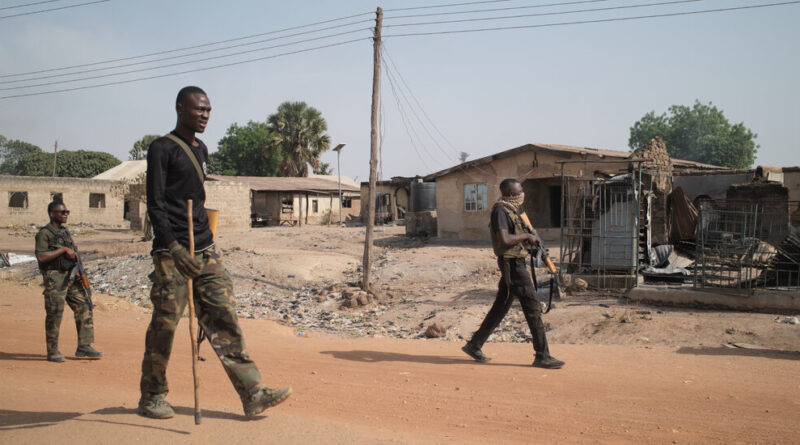
Kwara State has seen a surge in violent attacks in recent months, which some local government officials and residents have attributed to members of the Fulani ethnic group, which includes many nomadic cattle herders who need large tracts of grazing land. Analysts said forcing thousands of civilians into a military-run camp marks an escalation of systematic targeting of a predominantly Muslim ethnic group that faces increasing discrimination and violence across West Africa. As terrorists attacks increase in the region, marginalized Fulani in countries from Nigeria to Mali to Burkina Faso face attacks amid accusations that the same terrorist groups also recruit new members from them.
Amnesty said the camp was set up in January following a rise in violence in the area and after President Trump approved a Christmas Day bombing in northwest Nigeria. Once inside the camp, no one is allowed to leave, the group said.
Hajara Isihu, 37, from the Fulani community of Patigi in Kwara, said that a few weeks into her stay at the camp, people started dying of hunger. “Some days we are given food once a day,” she said. “Whenever we get three meals a day, which is hardly ever, we celebrate.”
Ms. Isihu said she escaped after three months.
Kwara had been relatively insulated from the intense violence that Islamist jihadists and violent gangs inflicted on the country’s northeast and northwest. Lately, analysts say, that has changed. The state has experienced a sharp rise in attacks in recent months that have left hundreds of civilians dead. In February, an assault by the terrorist group Boko Haram killed over 200 people in two villages there, one of the worst attacks in recent years.
“Cases of violence in Kwara surged last year to 200 from 49 in 2024,” said Ladd Serwat, an Africa analyst at the Armed Conflict Location and Event Data project, a research group in the U.S.
Mr. Serwat added that it is not always clear who is responsible for the violence in the area, but documented cases include attacks by Fulani militias fighting over limited resources and a Boko Haram faction called Mahmuda.
“What’s happening is that the Fulanis are victims on two fronts,” said Mr. Sanusi of Amnesty International. “They suffer attacks from bandits and jihadists. And they also suffer attacks from the security forces.”
The detainees at the camp were instructed by the military to leave their villages to allow security forces to carry out operations against suspected bandits in the area, according to rights groups and survivors.
“But unfortunately, rather than apprehending the bandits, they began profiling the Fulanis generally and apprehending them, including women, children and the elderly,” said Alhaji Shehu Garba, the chairman of the local branch of an influential Fulani herders group.
Ibrahim Abdullahi, the chairman of another Fulani group association, said that he had tried to access the camp with his team to determine how many people had died there, and to record their names.
“We were denied entry,” he said. “While we were there, two people were hospitalized, and they were later announced dead before we left.”
Dickson Adama contributed reporting from Jos, Nigeria.