Republicans Considering Legislation ‘To Kill’ Trump’s ‘Anti-Weaponization’ Fund, Congressman Says
Topline
Republicans are considering legislative solutions to prevent allies of President Donald Trump who believe they were unfairly targeted by the government in the past from seeking compensation from a new $1.8 billion taxpayer fund.
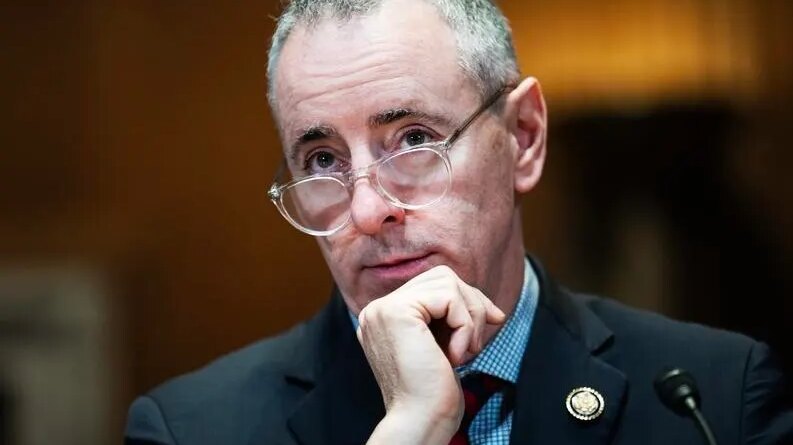
Rep. Brian Fitzpatrick, R-Pa., testifies during the Senate Appropriations Subcommittee on State, Foreign Operations, and Related Programs hearing titled “The Abduction of Ukrainian Children by the Russian Federation,” in Dirksen building on Wednesday, December 3, 2025. (Tom Williams/CQ-Roll Call, Inc via Getty Images)
CQ-Roll Call, Inc via Getty Images
Key Facts
Rep. Brian Fitzpatrick, R-Pa., told MeidasTouch reporter Pablo Manríquez on Wednesday Republicans are going to “try to kill it.”
He said Republicans will write a letter to the attorney general’s office and are considering legislative options, telling the left-leaning outlet, “we’re trying to unpack exactly what the legal machinations are, but you can’t do that.”
Multiple Republican lawmakers have criticized the “Anti-Weaponization Fund,” which was created as part of a settlement in the lawsuit Trump brought against the IRS over a leak of his tax returns.
Senate Majority Leader John Thune, R-S.D., also told reporters on Monday he was “not a big fan” of the fund and did not see “a purpose” for it, adding that lawmakers would likely give it a “full vetting.”
Sen. Bill Cassidy, R-La., called the settlement a “slush fund . . . without a legal precedent,” adding, “if there needs to be a settlement, let’s consider it and Congress should come together and decide on that.”
Sen. Joni Ernst, R-Iowa, and Sen. John Hoeven, R-N.D., have also expressed reservations, with Hoeven telling CNN he expected the fund to be tied up in litigation and Ernst calling for more details about “the financials behind this.”
What To Watch For
Rep. Jamie Raskin, D-Md., introduced legislation Wednesday that would prohibit federal funds from being used to create or make payments from the fund created in the settlement. The legislation would also establish other guardrails on government settlements or awards, including prohibiting the president and vice president and their families and other political appointees from receiving them.
Tangent
Fitzpatrick made the statement hours after Trump signaled he could make him the next target of his midterm retribution campaign, telling Fitzpatrick’s wife, Fox News reporter Jacqui Heinrich, “he likes voting against Trump. You know what happens with that. Doesn’t work out well.” Cassidy was the first high-profile Republican incumbent to fall victim to Trump’s election-year revenge when he lost his primary to Trump-backed Rep. Julia Letlow, R-La., on Saturday. Trump nemesis Rep. Thomas Massie, R-Ky., also lost his primary on Tuesday. Cassidy has been outspoken against some of Trump’s top priorities in the days since he lost, including saying he would vote against $1 billion in funding for Trump’s White House ballroom project.
Key Background
Trump settled his $10 billion lawsuit against the IRS in exchange for the creation of a fund for “victims of lawfare and weaponization to be heard and seek redress,” Attorney General Todd Blanche said Monday. Trump said the fund would be “reimbursing people that were horribly treated.” Trump officials have said anyone can file claims, regardless of partisan affiliation. The fund will be administered by a five-member board appointed by the attorney general, with one member selected in “consultation” with Congress. Trump will have the power to remove board members. The agreement also prohibits the IRS from bringing future claims against Trump, his family or the Trump Organization for past tax issues. Trump also agreed to drop his outstanding claims against the government over its investigations into Russian interference in the 2016 election and his handling of classified documents, as part of the settlement. Trump and his sons, Eric Trump and Donald Trump Jr., sued the IRS in January over the leak of their 2019 and 2020 tax returns by a government contractor, arguing the agency violated federal privacy laws by failing to properly protect the documents. The move was widely viewed as unprecedented since Trump was targeting an agency he oversees.
Further Reading
Trump Gets $1.8 Billion Payday With ‘Anti-Weaponization’ Fund As He Drops IRS Case (Forbes)
Trump’s IRS Lawsuit Could Be Invalid—Here’s Why He Could Still Get $1.7 Billion Anyway (Forbes)