Jason Arday got a witch hunt, others got silence

Silence and inaction are not always neutral. What we do not do, and what we do not say, often carry more weight than what we actually do and say.
When I sit in a gathering of men and the conversation is about someone who is not present, and it turns toward praise, I find myself noticing something entirely different: who speaks, and who stays quiet.
In some contexts, though not all, the silence says something.
What stopped this person from naming the obvious good in front of them? What lies behind their silence? What is it hiding?
This is not a licence for amateur psychoanalysis. Most people are, by nature, glad to see others succeed, and quick to admire good character when they encounter it. If someone says nothing, the reason is usually benign. But when the silence becomes a pattern? It can point to something less innocent. Envy, ego, prejudice, and even dissatisfaction with who they see in the mirror.
The blind spots we all carry
This reminds me of one of my many visits to South Africa.About a decade ago, on a speaking tour, I shared a car journey with a well-known preacher; this person is now one of the most senior in the UK. I sat in the back seat, and what I overheard stopped me cold: a justification (dressed in sophisticated language) for racism against Black people.
I couldn’t let it pass. I challenged him directly and told him that if anyone applied his own twisted logic and narrow experience to their own race, the table would turn on them just as quickly. It was not a conversation that ended in agreement, or even in reflection. Racism and arrogance are two sides of the same coin.
I do not cite this example to showcase my ability to be prejudice-free, I am still struggling with my own subconscious biases. Sadly, none of this should surprise us. We are all products of the environments that shaped us, and no amount of perceived piety makes a person immune to blind spots they cannot see in themselves. Maturity is not the absence of these blind spots. It is the willingness to have them uncovered, highlighted, and worked on.
We often celebrate the “united colours of Islam” and, alhamdulillāh, there are luminous examples in the UK of interracial marriage, harmony, and collaboration; at our best, Allah-centred righteousness shines, and I’ve felt its beauty personally.
Yet alongside this light are shadows we must face with honesty and iḥsān.
Racism is deep within our own community
According to research conducted by Muslim Census, the picture is sobering:
- 98 per cent of people believe racism exists within the UK Muslim community
- 97 per cent say the UK Muslim community is not doing enough to tackle racism
- 82 per cent have witnessed anti-Black racism from their own family and friends
- 31 per cent themselves admitted to holding anti-Black prejudice, either past or present
- 77 per cent who admitted a past racial bias said Islam and education were what helped remove it from their thinking. [1]
The study surveyed 250 non-Black Muslims, and even accounting for academic and methodological limitations, the findings are troubling.
Yes, the positive examples are real, and they deserve to be celebrated. But celebrating them cannot become a way of denying the malaise that sits alongside them. Denial is not piety, it is avoidance wearing piety’s clothes. The Prophetic path calls us to acknowledge, repair, and improve: through truthful conversations, fair policies and practices, and a genuine commitment to the dignity Allah has bestowed on every one of us.
We cannot credibly confront racism aimed at us from outside our community while the same poison is left to fester within it!
The heartbreaking example of Dr. Jason Arday
It is against this backdrop that the tragic case of Dr. Jason Arday, a neurodivergent Black man, belongs in this conversation.
Before I continue, I want to be nuanced. I appreciate that some who joined the public pile-on did not do so out of hatred for Jason specifically; for some, it was a release valve for a broader frustration with EDI (equality, diversity, and inclusion) or DEI if you’re stateside and know it as diversity, equity, and inclusion. Some of these people may have had a perception that our institutions no longer reward merit.
I do not have settled thoughts on how EDI/DEI is applied, and do not have in-depth knowledge on the subject. However, I do see how some critics overlook the historical, structural, and ideological poisons that still run through British institutions, academia especially. Notwithstanding, I want to hold onto the nuance: most people are decent and good-hearted, and not every hostility is born of racism or prejudice.
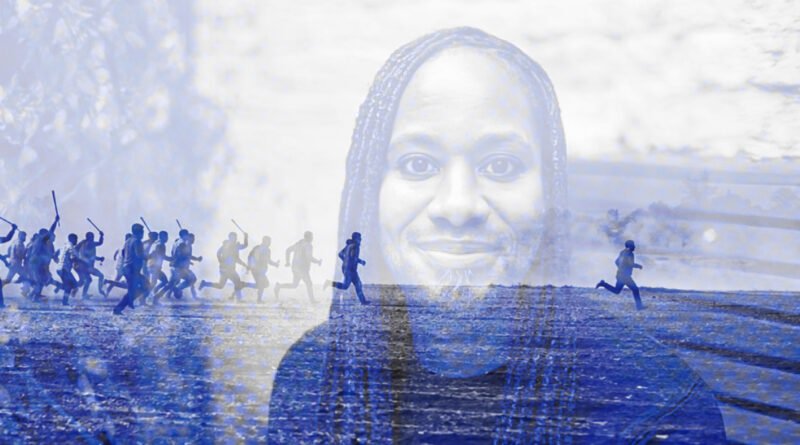
Still, what happened to Dr. Jason Arday shook me to my core. It was not mere scrutiny that followed the plagiarism allegations (they have not been formally proven). It was a witch hunt: an online lynching that fed on unresolved claims about his life and his achievements until it consumed the man entirely.
He resigned from his post at Cambridge. Nine days later, he was found dead. NewsCord, the media analysis organisation, tracked 249 UK news articles mentioning Arday across the 22 days leading up to his death, with more than three-quarters of that coverage, 188 articles, landing in just the final nine days, after his resignation had already been announced. [2]
What was done to him in public was evil. And it should weigh on every one of us who watched it unfold and said nothing.
Where was that same outrage for…?
The human devils in this story reveal themselves not only by what they did or say.
Where was that same outrage, that same relentless digging, when white academics and politicians with accusations of plagiarism (some proven) kept their chairs, titles, and salaries?
Where was the reckoning for white people entrusted with immense public responsibility, caught lying about their own achievements, who simply carried on?
The silence around such cases was not a lack of information. It was a choice.
Here is a (very) non-exhaustive list for you all:
| Person | What happened | What followed |
|---|---|---|
| Dr. William O’Reilly (University of Cambridge) | A former student discovered in 2021 that a 2018 paper O’Reilly published in the Journal of Austrian-American History had lifted more than twelve pages, almost word for word, from two of the student’s own essays.
Cambridge’s internal disciplinary tribunal, after a two-year investigation, found the plagiarism to be “the product of negligent acts but not deliberate”. Evidence later surfaced on PubPeer of a further pattern of verbatim overlap in three more of his articles, dating back to 2006. |
Despite the university’s own misconduct policy stating that plagiarism “normally merits dismissal”, O’Reilly kept his post.
There was no witch hunt. |
| Dr. Anthony Amatrudo (Middlesex University) | Amatrudo had four published papers retracted in 2019 after editors found that at least three of them reproduced large sections of a scholar’s PhD thesis without acknowledgement. | The university said it was “following internal procedures”, but no public disciplinary outcome was ever reported, and the story drew a handful of academic-press articles rather than sustained public attention.
There was no witch hunt. |
| Dr. Nicola Morrison (University of Cambridge) | A senior lecturer in Cambridge’s Department of Land Economy, Morrison was found by the university to have included unattributed material.
Some of the material included verbatim quotes from a final-year undergraduate’s dissertation in an article published under her own name in the Journal of the Town and Country Planning Association (April 2010). |
Cambridge upheld the plagiarism complaint. Morrison apologised, and her position was never under threat. The case drew coverage in Varsity at the time but no sustained public campaign.
There was no witch hunt. |
| Professor Anna Lora-Wainwright (University of Oxford) | An Oxford University investigation found she had committed “serious” misconduct by failing to properly credit her Chinese research collaborators in Resigned Activism: Living with Pollution in Rural China (the very book that had won her the 2018 British Sociological Association/Thinking Allowed Ethnography Award). | The university panel concluded she “did not intend to deceive or mislead”, recommended amendments to the book, and she remained in post. She is still listed as Professor of the Human Geography of China at Oxford’s School of Geography and the Environment today.
There was no witch hunt. |
| Susannah Dickinson (University of Arizona, School of Architecture) | A UA investigation found roughly 20 per cent of one of her conference papers had been copied, without citation, from former student Nicholas Johnson’s master’s thesis. | She was formally reprimanded by the university. Not long after, she was promoted to Associate Professor, granted tenure, and given a raise. Johnson has publicly said he was disappointed but not surprised.
There was no witch hunt. |
| Dr. Doris Kearns Goodwin | The celebrated American historian and presidential biographer was found in 2002 to have lifted multiple passages, without attribution, in her book The Fitzgeralds and the Kennedys. | She resigned from the Pulitzer Prize board but retained her standing as one of America’s most honoured historians, later receiving the Presidential Medal of Freedom.
There was no witch hunt. |
| Dr. Stephen Ambrose | One of the most celebrated American historians of his generation, Ambrose faced multiple, well-documented instances of unattributed material across several of his bestselling books. | He remained a lauded public historian until his death, with no lasting professional consequence.
There was no witch hunt. |
| Dr. Neri Oxman (MIT Media Lab) | In January 2024, Business Insider reported that Oxman’s 2010 MIT doctoral dissertation contained multiple unattributed or improperly quoted passages, including at least one lifted directly from another writer’s work; with one instance echoing the very plagiarism case that had ended a concussion researcher’s career.
Oxman acknowledged the errors, calling them a failure to place borrowed language in quotation marks despite having cited the sources. |
She had already left her MIT professorship in 2021 for unrelated reasons, so there was no faculty position to lose. There was also no equivalent public reckoning, no resignation under pressure, no campaign to strip her of her title or legacy.
There was no witch hunt. |
| Rachel Reeves | As UK Shadow Chancellor, her 2023 book was found by the Financial Times to contain at least twenty passages lifted without attribution from Wikipedia, The Guardian, and a colleague’s own remarks. She called them “inadvertent mistakes”. | Months later, she became the first woman in 708 years to hold the office of Chancellor of the Exchequer.
There was no witch hunt. |
The above are just nine examples involving white academics, some in which plagiarism or misconduct was formally established, and others in which allegations or reported instances of unattributed material did not result in comparable consequences to that of Dr. Jason Arday.
Academic Dr. Sabreena Ghaffar-Siddiqui’s work on social media brought to my attention some relevant research. [3]
A paper entitled The Dawn of the AI Era: Teens, Parents, and the Adoption of Generative AI at Home and School showed that:
Black teens are about twice as likely as their peers to report that teachers flagged their schoolwork as being created by generative AI when it was not.” [4]
I believe witch hunts are immoral and lack compassion. I am not citing these examples to indicate that more witch hunts should occur. We are human and we err. I am raising these to raise a simple question, even if the answer is not.
Why the silence?
Before I end this, it is important that the person who started the witch hunt of Dr. Jason Arday was the fellow academic Dr. Nathan Cofnas, a self-acclaimed “race realist” who wrote that, in a meritocracy:
Harvard faculty would be recruited from the best of the best students, which means the number of black professors would approach zero per cent. Blacks would disappear from almost all high-profile positions outside of sports and entertainment.” [5]
Cofnas is also a Zionist. No more needs to be said. [6] [7]
As I said at the start of this first edition of Think Aloud, what we withhold, including our words, outrage, and our attention, often says more about us than what we offer freely. It is time we sat with that discomfort, rather than around it.
Self-accountability is not a punishment. It is the only path that leads us to who we are meant to become.
Source: Islam21c
Notes
[1] https://muslimcensus.co.uk/anti-blackness-amongst-young-muslims/
[2] https://newscord.org/editorials/jason-arday-pile-on
[3] https://www.instagram.com/drsabreena_gs
[5] https://ncofnas.com/p/a-guide-for-the-hereditarian-revolution