
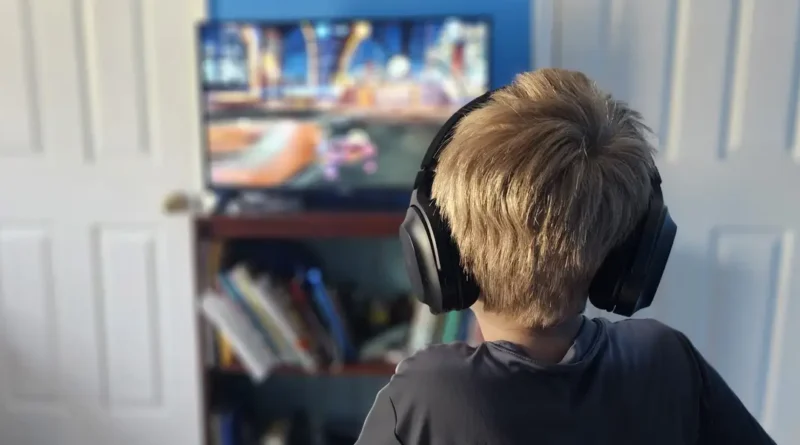
I didn't like that my son was spending his allowance on gaming purchases. Turns out, he was learning financial responsibility.
When we first stepped into the world of kid-oriented apps and online gamingmy husband and I saw in-game purchases as nothing more than buying nothing.
Our 11-year-old son has always been careful with his money, perhaps to a fault. As he grew increasingly willing to spend more and more of his allowance on RobuxV-bucks, and Minecoins, we were alarmed.
The whole thing irks me. I really struggle with virtual “cosmetic” purchases. Buying Skins, special emotes (expressions and dance moves, I think?), and expensive Nikes for your avatar?
I can’t wrap my frugal mind around it.
At first, we tried to steer our son away from gaming purchases. We talked about the lure of instant gratification and impulse buying. But we also listened to his side of the story. And we realized this was simply a world we did not understand.
In the end, our son’s logic about his gaming purchases helped us hand him the reins to make his own spending decisions.
Gaming purchases encouraged our son’s financial responsibility
We give our two kids an allowance of $5 a week. Their only other source of money comes from relatives’ gifts. Our main purpose with allowance is to let them practice spending their own moneymake their own mistakes, and learn how they want to interact with money in adulthood.
The author’s 11-year-old learned financial responsibility by spending money on games. Courtesy of the author
While our son is tirelessly methodical, our younger daughter lives for a blind box. As with everything else, our parental approach to their spending varies between them.
With a few years of making his own spending decisions under his belt, our son has grown skeptical of gimmicky offers that require urgency and any deal that sounds too good to be true. He is getting a taste of the real world in the digital age.
He’s become more strategic with his money, too. Fortnite recently increased the price of V-bucks — its in-game currency — so our son asked for my advice on his plan to stock up before the price jump. I told him that is exactly what I would do if I knew the price of something I love was about to go up. He decided to spend a little more than he normally would, reasoning it was better to buy now to save later.
Since we don’t pay for any gaming-related purchases outside Christmas or birthday presents, our son also budgets for an annual $80 PlayStation Plus subscription, which he researched as the cheapest option. It’s a cost he has to cover to do what matters to him.
I believe these in-game decisions now will pay off in adulthood.
When we stopped policing our son’s gaming purchases, it made it easier to have open conversations about money. He is proud to tell us about his purchases and sees them as savvy decisions. When he makes a mistake, we strive to meet him with respect and support, without fixing it for him.
Courtesy of the author
It’s in these conversations that I’ve realized that gaming is an essential part of our son’s social life. Most of his purchasing decisions revolve around gaming with friends — from the PS5 subscription to buying the latest game his friends are playing, and even gifting skins or Roblox items to friends so they can have more fun together.
Thinking about it this way, it makes sense that he would rather spend money on gaming than on the toy aisle. And really, is one any more gimmicky than the other?
When I asked him what he would advise other parents to do for their kids, he said, “Remember that it’s not just silly little outfits or superficial things. Sometimes it can buy fun experiences. So if they’re spending their own money, let them go nuts. They’ll find consequences sooner or later.”
Much to our surprise, in-game purchases are teaching our son that spending money on experiences with others — even virtual ones — is often more worthwhile than spending money on stuff. That’s a value my husband and I have built our lives on, and one I’m glad our son is learning on his own.