Fertiliser shortages due to Iran war are a key worry for developing world, UN agency says
By Philip Blenkinsop
BRUSSELS, April 14 (Reuters) – Fertiliser shortages due to the Iran war are a pressing concern for developing countries and gains from rising oil and gas prices for developing world producers are likely to be short-lived, the head of the United Nations trade agency said on Tuesday.
“The more immediate issue is fertiliser, because that then affects food security and food security is always the basis for stability,” said Pamela Coke-Hamilton, executive director of the International Trade Centre (ITC), adding that oil and gas could be secured from other places so the situation was “not as dire” even if price hikes were a problem.
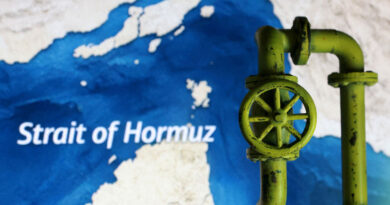
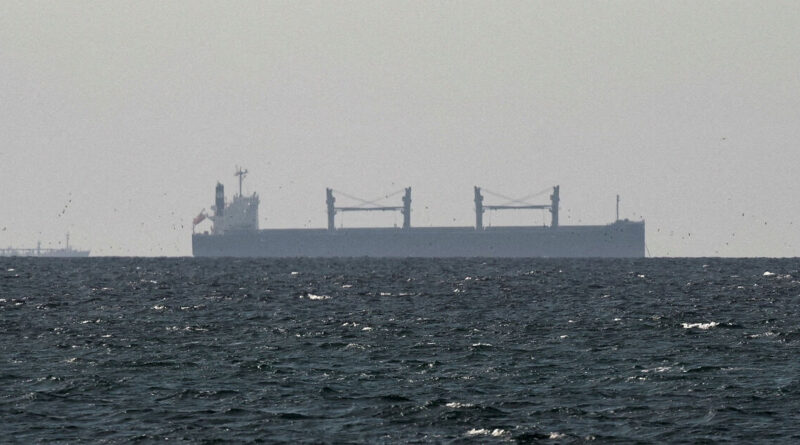
Coke-Hamilton, whose agency focuses on promoting trade for developing countries, noted that a third of global urea would normally pass through the Strait of Hormuz, which Iran and the United States are blockading.
“There are significant issues with respect to availability of fertilisers and also there’s a timeline for agriculture in terms of ensuring you have enough for the next harvest, which is being missed now,” she told Reuters in an interview.
The U.N. said on Monday that a diplomatic push was under way on a U.N.-led proposal to ensure safe passage for fertiliser shipments through the Strait of Hormuz.
The ITC said dependence on nitrogen fertilisers from Gulf producers is highest in several Asian and African developing countries, such as Kenya, Uganda, South Africa, Thailand and Sri Lanka.
Shortages typically lead to reduced fertiliser use and lower yields, rather than changes in harvesting time, with this effect more pronounced in regions such as Sub-Saharan Africa and South Asia, where production is more dependent on rains, planting windows are narrower and farmers more sensitive to input costs, the ITC said.
Alternative suppliers, particularly in North Africa, could help fill the gap, the ITC said, with Egypt holding a potential $1.6 billion of untapped exports and Algeria a further $1.3 billion.
The ITC said countries such as Nigeria, Kazakhstan, Brazil, Angola and Libya may benefit from increased oil revenues, but these gains would be limited as all but Kazakhstan remained net importers of refined products.
Higher natural gas prices may benefit countries such as Algeria, Malaysia, Turkmenistan and Azerbaijan, but expansion of supply is likely to be limited in the short term, the ITC said.
(Reporting by Philip Blenkinsop; Editing by Alexandra Hudson)