Donald Trump orders Lake Ontario to be renamed ‘Lake America’ in new slight to Canada
Unlock the White House Watch newsletter for free
Your guide to what Trump’s second term means for Washington, business and the world
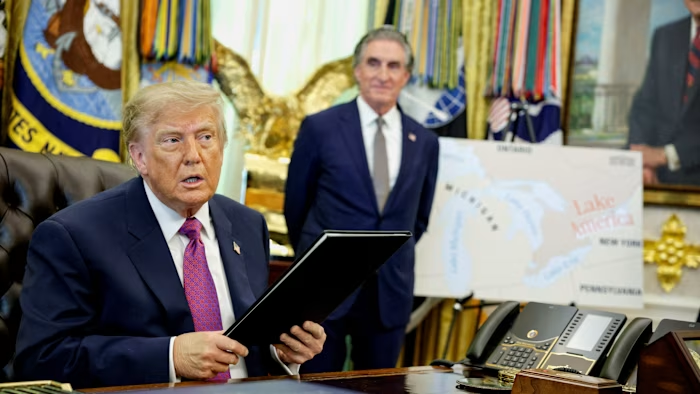
Donald Trump stepped up his war of words with Ottawa on Thursday, ordering his government to “immediately” change the name of Lake Ontario, which sits between Canada and the US, to “Lake America”.
The US president on Thursday signed an executive order that will change the name of the vast body of water, which straddles the border between the province of Ontario and New York State, in an important federal mapping system that is widely followed by state and local governments and private industry.
EFFECTIVE IMMEDIATELY: Lake Ontario is renamed to LAKE AMERICA! 🇺🇸 pic.twitter.com/ZFww8PexiW
— The White House (@WhiteHouse) August 27, 2026
“The lake will continue to play a pivotal role in shaping America’s future and the global economy,” Trump’s executive order said.
Last year, the president signed an executive order renaming the Gulf of Mexico, which borders Mexico, the US and Cuba, as the Gulf of America.
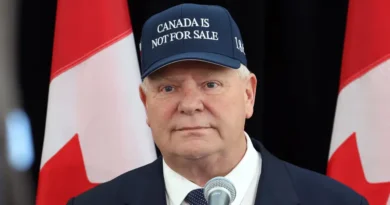
Canada’s Prime Minister Mark Carney responded: “The name Lake Ontario comes from the Wendat word Ontari’io, which, appropriately, means ‘the lake is beautiful, the lake is big’.”
“The name is more than 400 years old, predating both the Confederation of Canada and the Declaration of Independence of the United States of America.”
“We know that America is changing. Their trading relationships, their foreign policies, their national monuments, their hydronyms,” Carney added. “Canadians also know that naming reality means calling it Lake Ontario — then, now and always.”
Kathy Hochul, governor of New York, the only US state on the lake, responded to Trump’s name change on Thursday with a post on X. “New York won’t be calling it that,” she wrote.
Trump’s decision to rename the lake underscores fraying relations between the US and Canada, which are launching tit-for-tat tariffs against each other after trade talks collapsed.
Since the US president took office 18 months ago, Canada has faced relentless attacks from the White House on its sovereignty, character and economy, with Trump slapping tariffs on his country’s second-biggest trading partner.
Late last week, trade talks between the two sides fell apart, with US trade representative Jamieson Greer saying Washington had offered Ottawa “significant tariff reductions” on steel, aluminium, vehicles and lumber but Canada had rejected the deal.
However, Carney said he had suspended the negotiations after the Trump administration had offered a “bad deal” with numerous last-minute changes.
Carney later said his country was “at war” over trade with the US after the president “miscalculated” Canada’s response to his tariff attack.
Canadians, angry at Washington’s hostility, have backed Carney’s stance even though they could face economic consequences.
US vice-president JD Vance this week resumed attacks on Canada, calling it “a country that has underinvested in its military that quite literally would get invaded by a foreign country were it not for the umbrella of protection provided by” the US.
Earlier this year Canada met the 2 per cent of GDP Nato defence spending target and pledged to increase military funding to 5 per cent by 2035.
US commerce secretary Howard Lutnick on Thursday doubled down on his attacks over trade talks. “We had a deal, we shook hands, the president announced it,” he said. “Canada made the decision for political purposes, they wanted to walk away.”
After Trump signed his order on Thursday, Doug Burgum, US interior secretary, posted: “The places and waters that border our nation and support our economy should reflect the greatness of the United States.”
“At this point I think the only surprising thing is that he [Trump] didn’t decide to call it Lake Trump,” said Brian Rathbun, at the University of Toronto’s Munk School of Global Affairs and Public Policy.