Oil falls below $71 as US-Iran talks continue, Gulf exports rebound
Oil exports from the Gulf have been rebounding after talks took place Wednesday between the United States and Iran over a nuclear deal and the reopening of the Strait of Hormuz.
What happened: Oil prices fell for the third consecutive day on Thursday to below $71 a barrel as traffic increased through the Strait of Hormuz.
Brent crude fell around 1.13% on Thursday to $70.76 a barrel as of 10:28 a.m. EDT, returning the international benchmark to its pre-war levels.
The price drop followed signs of progress in Iran-US negotiations after a spokesperson for Qatar’s Foreign Ministry said in an X post on Wednesday that the two sides had made “positive progress” in talks in Doha focused on the reopening of the Strait of Hormuz.
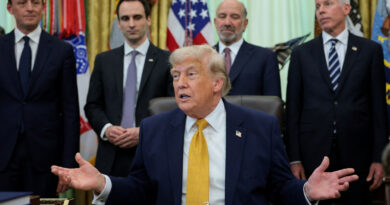
President Donald Trump also told reporters on Wednesday that “the denuclearization of Iran is moving along well.”
However, tensions appeared to reignite on Thursday, when Iran’s joint military command threatened in a statement that it would issue a “forceful response” against vessels straying from approved Strait of Hormuz routes. It was not immediately clear what prompted the threat.
“Any failure to comply, deviation from the designated route, or disregard for the navigation protocols of the Islamic Republic of Iran in the Strait of Hormuz will be met with an immediate and forceful response from the armed forces, endangering the security of the violating vessels,” the Iranian joint military command said in the statement, which was relayed on state television.
The next round of talks between the US and Iran will wait until after Supreme Leader Ayatollah Ali Khamenei’s funeral, which begins on Saturday.
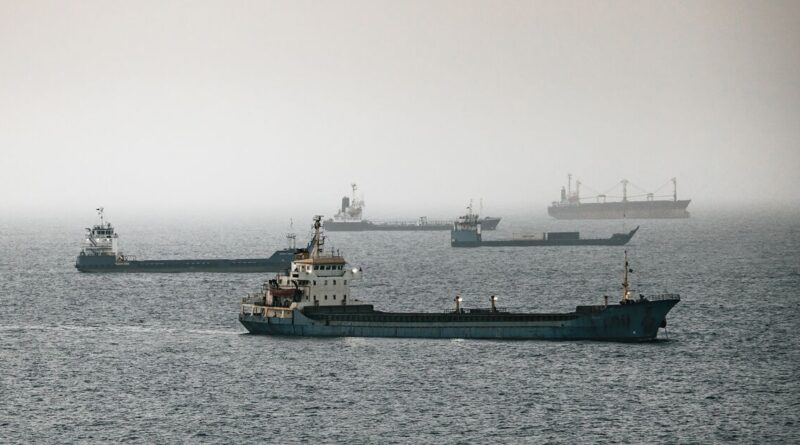
Meanwhile, Gulf energy producers have continued restoring oil exports in recent days, helping to boost traffic through the strait.
Saudi Arabia, the world’s second-largest crude exporter, has increased shipments through the waterway as conditions gradually improve. Four supertankers carrying about 8 million barrels of crude from the kingdom’s main export terminal at Ras Tanura entered the Gulf of Oman on Thursday, according to ship-tracking data compiled by Bloomberg. It marked the largest number of supertankers exiting the Strait of Hormuz in a single day since the memorandum was signed in mid-June.
The United Arab Emirates has also ramped up exports. Ship-tracking data from Kpler showed that the country exported more than 3.9 million barrels per day in June. The Gulf country, which left OPEC in May, is now exporting oil at its highest rate since 2017.
Overall, oil flows through the Strait of Hormuz have recovered to more than 10 million bpd, according to a US official cited by Bloomberg, up from the lows seen during the conflict but still well below the roughly 18 million to 19 million bpd that transited the waterway before the war.
Why it matters: After the United States and Israel launched strikes on Iran on Feb. 28, Tehran responded by attacking American assets in the region, Israel and neighboring Gulf countries, including critical energy infrastructure. In addition, the Islamic Revolutionary Guard Corps restricted commercial vessel traffic through the Strait of Hormuz. The waterway, which runs between Iran, Oman, and the United Arab Emirates, handles around one-fifth of the world’s oil and liquefied natural gas shipments during peacetime.
Before the war, an average of 130 to 140 ships passed through the strait every day. After the conflict began, however, very few ships transited the waterway because of attacks by the IRGC. The near-total closure of the Strait of Hormuz triggered a global energy crisis, with oil prices peaking at around $115 in early May amid supply fears.
Since Iran and the United States agreed to a 14-point memorandum of understanding on June 17 to permanently end the war, traffic through the Strait of Hormuz has gradually recovered, although sporadic attacks have continued to disrupt shipping despite the truce. The two sides are locked in intensive negotiations, with 60 days to hash out a deal to fully reopen the strait, stop the fighting and curb Tehran’s nuclear program.