Saudi FM concludes China visit amid Trump-MBS friction: What to know
Saudi Arabia has also rebuffed US pressure to normalize ties with Israel, and its rhetoric has only grew more critical of the current Israeli government. While Riyadh pledged $1 billion for Trump’s so-called Board of Peace, it appears not to have made good on that pledge yet, according to reports in late May. It also has withdrawn funding from LIV Golf after the 2026 season, and backed out of a proposed funding deal with the Metropolitan Opera.
Beijing’s opening
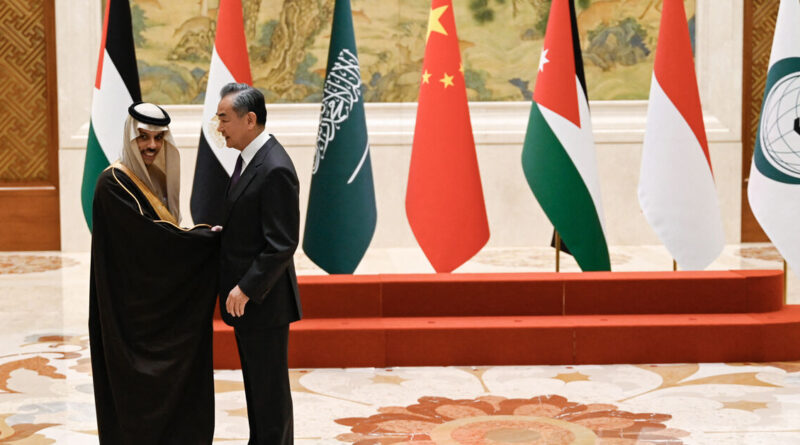
For Saudi Arabia, China offers more than symbolism. Firas Maksad, managing director for the Middle East and North Africa practice at the Eurasia Group, said it was natural for Riyadh to consult Beijing now, as the kingdom weighs its next moves on Iran and the wider Gulf posture.
“After all, China is by far the country with the greatest leverage over Iran, and it had played the key role in mediating and brokering the normalization of Saudi Arabia’s relationship with Iran in 2023,” Maksad told Al-Monitor. “And so it’s only natural at a time when so much is in flux and the regional relationship with Iran, not only Saudi Arabia, is in question that the Saudis consult with the Chinese and even try to coordinate with Beijing.”
He added that China could play a diplomatic role in helping Saudi Arabia and other Gulf states find a way forward with Iran. That possibility is increasingly relevant as Riyadh looks to diversify its foreign policy relationships and reduce its dependence on the United States. Last week, Agence France-Presse reported that the kingdom is planning to host reconciliation talks between Gulf countries and Iran.
In a recent piece for Foreign Affairs, Maksad and Ian Bremmer called China the “chief geopolitical beneficiary” of the postwar regional shift.
The diplomatic engagement is unfolding alongside steadily deepening economic and security cooperation between Riyadh and Beijing. Reports in March indicated that Saudi Arabia and China had struck a $5 billion deal to establish a production line for Wing Loong-3 combat drones in Jeddah. Under the reported agreement, a joint facility operated by the Aviation Industry Corporation of China and Saudi Arabia’s General Authority for Military Industries would manufacture about 48 drones a year. Neither Beijing nor Riyadh has publicly confirmed the deal.
In mid-June, Saudi Arabia signed six agreements and memorandums of understanding with Chinese entities on development and housing projects worth more $506 million in Riyadh and Dammam.
Our take
The war with Iran may have made a lasting dent in US credibility across the region, especially among Gulf states that were directly exposed to Iranian drones and missiles. That has pushed Saudi Arabia and others to look harder at their own security architecture and to seek out partners that can provide leverage in trying to contain a less predictable Iran. That does not mean Saudi Arabia is abandoning the United States. But the war has offered lesson in the Gulf: When regional security is in flux, dependence on a single power is not a sound option.