
In an AI world, taste is a competitive advantage for brands
AI hype may finally be giving way to something more interesting: Taste.
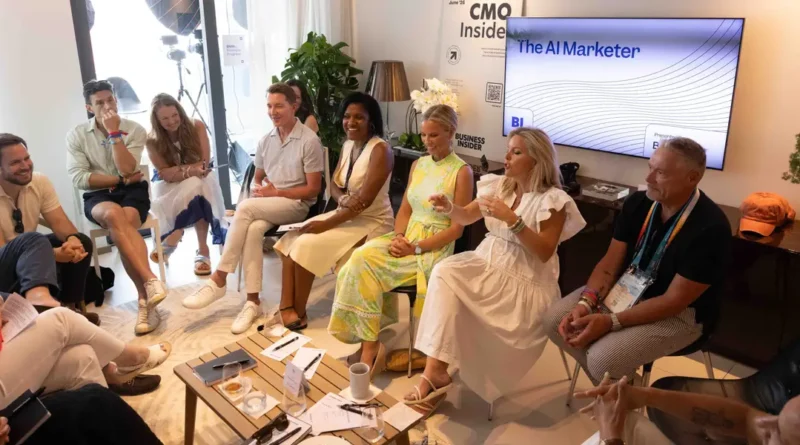
At Business Insider’s “The AI Marketer” roundtable, convened during Cannes Lions 2026 and presented by Bluefish AI, senior marketing leaders invoked the prevailing zeitgeist of the Festival — that human discernment is essential, and that taking more time to consider organizational change will drive better outcomes.
The roundtable included marketing leaders from Autodesk, Accenture Song, Adobe, Babylist, Comcast, SharkNinja, Anduril, Hilton, Kimberly-Clark, Deloitte Digital, Zoom, Indeed, and Instacart.
The discussion underscored a shift in how some of the largest brands are approaching AI, becoming less about accelerating adoption and more rooted in thoughtful change management and infrastructure.
The taste difference
As leaders discussed creative workflows, the conversation shifted towards one key word in tech and advertising circles today: taste.
“I think one of the things that’s been really important is not taking an existing process and layering AI on top of that. That’s actually a recipe for disaster and you start to have a lot of issues,” said Dara Treseder, chief marketing officer at Autodesk.
“What outcome are we trying to accomplish and what is the new system we should design to get there using humans and AI?” she asked.
Treseder called this “the golden age for marketers and creatives who have excellent taste.”
“The work we do is art and science,” she said. “Master the tools, have excellent taste, know how and when to use AI—and, most importantly, have the discernment to know when not to.”
Executives argued that while AI is making content production dramatically faster, it is also making originality more valuable.
“I think the reason why we’re talking about humans is because they will give you the competitive
advantage because as everyone adopts AI tools, it democratizes the playing field and the smaller companies will be able to create content that looks as good as the bigger companies, said Theo Ricketts, vice president of global sales, marketing and digital transformation at Kimberly-Clark.
“So where is our advantage?” He continued. “That has to be in the human and the insights that we’re bringing that drives better outcomes than our competitors.”
The experimentation phase is ending
Michelle Crossan-Matos, chief brand and experience officer at SharkNinja, described how the company is using AI to coach customer service agents in real time, helping them respond to customers while measuring whether each interaction builds trust in the brand. The company also uses AI to identify recurring customer issues from thousands of service interactions, turning what was once anecdotal feedback into measurable insights that product and marketing teams can act on.
“The call center agents know exactly how he or she is helping our brand,” Crossan-Matos said. “I have campaigns built from the customer service team now.”
Kim Storin, chief marketing officer at Zoom, framed marketing as a bidirectional function increasingly embedded across the organization, not confined to a single insights team.
“Our job is to be the voice of and the voice to the market,” Storin said.
That idea showed up in how Zoom is restructuring customer understanding internally. Rather than concentrating feedback in a dedicated function, she described an effort to push customer exposure across teams.
“It’s not just the customer insights team anymore,” she said. “Is the search team, is the paid media team talking to customers?”
People, jobs and change
The discussion became noticeably more candid when the topic turned to marketing talent.
James Whitmore, chief marketing officer at Indeed, pointed to hiring data showing that marketing roles have declined faster than nearly any other profession.
“If you learn AI and learn how to demonstrate your impact on the business and measure results, then no, you’re not at risk. If you sit back and let things happen to you, then of course you’re at risk,” he said.
Jeff Miller, chief marketing officer at Anduril pushed the conversation further.
“As inspirational as we all can be about the power and future of AI, you’re going to have to learn the tools and prove that you have taste, then you’re going to succeed, you’re going to thrive in your role. But, I don’t think that will be true of most people working in the marketing industry. I just fundamentally don’t believe that, he said.
The group also acknowledged that change needs to come from the CEO, specifically.
“The integration [of AI] has to happen cross functionally, it always has to come from the CEO. If it does not come from the CEO, it really doesn’t happen, said Sean Lyons, chief strategy officer at Accenture Song.
“The organizational operational lift is super high based on fear… trying to get those teams to understand that they can do better work this way,” he said.