Displaced Lebanese hesitant to return home as lasting truce uncertain
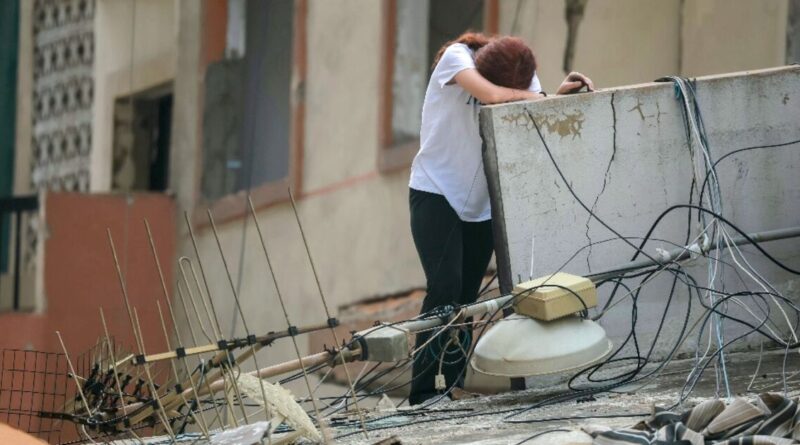
After the ceasefire in Lebanon took hold, Samah Hajoul headed back to her apartment in south Beirut — but only long enough to grab fresh clothes, feeling safer in her tent as she wonders whether the truce will last.
“I am afraid to return to my home because the situation is not stable yet,” the displaced mother of four told AFP from her campsite on the capital’s seafront.
The ceasefire, which entered its second day Saturday, has granted many people the chance to check on their homes in areas where Hezbollah holds sway, like the southern suburbs, which were heavily bombed by Israel.
Hajoul found her apartment lightly damaged, with broken windows, but was only there to “bathe the children and get summer clothes” as temperatures started to rise.
“We do not feel safe to return, for fear that something might happen at night and I would not be able to carry my children and flee with them,” she added.
Hajoul had to leave her neighbourhood when Hezbollah drew Lebanon into the Middle East conflict on March 2 with rocket attacks on Israel, prompting widespread Israeli airstrikes and a ground invasion in the country’s south.
Like many other displaced residents, Hajoul was waiting to “see what happens” at the end of the 10-day truce before deciding whether to go back.
“If the ceasefire is consolidated, we will return to our homes,” she said.
In the heavily bombed suburbs, neighbourhoods were still largely empty on Saturday, aside from those making quick visits to their homes, according to an AFP correspondent.
Among them was Hassan, 29, who only picked up a few things before returning to a school turned government shelter.
Hassan, who only gave his first name, pointed to “tension” surrounding Israeli strikes in the south and Iran’s announcement it was again closing the Strait of Hormuz, rattling the ongoing ceasefire in the broader war.
With both Israel and Hezbollah accusing each other of breaching the truce in Lebanon, Hassan said “there is no indication that there is a solution”.
“We are afraid that if we return to the suburbs we will lose our place in the school to which we were displaced.”
– ‘A temporary truce’ –
Israeli attacks on Lebanon killed nearly 2,300 people over the course of the war and displaced more than a million, according to Lebanese authorities, mostly from southern Lebanon and Beirut’s southern suburbs.
On Saturday, senior Hezbollah official Mahmud Qamati did little to reassure the displaced when he warned that “Israeli treachery is expected at any time, and this is a temporary truce”.
“Take a breath, relax a little, but do not abandon the places you have taken refuge in until we are completely reassured about your return” to your homes, he said.
AFP photographers saw heavy traffic heading south from Beirut in the morning, and similarly heavy traffic returning to the capital in the afternoon.
According to local media and residents, Israeli forces continue to carry out demolition and bombing operations on homes in several border villages.
The Israeli army on Saturday said it attacked “terrorists in several areas in southern Lebanon”, noting that the military was authorised to take action against imminent threats in spite of the ceasefire.
– ‘They will return’ –
Lebanese authorities hope the consolidation of the ceasefire will allow the displaced to return to their homes and compel Israeli troops to withdraw from the south.
The Israeli military said Saturday it had established a “Yellow Line” in southern Lebanon, similar to the one separating its forces from territory still held by Hamas in Gaza.
In the south, Lebanon’s military and local bodies have been working to open roads that were blocked due to Israeli strikes since the early hours of the ceasefire.
In Hanawayh, east of the southern city of Tyre, deputy mayor Mustapha Bazzoun pledged to “restore life by securing all services, from communications to opening roads, so that people can return to their normal lives as quickly as possible”.
“People are returning, but cautiously. We are working based on the idea that their return will be permanent. They may leave temporarily, but they will return later.”
strs-lar/nad/smw