Trump Says U.S. May Impose Tolls In Strait Of Hormuz If Peace Deal Fails
Topline
The U.S. may impose its own tolls on the Strait of Hormuz if its peace deal with Iran fails, President Donald Trump said Saturday, floating the idea hours after Iran said it closed the crucial oil shipping route, throwing peace talks into uncertainty.
Trump made the comments about the Strait in a Truth Social post.
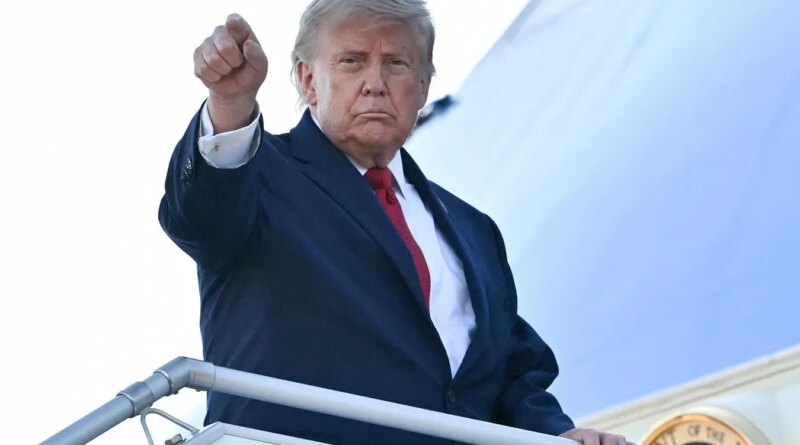
Photo by Mandel NGAN / AFP via Getty Images
Key Facts
Trump said in a Truth Social post there will be no tolls in the strait during the 60-day ceasefire created by the peace deal signed this week, as well as no tolls after the period expires, “unless they are imposed by and for the United States of America.”
Trump has previously expressed concerns about Iran imposing fees or tolls in the strait, but has never floated U.S.-imposed tolls prior to Saturday.
The president’s comments come after Iran’s joint military command said it closed the Strait in response to Israel’s continued attacks against Lebanon.
The peace agreement signed by Iran and the U.S. this week required an end to military operations by the two countries and their allies, though Israel and Hezbollah have traded strikes this weekend following a brief ceasefire Friday.
Vice President JD Vance denied Iran’s claims the Strait of Hormuz was closed Saturday, telling Fox News he was “not seeing any evidence” of the shutdown.
The peace deal required the Strait of Hormuz to be opened and free of tolls for the 60-day negotiation period, which began earlier this week.
What We Don’t Know
It is unclear how the U.S. would enforce tolls in the Strait, as the U.S. and Iran have consistently made conflicting statements about who controls the vital oil shipping route. The topic could be one of several discussed by American and Iranian diplomats during negotiations in Switzerland on Sunday.
Key Background
A memorandum of understanding was signed by the U.S. and Iran this week, paving the way for the 60-day negotiation period and establishing multiple conditions. In addition to opening the Strait of Hormuz, the agreement requires the U.S. to lift its naval blockade alongside a reaffirmation from Iran that it will not procure or develop nuclear weapons. The framework also lays the groundwork for Iran to gain access to a $300 billion private fund for reconstruction and to billions of dollars worth of frozen assets if it fully complies with a pending, permanent peace deal that may or may not be reached through current negotiations. Trump reiterated this week the U.S. would not be providing the $300 billion, saying Gulf countries could foot the bill if they wanted to. The president has faced backlash and reluctance from Republicans concerning the memorandum of understanding. Sen. Bill Cassidy, R-La., said Trump’s handling of Iran was “the worst foreign policy blunder in decades,” claiming Iran’s “nuclear ambitions were not curbed, and they have learned that threatening the Strait of Hormuz now works and will undoubtedly leverage it in the future.”
Further Reading
Iran Says Strait Of Hormuz Is Closed After Lebanon Attacks—U.S. Denies It’s Shut (Forbes)
Trump Says Iran Is ‘FINISHED’ After Cancelled Negotiations — As Israeli Attacks Threaten Deal (Forbes)