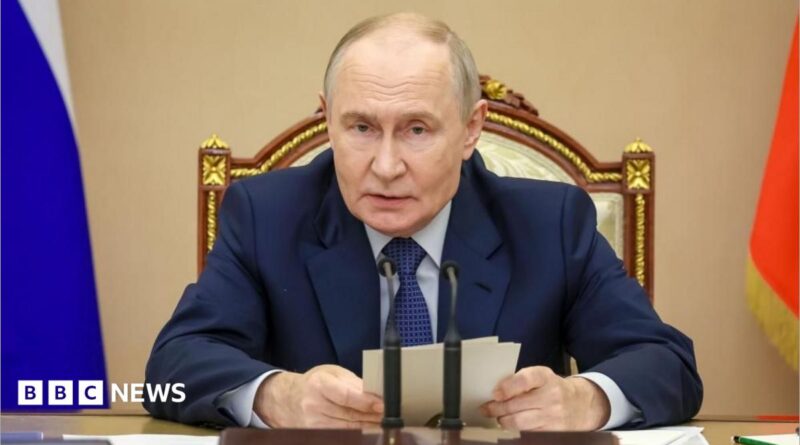
Russia's elections had few surprises – but how the Kremlin uses the results is far from clear
Ahead of the final day of this three-day election, Ukraine had launched a large-scale drone attack on the Moscow area. The city’s oil refinery was hit.
At a polling station near the oil refinery, I spoke to voters about the attack.
Here, too, there was little surprise at what had transpired.
More than four and a half years into Russia’s war on Ukraine, Muscovites had grown used to their city periodically becoming a front line. Instead of astonishment, there was quiet resignation.
“People in the Donbas, as well as in Bryansk, and Belgorod near the Ukrainian border, hear this kind of thing every day,” says a voter called Viktor, who has exited the polling station.
“They just get on with their lives.”
If the outcome of this election was predictable, what happens next is less clear.
The Kremlin will likely use the result to claim that most Russians have rallied behind the president, and to justify future policies and subsequent decisions on the war.
President Putin recently ruled out another wave of mobilisation.
“There is no scenario today that would require it,” he declared.
Not today. But what about tomorrow?
Despite official denials, in Russian society there remains deep anxiety over the possibility of a new mobilisation.
At the very least, the Kremlin is likely to treat the election result as a “mandate from the people” to continue the war.