'No home left' for Gazans stranded in West Bank since Oct 7
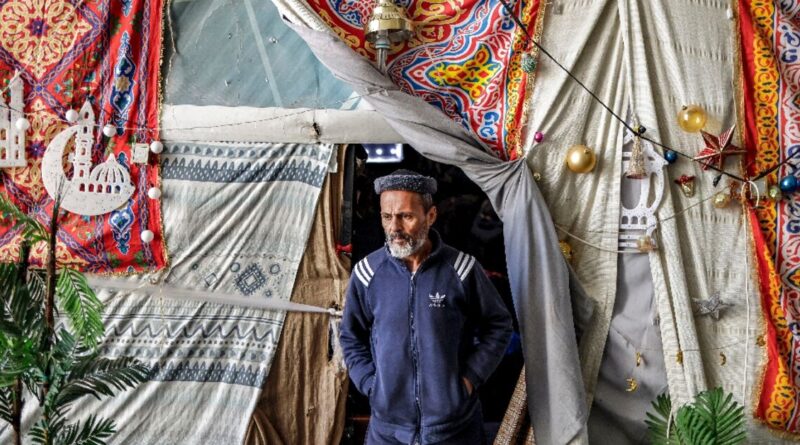
Under the bleachers of a West Bank stadium, a dozen men from Gaza live in a former changing room, blocked from returning home by the war that erupted more than two and a half years ago.
Among those stranded is Sameer Abu Salah, 54, who had been working odd jobs in Israel’s commercial hub of Tel Aviv, where wages are far higher than in his home city of Khan Yunis in Gaza.
He had then gone to Nablus, in the north of the occupied West Bank, where he is now trapped.
“I entered (Israel) only four days before the war,” he said from the little space he had set up under the stands of Nablus city stadium.
“I was respected and honoured. Then the war happened,” he added, referring to the devastating Gaza war triggered by Hamas’s October 7, 2023 attack on Israel.
Abu Salah now makes a living collecting and reselling recyclables, sending money to his family after losing two sons to Israeli airstrikes.
“Look at me now — I live in a tent. We used to live with dignity, while here we’ve been thrown aside like dogs,” he said.
Abu Salah, who is “obsessed with cleanliness”, has made the most of his situation: he fashioned a dresser out of cardboard boxes and decorated his walls with Palestinian flags and a portrait of historic Palestinian leader Yasser Arafat he found during his street sweeps.
Counting all those stranded is difficult, but the Palestinian Authority’s labour ministry said in March it had provided cash assistance to 4,605 Gazans stuck in the West Bank.
Though leaving the city’s boundaries is tolerated, the men under the bleachers still fear it, citing friends who were stopped at an Israeli army checkpoint and sent back to Gaza.
– ‘In a jail’ –
“It’s boring, but what can we do? We’re in a jail,” said Sameh, who came 10 days before the war erupted to get medical treatment for his son that was unavailable in Gaza.
His son returned, but Sameh, who declined to share his last name for fear of retribution, stayed behind to provide for the family.
Inside the changing room, he put up sheets on rope as dividers for his personal space in a manner reminiscent of the large tent camps of Gaza, “to live like my family”.
All the men AFP spoke to in the stadium had lost their homes in airstrikes. They showed videos of their homes before and photos of the piles of rubble after.
Nahed al-Hilou, a Gaza businessman now living in Ramallah, is equally afraid of leaving the central West Bank city he moved to from Tel Aviv after the war broke out.
Hilou, 43, left Gaza two days before October 7 on a business permit to find goods to import into the blockaded territory, where he had a restaurant employing 30 people in Gaza City’s upscale Rimal neighbourhood.
He found his way to Ramallah, where he opened a successful downtown falafel restaurant to make a living, and above all feed his family still in Gaza.
“I turned to what I know: my work, my profession, something I love,” he said.
He now employs nine people, all Gazans, and cooks Gaza-style: spicy.
Like all those outside, he worries constantly for his immediate family, who luckily all survived the war.
“We spent 20 days not knowing anything about them,” Hilou said.
Asked about the possibility of returning, he waved it off.
“Of course Gaza is dearer than here, but there, there is no home left, nothing.”
– No jobs, high prices –
According to the UN, 81 percent of Gaza’s structures were destroyed during the war, and its economy along with them.
The UN says that unemployment in the territory soared to 80 percent after the war, while prices for goods skyrocketed due in part to Israeli restrictions on truck entries.
Israel still controls about half of Gaza, and Israeli fire has killed at least 846 people since the start of a US-brokered ceasefire in October 2025.
Shahdeh Zaarb, 45, is luckier than his fellow Gazans, for he holds West Bank residency, having worked there regularly for the past 20 years.
From the northern Gaza city of Beit Lahia, known for its strawberry fields before the war, Zaarb has opened a farm in the West Bank city of Qalqilya.
But despite his relative freedom, Zaarb has not seen his children since 2021, and shares the same problem as the others.
“My children are in one place, I’m in another, and I can’t bring them here because of the crossings.”