Lebanon Emerges as Weak Link in U.S.-Iran Deal to End War
The preliminary agreement between Iran and the United States had barely come into effect when it all nearly unraveled on Friday. And, for the second time in recent weeks, the issue that threatened to derail it was Lebanon.
The conflict in Lebanon, once seen as a secondary front to the American-Israeli war on Iran, has become one of the main obstacles to ending it. That dynamic came into sharp focus on Friday, after fighting between the Iran-backed militant group Hezbollah and Israel intensified and a new round of talks between Tehran and Washington in Switzerland was subsequently scuttled.
While neither side gave a reason for the postponement, three diplomats who spoke on the condition of anonymity to discuss sensitive details said that Iran had withdrawn from the talks because of Israeli strikes in Lebanon.
“Iran’s new leadership views Lebanon as part and parcel of its own national security, as previous Israeli advances against Hezbollah in 2024 paved the way for a direct conflict with Iran,” said Mohanad Hage Ali, a senior fellow at the Carnegie Middle East Center in Beirut. “For Iran, the end game is an Israeli withdrawal from Lebanon.”
The diplomatic breakdown on Friday was the second time in recent weeks that the conflict in Lebanon has upended talks between the United States and Iran. Earlier this month, Israeli strikes on the outskirts of the Lebanese capital, Beirut, prompted Iran to launch missiles toward Israel and Israel to respond with its own wave of strikes across Iran.
The breakdown came days after the United States and Iran signed a preliminary agreement to end their own war that calls for “the immediate and permanent termination of military operations” in Lebanon and pledges to safeguard the country’s “territorial integrity and sovereignty.”
The inclusion of Lebanon in the deal was seen as a diplomatic victory for Iran, which has long insisted that any agreement include Lebanon, where its ally, Hezbollah, attacked Israel in March in solidarity with Tehran. Prime Minister Benjamin Netanyahu of Israel, which has not been party to the negotiations, had staunchly objected to those terms and vowed to continue the military campaign against Hezbollah.
On Friday, the Israeli ambassador to the United States, Yechiel Leiter, said Israel had committed to an immediate cease-fire and had “halted all offensive operations” in Lebanon, as diplomats sought to keep the fragile deal between Iran and the United States on track. But he said that Israeli forces were still operating in southern Lebanon “to rid the area of Hezbollah and dismantle its terror infrastructure,” adding, “We will remain there until that mission is accomplished.”
There was no immediate comment from Hezbollah.
The terms of the agreement between the United States and Iran, however, have raised as many questions as they have answered.
The deal purports to extend its commitments to Washington and Tehran’s allies, but neither Israel nor Hezbollah signed the memorandum, and it does not explain how either side would be compelled to comply. It also does not resolve the two questions at the heart of the conflict: whether Israel will withdraw from southern Lebanon and whether Hezbollah will surrender its weapons.
Washington and Israel had sought to keep the two conflicts separate, while Tehran made Israel’s campaign in Lebanon a pressure point in negotiations with Washington.
That strategy left President Trump increasingly concerned that persistent Israeli attacks could imperil a deal. In recent weeks, Mr. Trump has grown more openly frustrated with Mr. Netanyahu and pressed him to scale back military operations.
Since the agreement was announced, Israel has stopped issuing near-daily evacuation warnings for towns and villages across southern Lebanon.
Although Israeli strikes have also continued, their scale and pace had waned significantly until Friday.
Hezbollah said it had ambushed Israeli troops advancing on a hillside overlooking Nabatieh, the large southern Lebanese city, in fighting that killed four Israeli soldiers, according to the military. Israel responded with more than 150 strikes across southern and eastern Lebanon, killing at least 47 people, according to Lebanon’s health ministry.
Assaf Orion, a retired Israeli brigadier general and a fellow at the Washington Institute for Near East Policy, said that although Iran had “managed to connect the two theaters and leverage these negotiations with Trump to constrain Israel,” it was still “too early to judge” whether that restraint would hold — and, if so, for how long.
Lebanon’s cease-fire with Israel, brokered by the Trump administration in April, offers a cautionary precedent. It barred Israel from conducting offensive military operations while preserving the country’s right to take “all necessary measures in self-defense.”
Within hours of the announcement, Israel was invoking that broad latitude to continue strikes. In the weeks that followed, it also expanded its ground invasion despite the cease-fire. Like the U.S.-Iran agreement announced on Sunday, Hezbollah was not a signatory.
On another diplomatic track, the next round of Israeli-Lebanese talks toward a more stable solution in Lebanon will take place next week in Washington, the U.S. State Department said in a statement on Friday, after Secretary of State Marco Rubio spoke with Lebanon’s president, Joseph Aoun.
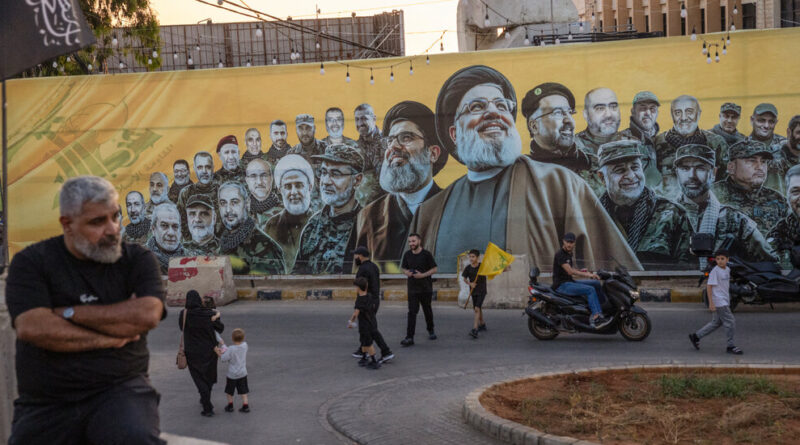
While it is unclear how much direct control Iran has over Hezbollah, analysts say Tehran has exerted a much stronger hand in the group since its former leader, Hassan Nasrallah, was killed in Israeli airstrikes in 2024.
After Hezbollah and Israel agreed to a cease-fire later that year, Hezbollah held its fire despite near-daily Israeli airstrikes, until the U.S.-Israeli war against Iran began in late February.
Lina Khatib, an associate fellow at Chatham House in London, said the U.S.-Iran deal “may create conditions for de-escalation” in Lebanon but did not address the core issues, including an Israeli withdrawal and the future of Hezbollah’s arsenal.
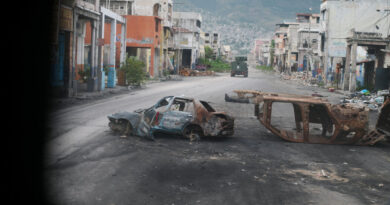
Israeli forces remain stationed across a broad section of southern Lebanon, the largest occupation of the country in more than two decades. Israel’s offensive has devastated border towns and forced more than a million people from their homes.
Israel has signaled it does not feel bound by any Lebanon-related agreements in the U.S.-Iran talks, and Israeli leaders have said in recent days that they do not intend to withdraw from the country. That stance puts the agreement’s promise to safeguard Lebanon’s territorial integrity to an immediate test.
Hezbollah’s weapons are bound up in the same deadlock. Israel has demanded that the group disarm before it will consider withdrawal. Hezbollah points to the occupation as evidence that its arsenal is still needed. Lebanon’s government has pledged to bring all weapons under state control, but has little ability to secure either outcome.
“It is unlikely that the Lebanon conflict is going to be resolved anytime soon,” Ms. Khatib said.
Reporting was contributed by Abdi Latif Dahir, Johnatan Reiss, Adam Rasgon and Alan Yuhas.