Israel Captures Crusader Castle That Symbolized Its Long Lebanon Occupation
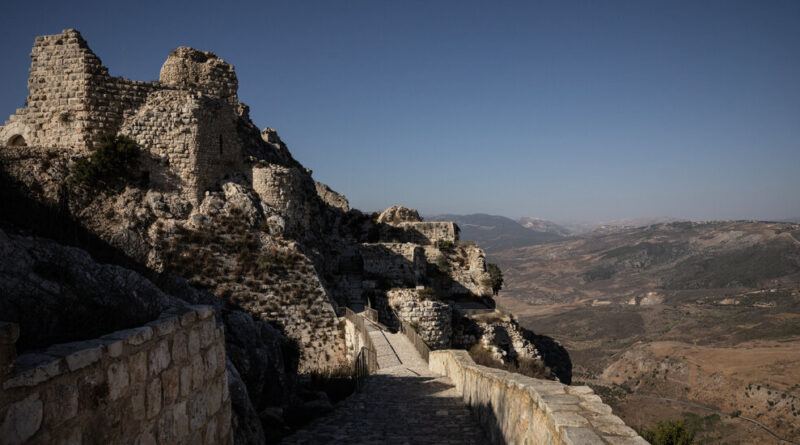
Israeli soldiers have captured a strategic hilltop crowned by the Crusader castle of Beaufort in southern Lebanon, the Israeli military announced on Sunday, part of the most sweeping Israeli invasion in the country in decades.
The seizure of Beaufort, while hailed by Israel’s top leaders, evoked bitter memories in both countries of the deadly fighting there during Israel’s nearly two-decade occupation of southern Lebanon. Israel finally withdrew in 2000 after a bloody insurgency led by Hezbollah, the Iran-backed militant group.
Now, more than a quarter century later, Hezbollah is once again fighting a guerrilla war against invading Israeli forces; Israeli leaders openly discuss a return to a long-term Israeli “security belt” in Lebanon to fend off Hezbollah attacks; and an Israeli flag flutters over the fortress at Beaufort.
Benjamin Netanyahu, the Israeli prime minister, praised the reconquest of Beaufort on Sunday as a “dramatic step” and vowed that Israeli forces would “deepen and expand” their control of territory in Lebanon.
But military experts said the fortified hilltop was unlikely to protect Israeli forces from Hezbollah’s cable-borne drones, which have led to mounting Israeli casualties. And simply occupying more territory in Lebanon was unlikely to subdue the militant group, they argued.
“The deeper in we go, the more troops we’ll need, the more vulnerable we’ll be, and the more casualties we’ll have” said Eyal Ben-Reuven, a retired Israeli general.
Talks between Israel and the official Lebanese government to crack down on Hezbollah, brokered by the Trump administration, have yet to achieve a breakthrough. But officials and analysts say they will most likely have to be part of any durable solution.
“Without a diplomatic process, nothing is going to be achieved,” said Mr. Ben-Reuven.
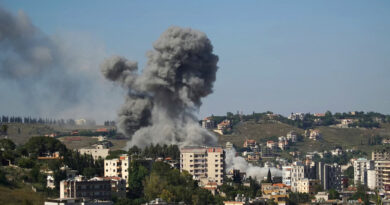
Israel has already declared much of southern Lebanon to be a combat zone, ordering the residents of major communities like Nabatieh to flee their homes. More than 1 million Lebanese are displaced, according to the United Nations, and Israeli forces are flattening villages close to the border with Israel.
Haim Har-Zahav, an Israeli writer who fought in Israeli-occupied Lebanon in the 1990s, said Israel’s return to Beaufort reflected how Israel could be barreling toward a similar occupation and war of attrition with Hezbollah. Mr. Har-Zahav, like many other Israelis, now sees that campaign as a strategic disaster.
Israel attacked Beaufort on the first night of its 1982 invasion of Lebanon against the Palestine Liberation Organization, which led to its 18-year occupation in the country’s south. Hezbollah and its allies ultimately forced Israel to withdraw. In the years since, the Iran-backed militants have fought multiple wars with Israel, mostly recently in 2024.
During the occupation, Beaufort later hosted an Israeli military outpost repeatedly pummeled by militant attacks that ultimately became a “a symbol for the entire Israeli presence in Lebanon,” added Mr. Har-Zahav. The fortress also became part of the popular consciousness in Israel because of an Oscar-nominated film.
The fighting in Lebanon has rattled the efforts to reach a broader agreement to end the war that Israel and the United States began against Iran in late February. Iran demanded a cease-fire between Israel and its ally Hezbollah as part of the talks, leading President Trump to declare a truce there in April.
Nearly two months later, the truce has effectively broken down. Near-daily Israeli strikes have killed hundreds in Lebanon since the truce, according to the Lebanese authorities. Hezbollah has fired on Israeli soldiers deployed inside Lebanon, killing roughly a dozen and wounding others, according to the Israeli military.
Mr. Netanyahu has come under increasing domestic pressure to ramp up Israeli attacks in Lebanon amid rising Israeli casualties. But analysts say his options are limited to avoid totally derailing the talks with Iran, which appear to be a higher priority for Mr. Trump.
Gershon Hacohena retired Israeli general, said the Israeli military believed taking Beaufort would serve as a show of force against Hezbollah. Israel had sought to capture the fortress in April, before the recent cease-fire, said General Hacohen, who was serving in the reserves at the time. But the operation was called off midway because of heavy Hezbollah fire, he said.
The latest war began in early March, when Hezbollah fired several rockets into northern Israel in solidarity with Iran after the U.S.-Israeli attack. In response, Israel launched a huge military campaign against Hezbollah that has killed more than 3,000 people in Lebanon, according to the Lebanese health ministry.
The Trump administration has sought to cinch a deal between Israel and Lebanon to stop the fighting and disarm Hezbollah. But the Lebanese military is far weaker than Hezbollah’s fighting forces, making a direct confrontation difficult. And as long as Israel remains in southern Lebanon, analysts say, the Lebanese government will have little legitimacy to move against the group.
Hassan Fadlallah, a Hezbollah official, argued on Sunday that the Israeli conquest of the castle showed that Lebanon was receiving nothing in its talks with Israel. Instead, he said, the images of the Israeli flag over the site should galvanize Lebanese to oppose the invasion.
Gabby Sobelman and Hwaida Saad contributed reporting.