
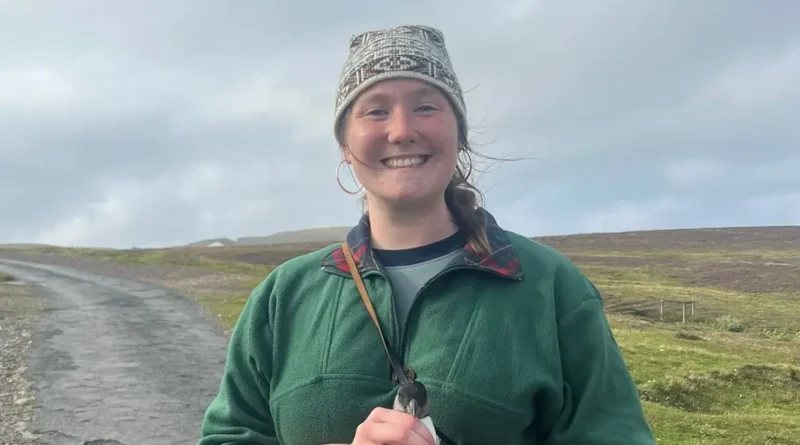
I live on a remote island with fewer than 60 people. There are a few things I wish I'd known before moving here.
Last year, when I packed up my life’s belongings into one big, blue suitcase, I didn’t know what to expect.
I was moving to Fair Isle: one of the UK’s most remote inhabited islandsand a place I hadn’t even visited before. My partner was working at the island’s bird observatory, where I was also about to start a job as a housekeeper.
A million thoughts, questions, and fears raced around my mind. I knew I’d be living in a rural place with under 60 residents, but I didn’t know what the weather would be like, what I would need on the island, or what the single shop there would sell.
I adapted quickly to remote-island life, but there are a few challenges that I never would have predicted.
It takes a lot of money, time, and luck to leave the island
Getting on and off the island can be tough. Maeve Howell
Fair Isle is over 800 miles away from where I grew up in the south of England, and the trip isn’t an easy one. Getting there from my hometown involves taking a train to Scotland, catching a ferry to Shetland, and then hopping on a short plane ride.
My parents have visited me once, but they’d likely come more often if it didn’t cost so much money and time to get here. Modern technology means I am only a phone call away, but sometimes a phone call isn’t enough, and it can be difficult to be so far from the people I’m closest to.
I’ve turned down countless birthday invites from friends back home and have missed many family events. If there were a family emergency (which, thankfully, hasn’t happened yet), I wouldn’t be able to head home right away like I might be able to if I lived anywhere else in Great Britain.
Even when I do try to leave the island, I’m not always able to. In Fair Isle, we live at the whims of the weather; the boat and plane that connect Fair Isle to mainland Shetland can be canceled at the last minute if the weather isn’t right, so travel is never guaranteed.
Back home, I would never think to check the forecast before catching a plane, but here, the weather determines everything. Even when the forecast shows sun, fog can roll in, making it unsafe to leave by plane or boat.
I’ve had to become a lot more organized
I’ve had to become much more of a planner since moving here. Maeve Howell
I didn’t anticipate how organized and resourceful I’d have to be on an island.
I’ve always been the person who panic-buys birthday presents at the last minute, or waits until the day of a costume party to plan my outfit. As somebody who’s always been a bit more spontaneous, I learned the hard way that island life requires organization.
Thanks to the unpredictable weathermail is often delayed, and even if I pay for expedited shipping, packages will still often get stuck waiting on mainland Shetland. Some companies won’t even ship mail to Fair Isle.
My partner’s birthday is at the end of August, and last year, I started ordering presents in late June just to make sure everything arrived in time. I never would have been this proactive at home, where Amazon Prime and late-night supermarkets have saved me so many times before.
Without the almost-instant gratification of same-day or next-day deliveryI also think much more intentionally about what I am purchasing and what I actually need for my life here — and whether I’m willing to wait for it to arrive.
Living among so much wildlife can have its ups and downs
Great Skuas can be protective of their young. Maeve Howell
Fair Isle is a wild and beautiful place. The nature here is amazing: When out walking, you’ll see puffins swirling above your head, sheep running around you, and rabbits scurrying about in the grass.
I didn’t expect this to impact my day-to-day life so much. Nesting birds are fiercely protective of their young, and during hatching season, the hills become full of angry seabirds.
Great shakes (or Bonxies, as they’re called here) will swoop down at anyone who comes near their nest and chicks, trying to hit you with their feet.
Other birds, like the Arctic skua and the Arctic tern, also swoop down and screech at you if you get anywhere near them. This makes walking around the northern half of the island more than challenging during the late spring and summer.
I’ve also been confronted with death in an all-new way. Spring brings with it the arrival of lambs, but also the brutal fact that not every lamb or ewe will survive childbirth.
The beginning of lambing season this year coincided with harsh, cold weather, and I found it so sad to encounter dead lambs while I was out walking. Back when I lived on the mainland, I was fairly sheltered from the realities of life and death, and I’m still adjusting.
Despite these challenges, it is such a privilege to be here and to have the opportunity to learn about and adapt to a different way of life.