Traders are spoiling for a fight over the yen
Unlock the Editor’s Digest for free
Roula Khalaf, Editor of the FT, selects her favourite stories in this weekly newsletter.
Two weeks after the historic joint US-Japanese effort to stop the rot in the yen, it is increasingly clear that the market is in the mood for a fight.
The Japanese currency did perk up, a fortnight ago, when US Treasury secretary Scott Bessent embarked on the first bilateral intervention in the yen since 1998. The New York Fed’s yen-buying endeavours helped to pull the dollar down from an eye-watering ¥164 to more like ¥156. In interventions, that is decent bang for your buck (or for your euro, in this case, since that is the currency Bessent chose to use on this occasion, startlingly, without consulting his European counterparts first).
It still could be the case that the presence of Uncle Sam in the yen market marks the peak in the exchange rate. After all, if anyone were to sell the yen in large amounts, who knows what retribution that might spark from a rankled US administration? Trade and defence policy are all interwoven with how the US sees its role as a global financial superpower, so it is rational to avoid angering the beast.
But markets in general, and currency markets in particular, are rarely driven by huge, lumpy trades where it is easy to identify an individual culprit for moves you don’t like. Instead, they synthesise the wisdom (or folly) of countless institutions and people. And right now, the masses are reloading their bets against the Japanese currency. Data from the Bank of New York shows that investors have been consistent and sizeable sellers of yen every day since the US intervention.
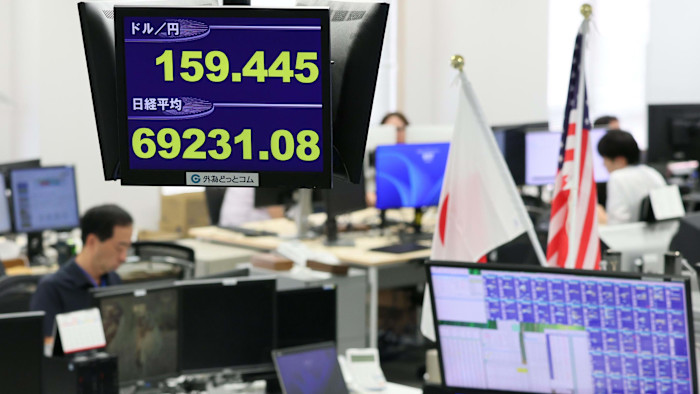
This has helped to take the exchange rate halfway back to where we started before the US jumped in. The dollar is back at ¥159 and all the ingredients are in place for it to keep wafting higher. The collision course is set.
In part, this is down to the so-called carry trade — a phenomenon with scary connotations given its long-running habit of hiccups and blow-ups that can shower seemingly unrelated markets with gunk.
Broadly, it describes the process whereby investors borrow in a cheap currency with low interest rates (hello, yen) and plough it into something higher-yielding or more exciting (hello, US government bonds and tech stocks, respectively). The carry trade ebbs and flows in popularity and notoriety, a soft indicator of wider speculative fervour. It thrives in the kind of low-volatility market environment now in play.
Opinion among analysts varies on the degree to which the carry trade is affecting the yen at the moment. It goes a long way towards explaining the extremes in the dollar-yen exchange rate, for sure. US government bond yields are extraordinarily high right now — the US government was forced to pay its highest borrowing cost for fresh 30-year debt this week since 2001. Japanese yields simply cannot keep pace. Some market watchers struggle to see the carry trade’s widespread impact elsewhere.
But Masayuki Nakajima at Mizuho Bank says several quirks in the yen market indicate it is exerting modest pressure on the currency. These include a rapid rise in transfers of yen from banks’ Tokyo branches to other branches abroad, often for use in higher-yielding foreign currency investments. Speculative net negative bets on the yen are also large by historical standards, despite a pullback after the US intervention. The timing of negative trades on the yen is also heavily weighted towards London and US trading hours — a hint that speculation is dominant rather than commercial considerations.
Last, the famed Japanese retail currency trader is back in business, gradually rebuilding negative yen positions against high-yielders such as the Turkish lira, Mexican peso and others.
The risk of a disorderly unwind of all this seems low, Nakajima said, for a host of reasons. The chance of higher Japanese interest rates, for example, is already extremely well understood, and the US economy does not appear close to a recession although surprisingly weak retail sales data on Friday was ominous. Still, he added: “If an unwind were to materialise, its impact would potentially weigh on a broad range of assets, from US technology equities to emerging market financial assets.”
Paradoxically though, as Nakajima points out, the very size of the yen carry trade may limit how aggressively policymakers can move against it.
Ultimately, the whole discussion about why the yen is so weak against the dollar circles around the same issues. As long as US debt yields are so high — lifted by sticky inflation and shakier US monetary policy credibility — and as long as the Bank of Japan sticks to a cautious path in interest rate rises, the yen remains a sell for the sprawling set of market participants that has already made good money out of this trade.
Intervention, joint or otherwise, is really likely to work only when those underlying factors shift. Even then, though, policymakers are no doubt aware that markets are very delicate ecosystems, with strands linking different elements that are not always obvious until they snap.
Yen bashers appear willing to keep testing Bessent’s nerve. Everyone else should look out for disruption if this morphs into a bigger battle.