How could extreme weather affect World Cup 2026?
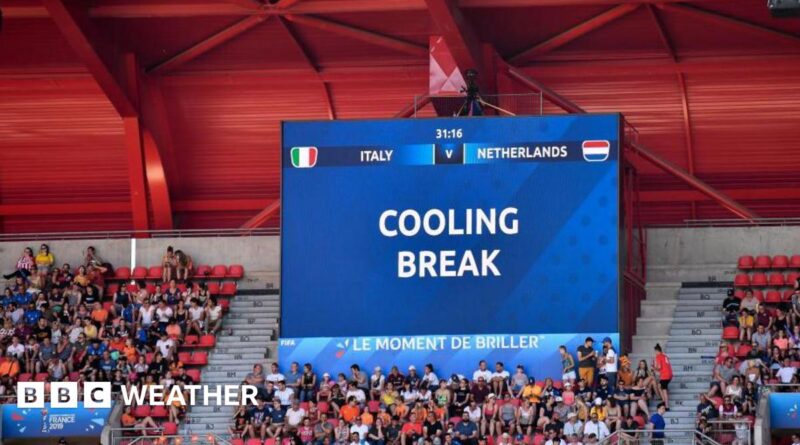
There are six host cities (Miami, Houston, Dallas, Monterrey, Kansas City and Atlanta) where the WBGT could feasibly reach at least 32C (90F) during the afternoon which would be considered as extreme heat stress where the body really struggles to keep itself cool.
To reduce these risks, matches are generally scheduled outside the hottest part of the day, with many kick-offs taking place in the late afternoon or evening. Scotland’s group C game against Brazil in Miami, for example, will have a kick-off time of 18:00 ET (23:00 BST).
Some venues, including stadiums in Houston and Dallas, also have retractable roofs and climate control to moderate conditions.
Summer heatwaves are also a common occurrence in North America and Mexico where temperatures can rise 10C (50F) or more above average, potentially pushing conditions into much more challenging territory for both players and fans.
In New York for example, the location of this year’s World Cup final on 19 July at 15:00 ET (20:00 BST), a typical heatwave could result in air temperatures in the mid-30sC (mid 90F) and WBGT of around 30C (86F) leading to extreme heat stress.