China gets around Iran blockade as Gulf courts Beijing
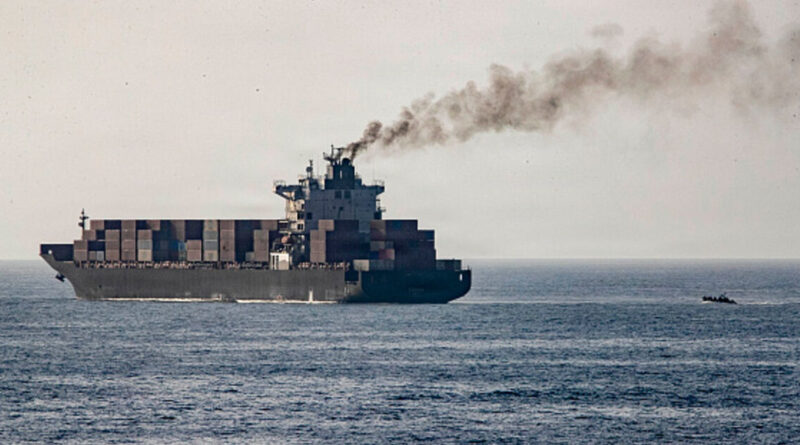
Despite ten days of a US blockade of Hormuz, 34 Iranian tankers slipped past the American militaryaccording to the ship-tracking firm Vortexa, underscoring how much oil is still finding a way through.
Iran’s ability to keep exporting oil has also been helped by a crucial buffer: crude already at sea. Vortexa estimated that more than 160 million barrels of Iranian crude and condensate are currently stored on floating tankers, awaiting delivery. At least 140 million of those barrels are reportedly beyond the blockade zone.
➡️ That matters for Beijing because the Hormuz route is not just about Iranian exports to China. It is also about energy security. Beijing has continued to receive shipments through the “dark fleet,” a shadowy network of tankers that obscure their ownership, destination, and cargo. One tanker seized by the US Marines during the blockade was reportedly listed as bound for China, while another vessel in the same network claimed to be headed for Singapore.
The larger point is that shutting this transit route has not been too detrimental for China. In addition to continuing to receive Iranian oil, Beijing has spent years building up large strategic reserves, giving it a cushion against supply disruptions. Kpler estimated in January that China had about 1.2 billion barrels of onshore crude stockpiles, a scale that allows it to absorb shocks far better than most importers.
🇨🇳 🇦🇪: While managing the oil supply situation, Beijing is also leaning into diplomacy with the Gulf states, especially Saudi Arabia and the UAE. On April 20, President Xi Jinping spoke with Saudi Crown Prince Mohammed bin Salman and urged an immediate ceasefire in the Middle East along with the preservation of normal navigation through Hormuz. The call was at the request of the Saudi leader, the South China Morning Post reported, and the message was clear: China is seen not only as an economic player, but also as a stabilizing diplomatic force when US diplomacy is falling short with Iran and protecting the Gulf states.
The UAE is also testing how far it can leverage Beijing in the current crisis. A Wall Street Journal report on Monday said Abu Dhabi had sounded out Washington about a financial backstop — a currency swap line — to remedy the fallout from the war. The request also carried an implicit warning: if the United States does not help, the UAE could lean more heavily on China, including potentially settling more oil transactions in yuan.
The Emirati academic Abdulkhaleq Abdulla reinforced that signal in public comments, writing that the UAE may need to reconsider whether US military bases, including Al Dhafra, remain worth hosting. He described the bases as a “burden” rather than a strategic asset, while also stressing that the UAE-US relationship would endure. Abu Dhabi wants to keep its options open, and China is one of them.
These warnings follow last week’s heavy Emirati diplomatic traffic to Beijing. As Rosaleen Caroll reported, Abu Dhabi Crown Prince Sheikh Khaled bin Mohamed bin Zayed met with Xi on April 14, and Chinese Foreign Minister Wang Yi held talks with the UAE presidential special envoy to China, Khaldoon Khalifa Al Mubarak, on April 13. Wang told the Emirati envoy that China “fully understands the legitimate security concerns of the Gulf Arab states.”
Joyce’s take: For Beijing, the longer the war goes, and the longer US President Donald Trump fails to achieve a strategic victory or a diplomatic breakthrough, the bigger the opening for China. By presenting itself as a reliable economic partner and a less politically intrusive power than Washington, China is capitalizing on the conflict, strengthening its position with Gulf states increasingly hedging amid regional turmoil while still obtaining oil.