
Tech's hottest job: Documentary filmmaker
Lume isn’t just a modern and expensive lamp; it doubles as a laundry folding genie. And to hype and humanize this alien-like robo housemaid before it starts shipping this summer, the company behind it, has launched an all-out, high-gloss social media video blitz.
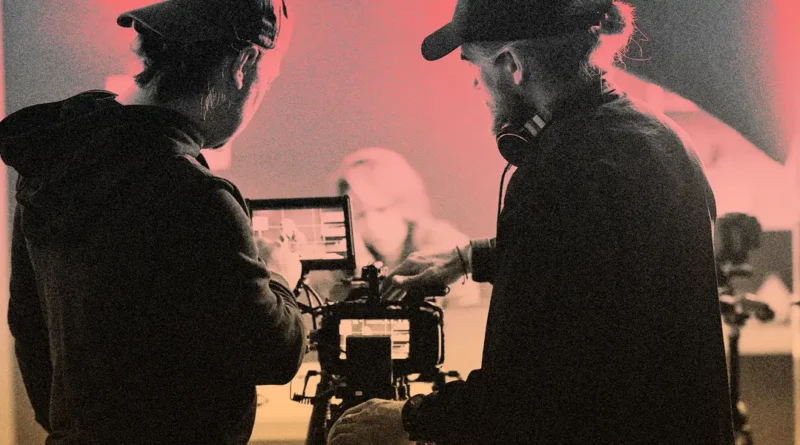
There’s a commercial launch video, a 10-minute-long documentary about Syncere’s founders, and a behind the scenes doc about the making of that doc. The documentary opens on a sunrise, follows the founders as they make coffee, shoot hoops in a driveway, work on the Lume prototype in a backyard, and eventually end the day sitting around a dining room table with family. The videos come from Offscript, a studio that describes itself as “a storytelling company, written by filmmakers, not advertisers,” for startups.
The rising trend of the cheeky and sleek launch video has “opened the floodgate for a lot of these tech companies and validated that there is a need for media,” says Alli Gooch, a 27-year-old filmmaker behind Offscript. “The documentary is just kind of like a higher-end version of building in public,” she says. “It all goes back to authenticity.” Nearly 50,000 people have watched the Syncere documentary on X over the past month, and more than 1 million have seen the launch video.
Founders’ desire to go directcircumventing traditional media outlets to tell their story straight to their customers without scrutiny, in part fuels this pivot to original, in-depth video. Companies are also granting access to these filmmakers as technology advances swiftly. Founders feel the pressure to make customers understand what a company does and why it matters in a sea of startups that might fail. So they’re splurging on star-treatment for themselves and their ideas.
Companies now “need to always be telling your company lore,” says Josh Machiz, chief marketing officer at venture capital firm Lightspeed. “In this moment in AI in Silicon Valley, you need to be documenting the history of your company.”
Blink, and you might miss the chance to capture your big breakthrough.
Storytelling has become one of the hottest corporate jobs. Frontier AI labs are opening communications roles with salaries of about half a million dollars, showing companies will pay a premium for someone who can make their corporate story a splash in a sea of AI slop. Founders will sit for hours-long podcast interviews with high-profile creators and shun traditional media. Andreessen Horowitz has its own news livestream that airs 8 hours a day. The venture firm also launched a New Media team last fall to give founders what they “need to win the narrative battle online.” It’s easier than ever to get an idea off the groundand online attention has never been more fractured.
James Lin, 23, previously worked as a neuroscience researcher at MIT, but says that AI may automate scientific research faster than moviemaking. James Lin
The most successful example of commanding attention comes from “The Thinking Game,” a nearly 90-minute-long documentary that follows Google DeepMind as they develop AlphaFold, a Nobel Prize-winning AI project to sequence proteins. The film took a conventional documentary route and premiered at the Tribeca Film Festival, then began streaming on (Google subsidiary) YouTube last fall; it’s since drawn more than 400 million views. The feature captured viewers like any other documentary, but Google, the doc’s subject, is its distributor.
Most startups don’t merit a feature-length film, but they still want to own conversation with short, sparkly videos on social media. Last year, more startups decided they needed launch videos, departing from a trend of leaving stealth mode via a LinkedIn post. A romcom video from the “cheat on everything” AI app Cluely garnered 13 million views on X. Friendthe much maligned white pendant AI companion, has released videos over the past year following users — including a woman who says she had a seizure while filming the short doc, and then quickly checks to make sure her companion is ok. Authenticity and humanity matter to consumers, particularly when you’re trying to sell them on your AI startup. In a video announcing its new affordable MacBook Neo, Apple played with the idea that their laptops are human-made, illustrating a pair of hands crafting the various features.
“There’s an acknowledgement that being able to present well on the internet has potentially huge outsized returns, and knowing how to engineer attention, command attention is extremely valuable,” says Donald Jewkes, a 26-year-old software engineer-turned-filmmaker, who has worked on short videos about robotics and AI coding.
Jewkes released a 15-minute mini doc about Jmail, a project friends of his made to house Jeffrey Epstein’s emails in a Gmail-like interface, last month. They built Jmail in just five hours, and more than 150 million people used it. Jmail’s rise to virality is a small slice of the rampant news cycle around the Epstein files that could have gone undocumented, but Jewkes and his camera stepped in quickly after to interview the people behind the project. “The inner workings and the behind the scenes, what it felt like to be there — all of those would have been lost,” Jewkes says. “I really felt the need to try and capture that and to have that on display for the world.”
Companies need smart marketing to make themselves likeable in an era where innovation can feel like impending chaos for many. The public perception of AI has cooled. The only topics more unpopular among respondents to a March poll from NBC were the Democratic party and Iran. Videos of humanoid robots on social media often freak people out. Scandals at companies like FTX and Theranos have raised the onus for startups to show investors the receipts on what they’re building.
These new era documentarians don’t see themselves as oppositional journalists or the sort of commercial marketing a film agency might make. They’re broadcasting a message about where future innovation is moving. “We’re pretty aligned on what we’re trying to tell, which is the story of technological and scientific progress,” James Lin, a 23-year-old filmmaker, says of the companies he works for and his own interests. He’s not following a company to expose scandal, but says, if he saw Theranos-like fraud or actions that didn’t jibe with his values, he would think: “I can’t continue on with this project, this doesn’t feel right.”
Lin’s camera skills come mostly self-taught. He studied neuroscience, previously working as a researcher at MIT, but says that AI may drastically shift the nature of scientific research faster than automation eclipse filmmakers. “Once robotics starts to scale, they’re going to be able to do science really well,” Lin says, telling me that he started working with friends (including Jewkes) on a viral launch video for Waves, which makes camera glasses. Now, he’s following biotech companies, and says his background in neuroscience helps him to parse the complicated topic and communicate it. “I’m not so interested in the drama as much as I am in, how does science happen?”
The tech-friendly, new media era is a boon to startups. People hate traditional ads, but younger viewers demand authenticity from the brands they support. As AI lowers the bar to creating content, the demand for quality lifts. “We’re all in on tech,” says Juliana Glodek, who also helms Offscript. “We can tell these stories that are on the bleeding edge of history.”
Amanda Hoover is a senior correspondent at Business Insider covering the tech industry. She writes about the biggest tech companies and trends.
Business Insider’s Discourse stories provide perspectives on the day’s most pressing issues, informed by analysis, reporting, and expertise.