Child Marriage and the Quran: Why 4:6 Must Come Before 65:4
The Argument to End All Arguments
The debate over child marriage and the Quran often begins with 65:4, a verse concerning divorce. But that is the wrong place to start. Before asking what happens when a marriage ends, we must first establish who is eligible to enter one.
Consider a simple analogy. Suppose one law states that only licensed drivers may operate a vehicle, while another establishes procedures for drivers involved in accidents. We would not use the second law to conclude that unlicensed individuals are permitted to drive. The rules governing what happens after an accident do not determine who was legally permitted to drive in the first place.
Yet this is precisely the reasoning employed when Quran 65:4 is cited as permission for child marriage. The verse addresses the waiting periods of divorced women who do not menstruate, but some interpret this as evidence that prepubescent girls are eligible for marriage. This reverses the proper order of reasoning: a regulation concerning divorce cannot, by itself, establish eligibility for marriage.
Instead, we must first examine what the Quran says about marriageability. The relevant starting point is Quran 4:6:
[4:6] You shall test the orphans until they reach the age of marriage (al-nikāḥ). So if you ascertain in them intellectual maturity (rushd), you shall hand over to them their properties. You shall not consume it extravagantly or hastily, lest they grow up. If the guardian is rich, he shall abstain from using it, and if he is poor, he shall use it in moderation. When you hand over their properties to them, you shall have witnesses. GOD suffices as Reckoner.
وَابْتَلُوا الْيَتَامَىٰ حَتَّىٰ إِذَا بَلَغُوا النِّكَاحَ فَإِنْ آنَسْتُمْ مِنْهُمْ رُشْدًا فَادْفَعُوا إِلَيْهِمْ أَمْوَالَهُمْ ۖ وَلَا تَأْكُلُوهَا إِسْرَافًا وَبِدَارًا أَنْ يَكْبَرُوا ۚ وَمَنْ كَانَ غَنِيًّا فَلْيَسْتَعْفِفْ ۖ وَمَنْ كَانَ فَقِيرًا فَلْيَأْكُلْ بِالْمَعْرُوفِ ۚ فَإِذَا دَفَعْتُمْ إِلَيْهِمْ أَمْوَالَهُمْ فَأَشْهِدُوا عَلَيْهِمْ ۚ وَكَفَىٰ بِاللَّهِ حَسِيبًا
Although the verse directly concerns the management of an orphan’s property, it uses reaching marriageable age as a recognized developmental threshold. Marriageability is something a person must attain, not a qualification automatically possessed from birth. The verse then connects that threshold with testing and the demonstration of sound judgment (rushd).
This raises the central question of the article: What does it mean to reach marriageable age, and what role does maturity play in determining whether someone has reached it?
Only after establishing this standard can we properly evaluate what Quran 65:4 does—and does not—tell us about marriage.
Marriage Is a Threshold That Must Be Reached
The phrase is balaghū al-nikāḥ, “they reached marriage.” Something that must be reached is not possessed from birth. If a person could be married at any age, every orphan would already have “reached marriage” in infancy, and the clause would mark nothing.
This holds on every reading, including the traditional one. If balaghū al-nikāḥ means puberty, then a prepubescent child has not reached it. No interpretation of this phrase leaves room for marrying a child.
The Quran also has a separate word for bodily puberty:
When your children reach puberty (al-ḥulum), they shall also ask permission, like those before them. GOD thus explains His revelations for you. GOD is Omniscient, Wise. (24:59)
وَإِذَا بَلَغَ الْأَطْفَالُ مِنكُمُ الْحُلُمَ فَلْيَسْتَأْذِنُوا كَمَا اسْتَأْذَنَ الَّذِينَ مِن قَبْلِهِمْ ۚ كَذَٰلِكَ يُبَيِّنُ اللَّهُ لَكُمْ آيَاتِهِ ۗ وَاللَّهُ عَلِيمٌ حَكِيمٌ
When the Quran means puberty, it says ḥulum. In 4:6 it says nikāḥ, the stage of readiness for marriage.
Testing Ends at Marriageability, and Testing Is for Sound Judgment
Quran 4:6 tells guardians to test orphans until they reach marriageable age (al-nikāḥ), and then, if they demonstrate intellectual maturity (rushd), to hand over their property. The question is whether marriageable age and sound judgment are two unrelated qualifications or whether they are connected.
Consider an orphan who reaches puberty at thirteen but still lacks the intellectual maturity to manage their property. If puberty alone determines marriageable age, then the instruction to test the orphan has reached its endpoint. Yet the very quality the guardian is looking for—rushd—has not been established.
How, then, is the guardian supposed to know when the orphan finally develops sound judgment if the testing was only supposed to continue until puberty? One could argue that the guardian should simply continue testing, but that requires extending the process beyond the endpoint stated in the verse.
A more coherent reading is that sound judgment is part of what determines whether someone has reached marriageable age in the first place. The purpose of testing is to establish maturity, so the testing naturally concludes when that maturity has been demonstrated.
This also helps explain why the Quran specifies no numerical age. Marriageability is not determined solely by a birthday or a biological change, but by the attainment of a level of maturity that must be assessed individually.
“Then If” or “So If”? The Small Word Inside 4:6
The key phrase in 4:6 is this: ḥattā idhā balaghū al-nikāḥ fa-in ānastum minhum rushdan. Translations render it “until they reach marriage, then if you perceive in them sound judgment.” Read that way, the verse describes two separate stages: first the orphan reaches marriage, and only afterward does a further condition, sound judgment, come into play as an additional requirement.
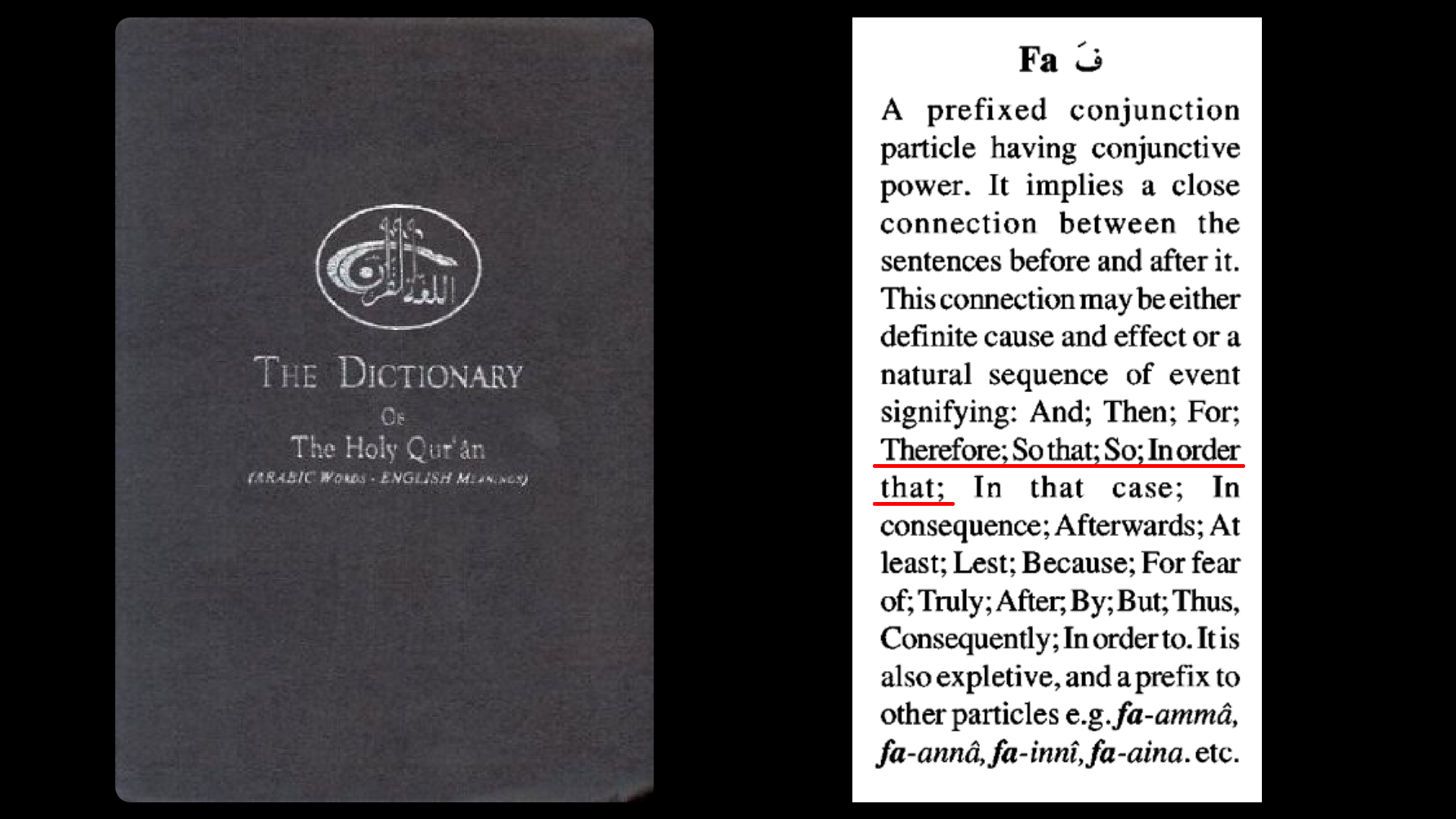
But “then” is not in the Arabic. The word is fa-, and it does not mean “then” by default. The Dictionary of the Holy Quran describes it as a conjunction implying a close connection between the sentence before it and the sentence after it, a connection that may be cause and effect or simple sequence. Among the renderings it lists are “therefore,” “so,” “in that case,” and “in consequence,” alongside “then” and “afterwards.” Which of these fits is decided by the context, not by the particle itself.
The Quran uses fa-in in exactly this way elsewhere. Take the verse on how many wives a man may marry just a few verses before:
[4:3] If you deem it best for the orphans, you may marry their mothers—you may marry two, three, or four. But if you fear lest you become unfair, then one, or with what you already have. Additionally, you are thus more likely to avoid financial hardship.
وَإِنْ خِفْتُمْ أَلَّا تُقْسِطُوا۟ فِى ٱلْيَتَٰمَىٰ فَٱنكِحُوا۟ مَا طَابَ لَكُم مِّنَ ٱلنِّسَآءِ مَثْنَىٰ وَثُلَٰثَ وَرُبَٰعَ فَإِنْ خِفْتُمْ أَلَّا تَعْدِلُوا۟ فَوَٰحِدَةً أَوْ مَا مَلَكَتْ أَيْمَٰنُكُمْ ذَٰلِكَ أَدْنَىٰٓ أَلَّا تَعُولُوا۟
Nobody reads this as chronology, as though a man first marries four wives and afterward discovers whether he feared injustice. The fa-in clause is a condition attached to the statement before it, and it tells us how far that statement applies. It supplies the criterion.
A second example appears in the same sura, in the verse on those who are exempt from fighting:
[4:90] Exempted are those who join people with whom you have signed a peace treaty, and those who come to you wishing not to fight you, nor fight their relatives. Had GOD willed, He could have permitted them to fight against you. Therefore, if they leave you alone, refrain from fighting you, and offer you peace, then GOD gives you no excuse to fight them.
إِلَّا ٱلَّذِينَ يَصِلُونَ إِلَىٰ قَوْمٍۭ بَيْنَكُمْ وَبَيْنَهُم مِّيثَٰقٌ أَوْ جَآءُوكُمْ حَصِرَتْ صُدُورُهُمْ أَن يُقَٰتِلُوكُمْ أَوْ يُقَٰتِلُوا۟ قَوْمَهُمْ وَلَوْ شَآءَ ٱللَّهُ لَسَلَّطَهُمْ عَلَيْكُمْ فَلَقَٰتَلُوكُمْ فَإِنِ ٱعْتَزَلُوكُمْ فَلَمْ يُقَٰتِلُوكُمْ وَأَلْقَوْا۟ إِلَيْكُمُ ٱلسَّلَمَ فَمَا جَعَلَ ٱللَّهُ لَكُمْ عَلَيْهِمْ سَبِيلًا
Here the translation itself renders fa-in as “Therefore, if.” The first half of the verse names a category of people who are exempt: those bound by treaty to a party at peace with you, and those who come to you unwilling to fight either you or their own relatives. The fa-in clause does not introduce a new group or a later event. It states the criteria by which that exemption is recognized: if they withdraw from you, do not fight you, and offer peace, then you have no grounds to fight them. The preceding clause names the category, and the fa-in clause tells us what marks someone as belonging to it. That is “therefore” in the sense of “so, on that basis,” and it is the same particle that stands in 4:6.
Now return to 4:6 with the same understanding of the particle: “Test the orphans until they reach marriage; therefore if you perceive in them intellectual maturity, hand over to them their properties.” On this reading, the clause after fa- is not a second hurdle placed beyond marriageability. It tells the guardian how to recognize that the orphan has reached it. The testing runs until marriageability; the thing that marks marriageability is sound judgment, and when that is found, the property is handed over.
This is the reading that fits everything else in the verse. It matches what the testing is for and where it ends, which was the point of the earlier section. It matches the context of 4:4–6, where marriage and control of one’s own property are treated as one stage. And it fits the Arabic, because the particle that links the two clauses is one the Quran regularly uses to attach a condition to what comes before it, not to mark a later date.
[4:6] You shall test the orphans until they reach the age of marriage (al-nikāḥ). Therefore, if you ascertain their intellectual maturity (rushd), you shall hand over to them their properties. You shall not consume it extravagantly or hastily, lest they grow up. If the guardian is rich, he shall abstain from using it, and if he is poor, he shall use it in moderation. When you hand over their properties to them, you shall have witnesses. GOD suffices as Reckoner.
وَابْتَلُوا الْيَتَامَىٰ حَتَّىٰ إِذَا بَلَغُوا النِّكَاحَ فَإِنْ آنَسْتُمْ مِنْهُمْ رُشْدًا فَادْفَعُوا إِلَيْهِمْ أَمْوَالَهُمْ ۖ وَلَا تَأْكُلُوهَا إِسْرَافًا وَبِدَارًا أَنْ يَكْبَرُوا ۚ وَمَنْ كَانَ غَنِيًّا فَلْيَسْتَعْفِفْ ۖ وَمَنْ كَانَ فَقِيرًا فَلْيَأْكُلْ بِالْمَعْرُوفِ ۚ فَإِذَا دَفَعْتُمْ إِلَيْهِمْ أَمْوَالَهُمْ فَأَشْهِدُوا عَلَيْهِمْ ۚ وَكَفَىٰ بِاللَّهِ حَسِيبًا
The Context of 4:4–6: Marriage and Control of One’s Own Property
Quran 4:6 does not stand alone. It is the third in a run of three consecutive verses, and the three have to be read together, in order, because each one answers a question the previous one raises.
[4:4] You shall give the women their due dowries, graciously. If they willingly forfeit anything, you may gladly keep it.
وَآتُوا النِّسَاءَ صَدُقَاتِهِنَّ نِحْلَةً ۚ فَإِن طِبْنَ لَكُمْ عَن شَيْءٍ مِّنْهُ نَفْسًا فَكُلُوهُ هَنِيئًا مَّرِيئًا
[4:5] Do not give immature orphans the properties (wealth) that GOD has entrusted with you as guardians. You shall provide for them therefrom, and clothe them, and treat them kindly.
وَلَا تُؤْتُوا۟ ٱلسُّفَهَآءَ أَمْوَٰلَكُمُ ٱلَّتِى جَعَلَ ٱللَّهُ لَكُمْ قِيَٰمًا وَٱرْزُقُوهُمْ فِيهَا وَٱكْسُوهُمْ وَقُولُوا۟ لَهُمْ قَوْلًا مَّعْرُوفًا
[4:6] You shall test the orphans until they reach the age of marriage (al-nikāḥ). Once you ascertain their intellectual maturity (rushd), you shall hand over to them their properties (wealth) . You shall not consume it extravagantly or hastily, lest they grow up. If the guardian is rich, he shall abstain from using it, and if he is poor, he shall use it in moderation. When you hand over their properties to them, you shall have witnesses. GOD suffices as Reckoner.
وَابْتَلُوا الْيَتَامَىٰ حَتَّىٰ إِذَا بَلَغُوا النِّكَاحَ فَإِنْ آنَسْتُمْ مِنْهُمْ رُشْدًا فَادْفَعُوا إِلَيْهِمْ أَمْوَالَهُمْ ۖ وَلَا تَأْكُلُوهَا إِسْرَافًا وَبِدَارًا أَنْ يَكْبَرُوا ۚ وَمَنْ كَانَ غَنِيًّا فَلْيَسْتَعْفِفْ ۖ وَمَنْ كَانَ فَقِيرًا فَلْيَأْكُلْ بِالْمَعْرُوفِ ۚ فَإِذَا دَفَعْتُمْ إِلَيْهِمْ أَمْوَالَهُمْ فَأَشْهِدُوا عَلَيْهِمْ ۚ وَكَفَىٰ بِاللَّهِ حَسِيبًا
Notice what the three verses are doing together. Verse 4 says the bride controls her dowry. Verse 5 says the immature must not be given control of property. Verse 6 says the immature stop being immature when they reach marriageable age by showing sound judgment. Taken as a whole, the passage is a single teaching about when a person becomes responsible for their own wealth, and it uses marriage as the measure.
This is where the context rules out any other reading. Suppose a child could be a bride. Then the same girl would be the woman whom 4:4 tells us to give her dowry to, and whose decision to waive it we are to respect, and also the immature person whom 4:5 forbids anyone to entrust with property. The two verses, sitting side by side, would contradict each other. They agree only if the bride is not among the immature, which means only if marriage belongs to the stage 4:6 describes, the stage at which a person has reached marriage and can be handed their property.
The choice of marriage as the measure is not accidental either. The Quran could have named any benchmark for readiness to manage wealth, and it named marriage, because marriage is where a person steps into binding financial life. A bride receives a dowry (4:4), may waive part of it (2:237), and enters obligations that run through money. A person who is ready for that step is a person who can be trusted with their own property, and a person who cannot be trusted with their own property is not ready for it.
The verse says as much in its own wording: ḥattā idhā balaghū al-nikāḥ fa-in ānastum minhum rushdan fa-dfaʿū ilayhim amwālahum, “until, when they reach marriage, then if you perceive in them sound judgment, hand over to them their properties.” Marriage, sound judgment, and control of one’s wealth follow one another in a single sentence, with nothing between them.
The last clause of the verse confirms it. The handover has to be witnessed, because the orphan now stands as an independent party who can later question how the guardian managed their wealth. That is the position of a full legal person. A child is not in that position, and the Quran would not have made marriage the benchmark for reaching it if marriage could be entered before it.
The Quran gives no number because its measure is the person. Someone who has reached marriage is someone who can hold, manage, and dispose of their own property. A child can do none of these things, and so a child has not reached marriage.
The Verdict
Quran 3:7 divides the Book into foundational verses and multiple-meaning ones, and warns against pursuing the multiple-meaning ones to distort the foundational.
[3:7] He sent down to you this scripture, containing straightforward verses—which constitute the essence of the scripture—as well as multiple-meaning or allegorical verses. Those with perversity in their hearts will pursue the multiple-meaning verses to create confusion, and to extricate a certain meaning. None knows the true meaning thereof except GOD and those well founded in knowledge. They say, “We believe in this—all of it comes from our Lord.” Only those who possess intelligence will take heed.
The foundation of the Quran is not obscure. It commands justice, even against one’s own interests (16:90, 4:135). It commands protection of orphans and the vulnerable (4:2, 4:10, 4:127). It describes marriage as tranquility, affection, and mercy (30:21), and forbids using it as an instrument of harm (2:231). On the question of who may marry, the foundational text is 4:6, and it points the same way. To take an anomalous reading of 65:4 and use it to argue that the Quran permits child marriage is exactly what 3:7 warns against: pursuing a multiple-meaning clause in order to overturn the foundational verses.
When we read 4:6, the criteria for marriageability are clear, and with them any uncertainty about children disappears. A child who was never eligible to marry has no marriage to be divorced from. The verse tells us that marriage is a threshold that must be reached. No one possesses it from birth, and even the traditional reading of the phrase as puberty excludes a child. It tells us that the guardian’s testing ends at that threshold and exists to establish sound judgment, which places maturity inside the threshold and not somewhere after it.
Read together with the verses around it, 4:6 also ties marriage to the control of one’s own property. Verse 4 puts the dowry in the bride’s hands, verse 5 forbids putting property in the hands of the immature, and verse 6 says the immature stop being immature when they reach marriage and show sound judgment. A child bride would have to be both the woman who controls her dowry and the immature person who cannot be trusted with property, and the two verses would contradict each other. They agree only if marriage belongs to a person who has reached the stage 4:6 describes, a person who can be handed their wealth in a witnessed transfer as a full party in their own right.
Against all of this stands a single clause in the sura on divorce. It regulates waiting periods, describes a physiological condition and not an age, and does not mention children. As the driver analogy shows, a rule about what happens after a marriage ends cannot tell us who was permitted to enter it. Eligibility was settled before 65:4 begins to speak.
The Quran does not set a number because it sets a standard: marriage is for the person who has reached it, the person who can hold, manage, and answer for their own life and property. A child has not.