
Taiwan's chip show will go on, with or without Jensen Huang
Jensen Huang is the face of TSMC’s biggest customer and one of its most famed supporters, but the firestorm surrounding his affair likely won’t dent business for the foundry, analysts say.
Even if the Nvidia CEO steps down, there shouldn’t be much direct impact on the Taiwanese firm, which builds over 90% of the world’s most advanced microchips and raked in $122 billion last year, they told Business Insider.
“We believe the demand for leading-edge wafers is larger than any one executive, and we see there’s no sign of Nvidia slowing down or actually cutting orders from TSMC yet,” said William Li, a senior analyst at tech market research firm Counterpoint Research.
“At this point, we don’t really see an impact from this Nvidia fiasco on them,” said Gaurav Gupta, VP analyst and chief of research for emerging market dynamics at advisory firm Gartner.
Huang has been the center of a scandal that concerns his relationship with Alice Huang, a woman The New York Times reported was suspected by US officials of passing information to Beijing.
The CEO and founder of the $4.5 trillion Nvidia admitted in a memo to employees on Sunday that he had engaged in an extramarital affair, though he did not say with whom. Nvidia’s board is investigating whether Huang was the target of a “foreign intelligence effort.”
Hometown hero
In the last few years, Huang has become one of the highest-profile names in the AI industry, much of which is powered by Nvidia’s graphics processing units. TSMC, meanwhile, relies heavily on Nvidia’s business, which is its biggest customer and contributes to about a fifth of the foundry’s revenues.
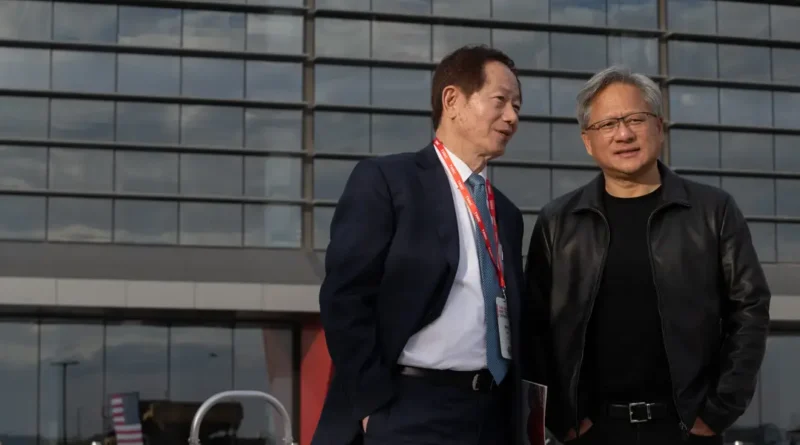
It’s a relationship bolstered by Huang’s Taiwanese roots, with the CEO often visiting his hometown to promote its role — and that of TSMC’s — in the AI boom.
Lam Yik Fei/Bloomberg via Getty Images
Losing Huang himself isn’t the challenge that TSMC, or Taiwan Semiconductor Manufacturing Company, should worry about, the analysts said.
“Demand for AI Infrastructure build-out is strong in a supply constrained environment,” said Gupta, adding that tech leaders “shouldn’t get distracted” by the investigation into Huang.
How TSMC might get hit
For TSMC, the most prominent threat from Huang’s scandal could instead come from Washington.
The US has long tried to cut off China from the best computing hardware that Nvidia has to offer, a move that Huang has chafed against. The scrutiny around his relationship with Alice Huang now opens difficult questions for him, since she was an executive at Megaspeed, a Singapore-registered firm that US officials suspected was illegally sending Nvidia chips to China.
“The channels that could actually reach Taiwan are policy-driven, not tied to the scandal itself — mainly tighter export controls and more scrutiny of chips being diverted to China,” said Li.
That could dent the GPU-maker’s revenues and in turn affect TSMC. But it’s a stretch, analysts said.
Even if Nvidia’s China revenues drop, other parts of the US hyperscale AI industry, hungry for computing power, will likely fill in the gap to buy up TSMC’s chips, Li said.
Taiwan’s supply chain and TSMC are just too central to the AI industry, Gupta added.
“Only if any leadership changes or security findings implicate Nvidia and that negatively impacts investor confidence or slowdown in dealmaking, could it slow down some of the AI data center buildout,” Gupta said.
Still, he added, that trend would hit the entire semiconductor industry, not just TSMC.
When asked about Huang’s scandal and its potential impact on Nvidia’s relationship with TSMC, an Nvidia spokesperson told Business insider: “Our partnership with TSMC and the broader supply chain is strong as always.”
TSMC did not respond to a comment request sent outside regular business hours by Business Insider.