
Inside a deadly Tesla Autopilot failure, and the missing crash data that revealed what happened
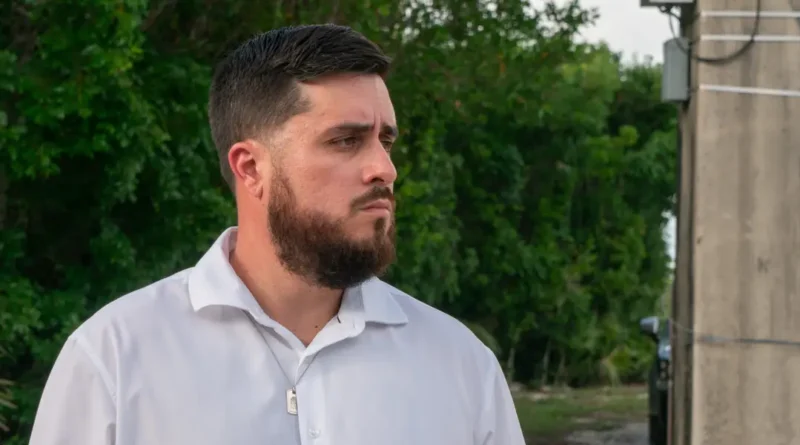
The last thing Dillon Angulo says he remembers is pulling over to see the stars. It was around 9:15 on April 25, 2019, in Key Largo, Florida. He and Naibel Benavides had been inseparable since their first date a few weeks earlier. Angulo, a bearded, stocky 27-year-old Cuban American, was studying general contracting at Florida International University. Benavides, an ebullient 22-year-old with long, curly hair, had recently moved to Miami from Cuba to live with her mother and become an optometrist. They shared a passion, as Angulo puts it, “to build a better life.”
During his birthday dinner, she told him that she’d been accepted to an optometry school in New York City. For a moment, he was shattered, but then she said she wasn’t moving. “I’m gonna stay to be with you,” she said. She made plans to introduce Angulo to her mom. Later that week, he drove her down to the Keys in his black Chevy Tahoe to catch fish so he could cook them his go-to recipe: fresh-grilled yellowtail with a side of mushroom risotto. Outside the bait shop, they snapped a selfie: him in his Miami Dolphins hat and a black T-shirt, her in a white crocheted shirt, smiling.
Courtesy of Dillon Angulo
The rest of the night comes to him in fragments. Her phone fell in the water when they were out on the boat. She used his phone to call her mother and remind her they were coming for dinner the next day. He filleted the yellowtail on the dock. A clear night fell. On the way back to Miami, he saw heavy traffic ahead on US-1. To avoid it, he took Card Sound Road, an old two-lane street cutting through a strip of undeveloped wetlands and twisted green mangroves.
The road was unlit, so dark that the stars looked their brightest. Angulo wanted to show her, so at the end of the road, he pulled off behind the T-intersection signs onto a gravel patch. They stepped out of the truck. He’s not sure how long they were standing there before he saw headlights speeding toward them. “I’m like, where’s that car coming from?” he recalls. Then the stars went black.
This is the story of what happened next, drawn from thousands of pages of court filings, depositions, and extensive interviews. What began as a routine car crash investigation evolved into a yearslong saga involving Elon Musk, Tesla lawyers, police investigators, independent safety researchers, and a reclusive Russian-born hacker known only as Green. At the center is a question that came to define one of the most consequential cases in self-driving history: What happened to the data that explained how the crash unfolded on Card Sound Road? The answer reveals how a fight over a single glovebox computer became a referendum on Tesla’s self-driving technology, its safety claims, and its handling of evidence after deadly accidents.
Two and a half years before the crash, on October 20, 2016, Musk posted a video on Twitter with a caption: “Tesla drives itself (no human input at all) thru urban streets to highway to streets, then finds parking spot.” The video opens with a man climbing into his black Model X in a suburban driveway. He lets his hands drop from the wheel as the car pulls forward on its own. For the next three and a half minutes, set to the Rolling Stones’ “Paint It Black,” the Tesla glides itself through city streets, merges onto a highway, and finally arrives at the company’s Palo Alto headquarters. The car was guided by Autopilot, the company’s semi-autonomous driver assistance system, which uses cameras, radar, and sensors to steer, accelerate, and brake on its own. “The person in the driver’s seat is only there for legal reasons,” reads a message in the video. “He’s not doing anything. The car is driving itself.”
A series of Tesla crashes suggested a more troubling reality. Earlier that year, Joshua Brown, a 40-year-old Navy veteran, was killed in Florida when his Model S struck a semitrailer turning across the highway, while his Autopilot was engaged. The car was traveling around 74 miles per hour in a 65 zone (Autopilot allowed the driver to manually set the speed) and made no attempt to brake. Tesla’s explanation was that neither the Autopilot system nor the driver had seen the white truck against a brightly lit sky. In the 37 minutes before impact, Brown had his hands on the wheel for around 25 seconds.
NTSB; Courtesy Robert VanKavelaar/Handout via Reuters
The National Transportation Safety Board called out Tesla for fostering Brown’s disengagement. “The system gave far too much leeway to the driver to divert his attention to something other than driving,” NTSB Chairman Robert Sumwalt said at a board meeting.
Tesla has countered that its owner’s manual and instructional materials explicitly warn that Autopilot requires constant driver attention and isn’t a self-driving system.
Two years later, on March 23, 2018, Walter Huang, a 38-year-old software engineer at Apple, died when his Model X veered left and slammed into the concrete divider on Highway 101. When his widow sued Tesla, the company denied responsibility, arguing that Huang was an inattentive driver who had been playing games on his phone at the time of the crash. His widow disagreed, arguing that Tesla’s marketing made her husband and millions of other owners believe in a fantasy that the car could drive itself. Tesla settled for an undisclosed amount the day before the trial was set to begin.
On March 1, 2019, Jeremy Banner, a 50-year-old father of three, was heading to work before dawn on Highway 441 in Delray Beach, Florida, when he switched his red Model 3 onto Autopilot. A tractor-trailer was pulling out of a private driveway at a farm, and the NTSB’s crash report found that the Autopilot’s vision system didn’t detect it. The car, which was going 68 mph in a 55 zone, didn’t warn Banner, and it slammed into the truck, which sheared off its roof as it passed under the trailer. Banner died instantly. Still on Autopilot, his car continued driving his body down the highway for another 40 seconds.
The NTSB had warned Tesla after Brown’s death to restrict Autopilot to the roads for which it was designed: limited-access interstate highways, where there are no intersections, driveways, or crossing traffic. But the company had not built in any technical safeguards to prevent drivers from switching it on anywhere the car detected lane markings. Four years later, the NTSB’s chairwoman wrote directly to Musk to say Tesla had not responded to these recommendations.
Then came the crash in Key Largo. Florida Highway Patrol Traffic Homicide Investigator Cpl. David Riso, a former military police investigator for the US Army, arrived at the scene after a 911 call from driver George McGee. Riso found McGee, 44, pacing in a daze alongside his smashed black Model S. The front right side of the Tahoe McGee had plowed into was crushed. Angulo lay on the ground face up, shirtless, blood streaming from his mouth, groaning, unable to speak. His pelvis and jaw were shattered, and his brain was bleeding. Riso saw no other victims and assumed Angulo must have been driving alone.
More cops arrived. One recorded the scene on a bodycam. McGee said he’d been on a call booking a flight when he dropped his phone, and fished around to find it. “The minute I sat up, I hit the brakes and saw his truck,” he told officers. He’d slammed on the brakes too late. But still it shouldn’t have happened, he said. “I’ve been using cruise control,” he said, meaning Autopilot. McGee, a managing partner at a private equity firm who commuted from Boca Raton, had recently bought the Tesla so that he could use Autopilot on his 100-mile night drives home to a gated community in Key Largo. McGee did not respond to requests for comment.
Riso and the cops searched the crash scene with flashlights. “I think there’s a passenger,” Riso heard another officer say. Over 115 feet away, Naibel Benavides’s body lay in a tangled patch of brush. Riso filed his report and began his homicide investigation.
In the days after, Riso filed warrants to obtain the usual evidence needed to prove who was responsible and what happened. He needed the airbags to study the DNA evidence, the data recorder that detailed its deployment, and everything stored on the Tesla’s central dashboard tablet: connected device activity, GPS and speed records, McGee’s typical route patterns. He needed all the logs that might prove whether Autopilot had been engaged, and whatever the car’s eight cameras had captured in the moments before impact.
Riso retrieved the hardware from the car, including the Autopilot computer — a flat silver box with multicolored video cables coming out of it, tucked above the glovebox. He called the NTSB for guidance. Every car with Tesla Autopilot, the agency told him, was engineered to automatically generate and transmit crash data to Tesla’s headquarters immediately after any crash or near-collision. The Autopilot computer would have stored the five seconds of video leading up to the airbag deployment. It would contain detailed data that could be reconstructed into a real-time display of what the computer was perceiving when it crashed. It would help indicate the degree to which the driver and the computer were each at fault.
The most important data was missing: the Autopilot snapshot that would’ve shown what it had seen as the Tesla barreled toward the couple.
Getting the computer data was uniquely difficult. Unlike other carmakers, which used GPS technology to restrict driver-assistance systems to the divided highways for which they were designed, Tesla warned drivers not to use Autopilot elsewhere but built no technical safeguards to stop them. And because Tesla built and controlled every part of the system, it was the sole custodian of whatever the car had seen. When crashes happened, the data it collected was stored in a proprietary format that only Tesla could decode, leaving investigators dependent on the company’s cooperation.
On May 23, 2019, Riso reached out to Ryan McCarthy, Tesla’s deputy general counsel and head of product litigation. Before joining the company in 2017, McCarthy spent 13 years as a partner at Bowman and Brooke, a Minneapolis-based national product liability firm that had defended Tesla in catastrophic injury cases. He brought an expertise in how Tesla’s data systems worked, what they recorded, and how to limit the company’s exposure after a fatal crash.
In his initial call with Riso, McCarthy told him Tesla was happy to help and to put his request in a detailed letter. McCarthy connected Riso with someone who could help extract the data from the Autopilot computer, a technician at the Tesla Service Center in Coral Gables named Michael Calafell.
Jennifer Ortiz for BI
Three weeks later, according to Riso’s testimony, he met with the technician, a gangly, dark-haired mechanic in his 40s. Calafell led him onto a second floor full of gleaming Teslas. There was no 2019 Model S, the model McGee had been driving. Calafell told him not to worry. They could run the Autopilot Riso had brought in his bag on “an exemplar car, which is basically a similar vehicle,” Calafell said, according to Riso. He just had to swap out that car’s computer with the one from the car crash.
Calafell wheeled the Autopilot computer up to the car and got to work. Riso kept a close eye. About 30 minutes later, Calafell told Riso he’d completed the download, and he had bad news. “He told me the file was corrupted,” Riso testified. There was nothing of value on the Autopilot computer. Calafell gave it back to Riso, along with a thumb drive containing the corrupted data. Riso, now retired in Italy, declined to comment on this story. Calafell, McCarthy, and Tesla did not respond to multiple requests for comment.
Soon after, McCarthy emailed Riso the only information the company claimed to have received from McGee’s car: the infotainment data (the logs showing McGee’s 13-minute call with American Airlines that ended two seconds after the crash), and a single dashcam video (the forward-facing footage from McGee’s car showing him running the stop sign). The most important data was missing: the Autopilot snapshot that would have shown what the system had seen, identified, and failed to warn in the critical seconds as the Tesla barreled toward the young couple.
Without this, Riso’s investigation hit a dead end. More than a year after the crash, he closed the case and filed his final report. He noted, “Mr. McCarthy has assisted with my investigation in this case and provided me with important evidence.”
For Dillon Angulo, the long road to recovery had just begun. When his parents broke the news of Naibel’s death from the hospital, he imploded. Because of his traumatic brain injury, he couldn’t retain what they’d told him after he woke up. So they had to go through the hell of retelling him each morning. Eventually, Angulo was able to retain the details of the crash. When he learned McGee’s car had been on Autopilot, he was shocked and furious. Before the accident, he tells me, “I thought Teslas were super cool cars” and that Elon Musk seemed like “a cool guy trying to help the environment.” Not anymore. “I felt like they experimented on us,” he says. “How is this allowed on the road?”
Courtesy of Dillon Angulo
He wasn’t the only one asking that question. In 2020, NTSB Vice Chair Bruce Landsberg called Tesla’s Autosteer — the steering component of Autopilot — “completely inadequate.” Three years earlier, the agency had sent safety recommendations to six automakers, urging them to restrict their systems to roads they were designed for and to replace steering-wheel sensors with cameras that could verify that a driver’s eyes were on the road. Five responded, describing the steps they planned to take. “Sadly, one manufacturer has ignored us,” NTSB chair Robert Sumwalt said at a public hearing. “That manufacturer is Tesla.”
The following year, on February 27, 2021, five police officers were searching a car for drugs on a highway near Houston with their blue lights flashing when a Tesla Model X rammed through the traffic stop at 70 miles per hour. The Tesla slammed into a police SUV, smashing it into three others, injuring the officers and their police dog. The driver, who had been drinking on margarita night at a Mexican restaurant, was using Autopilot. The dog survived with minor scrapes. The officers suffered serious injuries, and filed a $20 million lawsuit against Tesla, alleging that Musk and the company had “vastly and irresponsibly overstated” Autopilot safety. The complaint cited a dozen other accidents involving the Autopilot system’s failure to detect the flashing lights of emergency vehicles.
The idea that someone should be able to drive an automobile that way and consider it to be a safe thing is ludicrous.Todd Poses
While the Texas case unfolded, the Benavides family and Dillon Angulo got some resolution. After suing McGee for negligence for an undisclosed amount, they received a confidential settlement from him and his insurance company. For Angulo, this was a step toward going after Tesla. Neima Benavides, Naibel’s sister and representative of her estate, sued Tesla in April 2021, asserting that the company had put a dangerous product on the road and failed to tell drivers the truth about what it would do. Angulo filed a separate suit in 2022, and the two cases were later consolidated.
“The theory of the case is that the car never should have been able to operate on Card Sound Road,” Angulo’s attorney Todd Poses tells me over lunch in Miami. “It doesn’t work there, OK. And the idea that someone should be able to drive an automobile that way and consider it to be a safe thing is ludicrous.”
The second pillar of their case was deceptive marketing. SAE International, the global automotive engineering standards body, grades self-driving technology on a scale from 0 to 5. No vehicle has ever reached Level 5, full autonomy in any condition without driver action. The most advanced systems today — Mercedes-Benz’s Level 3 Drive Pilot and Waymo’s Level 4 robotaxi service — operate under tightly controlled conditions, such as divided highways in daylight at speeds under 40 mph for Mercedes, and pre-mapped, geofenced urban zones for Waymo. Autopilot is a Level 2 system; it can handle steering and speed on certain roads but requires the driver to remain alert and in control.
Jennifer Ortiz for BI
Critics who include safety regulators and independent engineers have argued that Tesla has deliberately blurred the line between a driver-assistance tool and a self-driving car. This was done, they say, by using terms such as “Autopilot” and “Full Self-Driving” to imply capabilities the system didn’t possess. The Center for Auto Safety and Consumer Watchdog had told the Federal Trade Commission that Tesla’s marketing practices were so misleading that it was “reasonable for Tesla owners to believe, and act on that belief, that a Tesla with Autopilot is an autonomous vehicle capable of ‘self-driving.'” A 2022 survey by the Insurance Institute for Highway Safety found that 42% of Tesla Autopilot buyers trusted their vehicles to be fully self-driving.
“In each case that we see around the country, people rely on Autopilot,” Poses tells me. “It works, it works, it works, it works, it works, and then one day it doesn’t. You’re like, ‘What the fuck?'”
A survey of Tesla Autopilot drivers found that nearly half trusted their vehicles to be fully self-driving.
In court filings, Tesla blamed the crash entirely on McGee: He was speeding at 62 mph in a 45 zone and had taken his eyes off the road to reach for his phone. The company also argued that because McGee had pressed the accelerator beyond the speed limit, Autopilot’s automatic emergency braking had been disabled. Tesla also argued that McGee had repeatedly ignored hands-on-wheel alert chimes — racking up 23 “strikeouts” in three months of ownership, including one on the night of the crash. Each strikeout triggered a temporary Autopilot lockout, but the system reset as soon as the driver put the car in park and back in drive. The car issued one final alert, 1.65 seconds before impact.
Not long after filing the suit, Poses received a call from McCarthy offering what Poses calls “money to get rid” of them. The families wouldn’t settle. They wanted to go to trial.
While the lawyers plotted their next move, pressure on Tesla was building. In August 2021, Sens. Edward Markey and Richard Blumenthal called on FTC Chair Lina Khan to investigate Tesla’s “potentially deceptive and unfair practices” in marketing its automation systems. They pointed to a 2019 YouTube video Tesla had posted showing a car driving autonomously — by then viewed more than 18 million times — and to Musk’s repeated touting that full autonomy was just around the corner. “Tesla drivers listen to these claims and believe their vehicles are equipped to drive themselves — with potentially deadly consequences,” the senators wrote.
In 2022, the Department of Justice opened a criminal probe into whether Tesla had misled consumers, investors, and regulators about Autopilot’s capabilities (Tesla was never charged). In December 2023, The Washington Post published a sweeping investigation finding that at least eight fatal or serious Tesla crashes, including the one in Key Largo, had occurred on roads where Autopilot should not have been enabled in the first place. Three days later, federal safety regulators announced the largest recall in Tesla’s history: More than 2 million vehicles equipped with Autopilot systems would receive software fixes after regulators found the safeguards against driver misuse were “insufficient.” Tesla disputed the Post story on X, calling it “particularly egregious in its misstatements.”
Jennifer Ortiz
The same day the recall was announced, Angulo and the Benavides family held a press conference. For the first time, Angulo came face-to-face with his late girlfriend’s family. They greeted him with an embrace. “I was grateful,” Angulo tells me. “They looked me in the face, and that meant a lot to me, because I do feel guilt. I pulled over. I gotta live with the rest of my life knowing that I didn’t bring their daughter back home.”
The recall affirmed what their lawyers had been arguing all along — that Autopilot needed driver monitoring, geofencing, and safety precautions that Tesla hadn’t built in. But to prove it, they would need the one thing Tesla said didn’t exist: the crash data from McGee’s Model S, and the augmented visualization that showed exactly what Autopilot had seen and done in the seconds before impact. In November 2024, Tesla’s outside counsel at Bowman and Brooke, Thomas Branigan, put it in writing in a letter to Poses’ team. “The data transmitted to [Tesla] does not include either the crash video or snapshot data,” he wrote. “Tesla cannot produce an ‘augmented’ clip.”
By then, the Autopilot computer had been sitting in an evidence facility for five years. The victims’ legal team subpoenaed the Florida Highway Patrol, retrieved the computer, and reached out to Tesla’s counsel for help extracting the data. The response, according to Poses, was immediate and unambiguous: Tesla wasn’t participating. “Basically, they told me to go fuck myself,” he says.
No matter what might have been erased, the data would still be recoverable from the Autopilot computer itself. “The undead programs do exist,” Green explained.
Poses and his team drafted a motion to compel Tesla to cooperate, attaching a link to Musk’s “Paint It Black” video as Exhibit A for the driverless dream Tesla had been selling the public. The judge granted the order, but the legal team didn’t want to turn the motherboard over to Tesla to handle. “We can’t trust these guys,” Poses says. But who could help them get the data out of Tesla’s black box?
The answer was a middle-aged, ponytailed hacker and Tesla tinkerer living in Nashville known online by the alias GreenTheOnly — Green for short. He had come to the US 20 years earlier and now worked in high-performance supercomputing, he tells me in his thick Russian accent when I reach him by phone. Like many engineers, he enjoyed taking apart smaller devices at home — a low-end exercise, he calls it — to stay sharp. Since buying his first Model X in 2017, he had been cracking open Tesla’s computers.
In the hacker subculture, Green is a white hat, working on Tesla chips to find flaws, and feeding them back to the company through its “Bug Bounty” program. He had stumbled into Tesla’s systems years earlier while investigating a possible software licensing violation. He believed Tesla was using open-source code without publishing it and bought a salvage computer to prove it. When Tesla’s IP counsel took his calls seriously, his curiosity deepened. He says a Tesla security team member and offered $15,000 per software vulnerability he resolved.
Jennifer Ortiz for BI
After Poses read about Green’s work, he reached out, and they met over Zoom to discuss the case. Tesla said in court filings it had never received the full “tarball,” the compressed archive of crash data that the car’s system automatically transmits after a collision. They also said that Michael Calafell had found the Autopilot data corrupt and inaccessible. Neither was true, Green told Poses. First, Card Sound Road had adequate cellular coverage, meaning there was no technical reason the full data package couldn’t have streamed to Tesla’s servers. And Tesla had said it received one video file from McGee’s computer. Green thought that didn’t add up. The data is transmitted as a single package: If they got one video, they got everything.
The story of the data being corrupted on the Autopilot computer didn’t make sense either, Green said. Like Poses, he suspected that the only thing corrupted was Tesla’s handling of the data. But, as he told Poses, there was good news: No matter what might have been erased, the data would still be recoverable from the Autopilot computer itself. “The undead programs do exist,” he explained.
On a sunny morning in October 2024, Green, the victims’ legal team, and representatives from Tesla gathered at the Florida Highway Patrol evidence facility in Miami. There to assist and certify the process was Jason Lewis, a former Secret Service cybersecurity expert who now ran a consulting firm in Tampa. Lewis watched Green work, verifying that every step followed forensic protocol. Five hours later, Green had extracted the data from the computer. “We were fucking giddy,” Poses says. “We’re like, holy shit, this is happening.”
Lewis made four thumb drives containing forensic clones of the data, one for each party. To get to work and attempt to resurrect the augmented video of the crash away from Tesla’s prying eyes, Green, Poses, and Lewis went to a Starbucks. Green opened his laptop and typed between sips of peppermint hot chocolate while the others waited anxiously. Unlike Calafell, who had run Tesla’s own extraction software, Green worked directly at the chip level — bypassing Tesla’s tools entirely. Then he pointed to what he was seeing on the screen. “Here’s the line of code that says the data was sent to Tesla,” he said. “Here’s the line of code that says they received it.” The data was all there, including the augmented video detailing the crash, frame by frame, one-hundredth of a second at a time.
Todd Poses
The video showed Tesla’s Autopilot system actively identifying and processing every critical element in the scene: the blue perimeter line marking the outer boundary of drivable space, the approaching end of the roadway, the stop sign, the blinking red light, the stationary car sitting directly in the vehicle’s path, and a glimpse of the two pedestrians behind the truck. Despite that comprehensive situational awareness, it issued no forward collision warning — no proactive alert of any kind. The automatic emergency braking, which Tesla argued McGee’s accelerator input had disabled, never fired either.
What made this failure especially striking was how the system sees the world. Unlike Waymo and virtually every other serious competitor in autonomous driving, which combine cameras with LiDAR and radar to create redundant layers of perception, Tesla had bet everything on cameras alone. Musk called LiDAR “a crutch” and said that because humans drive with eyes, machines should, too. The argument had a certain elegance, and a flaw: Cameras struggle with stationary objects, poor lighting, and unusual road geometries in ways that LiDAR does not.
Jennifer Ortiz for BI
In the augmented video, as the Tesla sped toward the Tahoe, the yellow projected-path line — the system’s real-time calculation of where it intended to drive — began lurching wildly, as if the software was desperately cycling through options with nowhere to go. At one point, it projected a route heading directly into the SUV. The system never engaged drivable-space braking. Only in the final seconds before impact did Autopilot abort, flashing a “take over immediately” prompt and surrendering control back to a driver who had no time to react. It didn’t slow the car. It didn’t steer. As Lewis watched the augmented video, he formed his own view of what Tesla had been doing. “When I see stuff like that,” Lewis said, “it is typically indicative of a company trying to hide evidence and obstruct.”
A few weeks later, a federal judge ruled that the suit would proceed to trial. On July 14, 2025, at the US Courthouse in Miami, the family’s lawyers began by displaying the augmented video of the crash on multiple monitors. Benavides’s mother, there along with her family and Angulo, left the room. The jurors watched frame by frame as McGee’s car plowed past the stop sign and into the Tahoe — where, for a faint moment, a blur of Angulo and Benavides could be seen.
The jury also watched the “Paint It Black” promo from 2016. Under cross-examination, Tesla’s corporate representative Eloy Rubio Blanco confirmed that, as had been reported, the final cut of the video had omitted something: As the car triumphantly pulled into the Tesla headquarters at the end, it had clipped a fence. It wasn’t included, Blanco said, because “the goal of the video was to show the hardware capabilities and how the feature was going to behave in the future.”
He also testified that as of 2019, Tesla’s Automatic Emergency Braking would not fire in a T-intersection collision, the precise scenario that killed Benavides. Missy Cummings — a former Navy fighter pilot, MIT roboticist, and one of the country’s leading autonomous vehicle safety experts — testified that this was never disclosed to owners. When a plaintiff’s attorney asked why she thought Tesla had chosen not to geofence its technology in 2019 when other manufacturers already had, Cummings said, “I believe they were using that as a way to sell more cars.” As for Musk’s claim that a Tesla could drive safer than a human: “It wasn’t true then,” she told the jury, “and it isn’t true now.”
Monroe County Sheriff’s Department
From the witness stand, Tesla representatives’ answers were consistent and simple: No technology available in 2019 could have prevented the crash, and McGee alone was to blame. It was the same argument they had made in every Autopilot case before this one.
Tesla had long maintained that it never received the full set of crash data from McGee’s Autopilot computer. When David Shoemaker, Tesla’s Autopilot manager, testified in a deposition, that story unraveled. Shoemaker, who oversaw a team of 13 engineers, testified that Tesla either received the complete dataset or nothing at all. And yet he said that Tesla’s deputy general counsel, McCarthy, had told him they had received a partial transmission, footage from only one of the car’s eight cameras. “My memory is that Ryan McCarthy told me that we had one video,” he said.
When Poses pressed him to explain the disappearance of the rest of the dataset, Shoemaker said the most plausible explanation was that “somebody at Tesla took an affirmative action to delete it.” He added, “I should note that it’s very unlikely that they took action to delete one particular snapshot. It’s most likely they were deleting a large batch of files, and this one was caught up in the delete job.”
Alan Moore, an NTSB-certified forensic engineer and accident reconstructionist with 30 years of experience, agreed. “The moment Calafell plugged those computers in,” Moore tells me, “they started overwriting the data that was on them. Whether it was intentional or just a lack of knowledge, Tesla’s involvement basically worked to damage the data.”
As a field technical specialist for eight years, Calafell’s job was handling damaged batteries, nothing like what he’d been tasked to do by Ryan McCarthy. He had no training in forensic data recovery. When asked if it was outside his expertise to facilitate a download of Autopilot data, he repeated: “Yes. Yes.” He hadn’t done it before or since. Ordinarily, he confirmed, no one in the service department was permitted to pull Autopilot logs.
It was the largest verdict ever handed down against Tesla — $243 million in damages.
Calafell had signed a sworn declaration under penalty of perjury stating that he never received or powered up the Autopilot computer on June 19, 2019. The declaration included photographs purporting to support that claim. But in a subsequent deposition, Calafell said he hadn’t written it, and that the order to prepare it had come from Tesla’s legal department. On the witness stand, he changed his story, saying the order had instead come from his field technical staff supervisor. When plaintiff attorney Adam Boumel reminded him of what he’d said under oath, Calafell said of the affidavit, “I didn’t look at it carefully enough,” adding, “I didn’t review it thoroughly. So that was my fault.” He also confirmed that he had taken no steps to safeguard the data before connecting and powering up the computer.
Outside the courtroom, Todd Poses watched Ryan McCarthy pace the hallway, phone pressed to his ear, visibly agitated. He was trying to get authority to settle, Poses believes. Tesla had turned down a $60 million settlement offer before trial. Now, with Shoemaker’s testimony in the record, Calafell’s contradictions exposed, and the augmented video burned into the jury’s memory, Poses figured they’d take the deal. McCarthy came back with a different answer from above: no settlement.
Jennifer Ortiz for BI
And on August 1 the jury came back with a verdict: Tesla placed the 2019 Model S on the market “with a defect” that was a legal cause of damage. Poses had convincingly advanced three arguments in swaying the jury: The Tesla owner’s manual warned that Autopilot should only be used on controlled-access highways, yet the company had built no technical safeguards to prevent drivers from switching it on anywhere the car detected lane markings. The system’s driver monitoring was insufficient to ensure the person behind the wheel was actually paying attention. And the company’s marketing had been deliberately engineered to foster a false sense of what the technology could do.
The jury assigned Tesla 33% of the fault, and McGee 67%. McGee wasn’t the defendant; this case was against Tesla alone. And the penalty was quadruple the settlement figure. Tesla got hit with $243 million in damages — $19.5 million to the Benavides family, $23.1 million to Angulo, and $200 million in punitive damages. It marked the largest verdict ever handed down against Tesla, the first time in the company’s history that a jury had found it liable in a wrongful death case tied directly to Autopilot’s operation.
Tesla vowed to appeal. “Today’s verdict is wrong and only works to set back automotive safety and jeopardize Tesla’s and the entire industry’s efforts to develop and implement life-saving technology,” the company said in a statement. The company denied any wrongdoing, insisting no car in 2019 or today could have prevented the crash. “This was never about Autopilot,” Tesla went on. “It was a fiction concocted by plaintiffs’ lawyers blaming the car.” The company also sent a statement to The Washington Post saying it had not intentionally suppressed the data needed to create the augmented video, it just could not find it.
Two months after the verdict, the National Highway Traffic Safety Administration’s Office of Defects Investigation opened a preliminary investigation into Tesla to assess “the scope, frequency, and potential safety consequences of Full Self-Driving executing driving maneuvers that constitute traffic safety violations” covering nearly 2.9 million vehicles.
By December 2025, the documented violation count had jumped from 58 incidents to 80, and NHTSA fired off a sweeping demand for crash data, complaints, lawsuits, and internal analyses. Then, in March 2026, the regulatory pressure escalated. NHTSA upgraded a separate probe into Full Self Driving’s handling of reduced-visibility conditions — sun glare, fog, camera-blinding road hazards — to an engineering analysis covering more than 3.2 million vehicles, the step that typically precedes a recall.
After a five-day hearing, a California administrative law judge ruled that Tesla’s use of “Autopilot” followed “a long but unlawful tradition” of using ambiguity to mislead consumers, and that “Full Self-Driving” was “actually, unambiguously false and counterfactual.” Tesla dropped the Autopilot name in January 2026 to avoid a suspension of its dealer license — then filed suit against the California DMV in February to reverse the ruling.
The agency’s central finding was damning: FSD’s degradation detection system, the software designed to recognize when cameras can’t see properly and alert the driver, fails under common roadway conditions. It was the same system Tesla has spent a decade marketing as the future of safe driving.
Meanwhile, the legacy of the Benavides case continues to grow. “One of my big takeaways is: Don’t trust big companies to play fair and produce data,” Alan Moore, the forensic engineer, tells me. Missy Cummings, the safety expert, sees the problem extending well beyond Tesla. “Other manufacturers have driving assistance systems where people get complacent and don’t pay attention,” she tells me. “It’s just the perfect storm of people who don’t want to pay attention and a car that does a pretty good, but not great, job at driving.”
Jennifer Ortiz for BI
Shortly after the verdict, Poses and Boumel received a congratulatory email from Marc S. Dobin, a Washington attorney who had recently won an arbitration case against Tesla over its Full Self-Driving package. He had recognized a familiar name in the Key Largo saga: Michael Calafell. Why would Tesla dispatch a lowly technician out of a service center in Coral Gables across the country to testify in Washington? Poses had long believed Calafell was “a patsy,” and the email seemed to confirm it. “Calafell testified in my case,” Dobin wrote.
By spring 2026, Poses said he was being consulted on cases against Tesla in California, Florida, Utah, Georgia, Texas, and Illinois. This includes the case of the five officers injured when the drunken driver on Autopilot slammed into a traffic stop near Houston in February 2021. A lawsuit had been filed on the same theory that the system had seen everything and done nothing. In filings on the case, Tesla’s responded: They couldn’t find “the complete Autopilot crash dataset necessary to reconstruct Autopilot’s perception and decision-making and render an augmented visualization.”
Poses wasn’t buying it. “Tesla had received the full dataset,” he alleged in court filings, “and somebody from Tesla, with restricted access, took an affirmative action that resulted in the deletion of the data. Based on the technical record and Tesla’s prior admissions in Benavides, plaintiffs believe it is likely that the same thing happened here.” The Texas case is currently in discovery.
Lewis and Green, the technical team on the Key Largo case, are working together as a duo on other investigations. This includes a new case in Illinois involving a 2025 Tesla that failed to detect a tractor-trailer and drove straight into it at highway speed, shearing off the roof and killing the driver. The accident’s scenario is hauntingly familiar. After Joshua Brown died in 2016 when his Tesla on Autopilot drove into a tractor-trailer, Tesla told regulators it had fixed stationary object detection. The NTSB identified the same defect again in 2019, when Jeremy Banner died in his Tesla the same way. Tesla recalled 2 million vehicles in December 2023, acknowledging its driver engagement controls were insufficient. Now, a driver in a 2025 Tesla had died the same way. Tesla’s appeal of the Miami verdict is winding through the 11th Circuit US Court of Appeals.
On a hot afternoon late last fall, Angulo drove me down through the mangroves on Card Sound Road to the crash site. He can’t fish from a boat anymore. His shattered pelvis won’t allow it, though he can still wade into shallow water and spearfish, which is something. Seven years after the accident, Angulo requires physical therapy three times a week and struggles with constant fatigue.
Jennifer Ortiz for BI
When I ask Angulo what he would say to Musk if given the chance, he goes quiet, and his chin trembles. “I’m mad that you put other people’s lives at risk to develop this technology,” he says finally, “How can you do this?”
On June 19 in Katy, Texas, a Tesla Model 3 left a residential street at 73 miles per hour and slammed into a brick home, killing 76-year-old Martha Avila as she stood in her living room. The driver said he was using Full Self-Drivin. Musk went on X and posted that the allegation “makes no sense.” Tesla AI Head Ashok Elluswamy claimed the driver “manually overrode self-driving by pressing the accelerator all the way to 100%.” The NHTSA has opened a probe.
Despite three concurrent federal investigations into Tesla’s self-driving systems, Musk is eyeing an even bigger empire. After SpaceX went public this month in the largest IPO in history, raising $75 billion, SpaceX president Gwynne Shotwell hinted publicly at a merger with Tesla. In the meantime, Tesla expanded its Robotaxis — which run on a more advanced version of the same camera-only Full Self-Driving technology — across Austin, Dallas, and Houston. Rollouts in Phoenix, Las Vegas, and elsewhere are said to be coming soon. As Musk promised the audience at the World Economic Forum in Davos in January, the Robotaxis “will be very, very widespread by the end of this year.”
David Kushner is a regular contributor to Business Insider. He is the author of several books, including “Masters of Doom” and the forthcoming “Ocean of Bones: The Hunt for the Pirate Slave Ship Guerrero,” which will be published in November.
Business Insider’s Discourse stories provide perspectives on the day’s most pressing issues, informed by analysis, reporting, and expertise.