Copper Goes Ballistic As A Shortage Meets An Outage
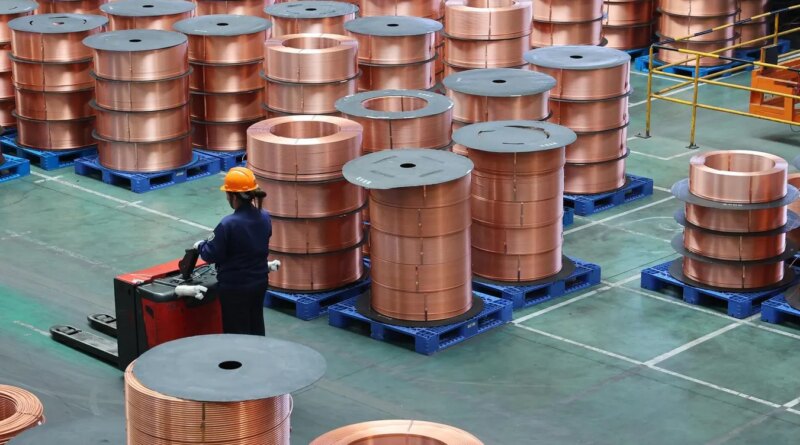
Copper tubing at a factory in Chongqing, China. (Photo by VCG/VCG via Getty Images)
VCG via Getty Images
Copper is trading at an all-time high of $6.44 a pound and could go a lot higher as the effects of a supply squeeze and the Iran war are supercharged by stockpiling and mine closures.
Biggest winners so far from the copper boom are the major producers led by BHP, the world’s biggest mining company, but closely follow by second ranking Rio Tinto. Both companies along with Anglo American and Glencore have big copper operations.
BHP At All-Time High
BHP has risen by 25% on the Australian stock exchange over the last six weeks, hitting an all-time high earlier today of A$60.23 ($43.36). The stock has risen by 56% over the last 12 months.
Rio Tinto also hit an all-time high of A$185.50 earlier today.
Strong demand for copper from traditional markets such as construction, electronics, and transport is being boosted by a rush to stockpile as buyers lose confidence in global supply chains which are being affected by “outages” at major mines.
Haul trucks transport ore from the open pit at Freeport McMoRan Grasberg copper and gold mine 14,000 feet above sea level.Photographer: Dadang Tri/Bloomberg
© 2015 Bloomberg Finance LP
The latest event to lift copper was a report last week that Indonesia’s giant Grasberg mine might miss its previously announced full-scale restate date by 12-months from early next year to early 2028.
Mine operator, U.S.-based Freeport McMoRan, later disputed the report of an extended delay made by one of its executives in Indonesia, saying it was sticking with the early 2027 re-start deadline.
The mine has been producing at about 45% of capacity since September last year when a catastrophic mudslide killed seven workers and blocked the mine.
Before the outage, Grasberg was producing at a rate of 1.7 billion pounds of copper a year. Since the mudslide it has been reduced to around 700,000 pounds.
Not Just Grasberg
Losing full production from Grasberg followed the closure of the Cobre Panama mine in Panama, and an outage at the Kamoa Kakula mine in the Democratic Republic of Congo.
Reduced supply of copper is occurring as demand rises to meet the rapid electrification of industries including transport where electric vehicles are displacing those with internal combustion engines.
But the immediate issues causing most concern for copper consumers are the effects on supply of stockpiling, and the blockade of the Strait of Hormuz which is not only limiting the supply of oil but also of sulfuric acid produced as an oil by-product and essential in some copper refining processes.
Oil tankers at anchor off the Strait of Hormuz in the Indian Ocean. (Photo by Barry Iverson/Getty Images)
Getty Images
Stockpiling is another element at work in the global copper shortage as major users and some governments squirrel away metal in case supplies dry up in the same way oil supply has been hit by the Iran war.
The U.S. is one of the countries storing copper for a rainy day prompting the investment bank Morgan Stanley to last month report on the market distorting effects of stockpiles.
Project Vault
The bank said that U.S. copper inventories, being amassed as part of the country’s Project Vault, were being viewed as a strategic reserve by the market.
Whatever the explanation there is undoubtedly an unusual market in copper today with overall global inventories reported to be at an all-time high as the price also hits an all-time high, something which is not supposed to happen in a commodity market.
The unusual chain of events in copper was noted by the chairman of Rio Tinto, Dominic Barton, at the company’s annual meeting in the Australian city of Perth last week.
Rio Tinto chairman Dominic Barton: Photographer, Cole Burston/Bloomberg
© 2019 Bloomberg Finance LP
Barton said rising geopolitical tensions was adding to demand for minerals and metals.
“I don’t know if we’re close to a world war, but I definitely think the complexity, the intensity of the changes, the fragmentation, it’s got to be at a 50-to-60 year high,” he said.
“It’s a really volatile time. Part of that is understanding nationalism. Everyone wants to have manufacturing in their country. They want security of supply. Everyone wants minerals for their own use.”