The Seven Mubeens of Yaseen: What Do They Mean? – The Majestic Quran
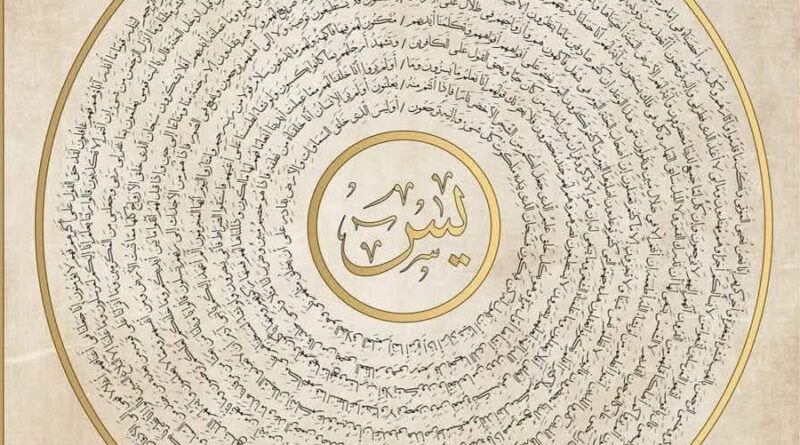
Surah Yaseen is an early Makkan surah, revealed at a time of severe tension between the Muslims and the idolaters. The Prophet (peace be upon him) called it ‘The heart of the Quran’. Its central theme is convincing arguments for the doctrines of Tawhid, Risalah and Akhirah. Reading Surah Yaseen in times of hardship calms the nerves and reassures one, restores health in sickness, and at the time of death eases the pain of death.
What’s really interesting is that the word ‘Mubeen’ appears seven times, linking Surah Yaseen’s themes and highlighting seven clear teachings about Divine purpose and guidance. Below is an insight into the seven ‘Mubeens’ and their significance:
- The outcome of this life depends on good deeds: “We will resurrect the dead and record all they achieved and the legacies they left behind; and We recorded everything in a Clear Book” [12]. The angels have recorded all the deeds done by humans, so Allah’s judgement will be just. The mubeen here advances the Surah’s overarching goal: prepare yourselves for the Day of Judgment. A reminder to take accountability seriously and that no one can plead ignorance. Note, we begin with the end- why? The maxim, ‘All is well that ends well.’ Here the Mubeen points out the “Clear Book”.
- Religion is a choice: “They said, ‘Our Lord knows we are messengers sent to you, and our duty is to communicate the Message clearly” [16-17]. The Messengers have the duty to convey the message; that’s it! They can’t force faith down someone’s throat. Humans have the choice to accept it or reject it; the human is a free agent, therefore accountable and responsible. The Mubeen here teaches, ‘there is no compulsion in religion’. So, inviting people to make the correct choice. Here the Mubeen points out the “Clear Message”.
- Idolatry is a dangerous form of materialism: “Should I take beside Him gods whose intercession would not benefit me in the slightest if the Most Kind willed to harm me? Nor would they be able to save me. Obviously I would be clearly misguided” [23-24]. There are many things in life that distract from Allah’s worship and lead to failure. The Mubeen here points out the biggest of them: love of material things, a distraction from the purpose of life; this is modern idolatry. Here the Mubeen points to the “Clearly Misguided”.
- Generosity is the expression of faith: “When they are told: ‘Spend what Allah has provided you,’ the disbelievers say to the believers, ‘Why should we feed someone who Allah could have fed, if He wanted? You are clearly misguided’” [47]. Generosity, giving freely without expecting anything in return, is a moral value; without it we are miserly. So, the Mubeen here highlights: If Allah has placed the means in your hands, you have a duty to use those means responsibly for the good of others. So here the Mubeen points to being “Clearly Misguided” again.
- Satan puts you off from following the Quran: “Didn’t I command you, children of Adam, not to obey Satan; he is your clear enemy” [60]. The Mubeen here points out the arch-enemy, Satan. Making us aware of the dangers of following Satan’s prompts. This advances the Quran’s overarching purpose to protect people; otherwise, the invisible enemy would ruin them. Here the Mubeen points to Satan as being the “Clear Enemy”.
- The Quran is Allah’s clear guidance: “We didn’t teach the Messenger poetry; it isn’t appropriate for him. This Quran is a reminder and a clear recitation” [69]. The Mubeen here clarifies the nature of the Quran: a clear book with straightforward teachings. Unlike poetry, which is figurative language that evokes feelings to create a specific effect. But the Quran teaches beliefs, principles of good and evil, laws that protect and tells history so we can be wise. Poetry, in contrast, is imagery, artistic language with rhymes and sounds, often lacking substance. But the Quran is a clear message. Here is the Mubeen is inviting people to reflect on the “Clear Recitation”.
- History of human disobedience: “Haven’t humans considered how We created them from a drop of fluid, so they openly argue against Us?” [77]. The evidence that Allah created us is obvious, but many ignore Him; why? They are stubborn, unwilling to accept the truth of Muhammad (peace be upon him) or the veracity of Allah’s book. Humans are clearly or openly quarrelsome, ever ready to challenge, disobey authority and argue. This is human nature that stems from deep survival instincts: protecting resources, securing status, and defending one’s group. This Mubeen advances the Surah’s overarching goal of inviting people to obey Allah and to control their quarrelsomeness.
What is a Motif?
A recurring word, image or idea that makes a pattern and weaves together different parts of the story. It gives Quranic Surahs greater unity, emphasis and depth. Unlike a theme, which is a central concept, a motif repeatedly reappears to draw attention to that concept and connect different parts of the Surah. In Surah Yaseen, the repeated adjective Mubeen acts as a unifying motif, reinforcing key teachings about accountability, revelation, Satan’s misguidance, generosity, faith and resurrection. Similarly, the repeated refrain in Surah Al-Rahman highlights Allah’s gifts, while the shirt motif in Surah Yusuf helps structure the story and trace Yusuf’s journey. Recognising such motifs helps readers appreciate that Quranic repetition is purposeful, revealing literary coherence and strengthening the Surah’s central theological and moral message.
The seven Mubeens of Surah Yaseen form a powerful thread of clarity running through the Surah. They highlight the Clear Book of deeds, the Clear Message of the Messengers, clear misguidance, Satan as the Clear Enemy, the Quran as Clear Guidance, and humanity’s open tendency to argue. Together, they call us to see the truth clearly, recognise the distractions and dangers around us, and take responsibility for the choices we make. Ultimately, the Mubeen motif reinforces Surah Yaseen’s central invitation: the truth has been made clear, our responsibility is to recognise it, live by it and prepare for our return to Allah.
Read the translation HERE.