Jesus Declares Himself a Liar in Sahih Hadith (Hadith vs. Quran)
Imagine a man of unquestioned honesty who watches a theft unfold before his eyes. The thief, confronted, swears by God that he did nothing. The witness then turns around and declares that he is the one who has lied. Few would call that humility. Most would call it a collapse of both truth and justice. Yet this is precisely the scene found in Sahih al-Bukhari 3444 and Sahih Muslim 2368 attributed to Jesus, son of Mary, by Abu Hurayra.
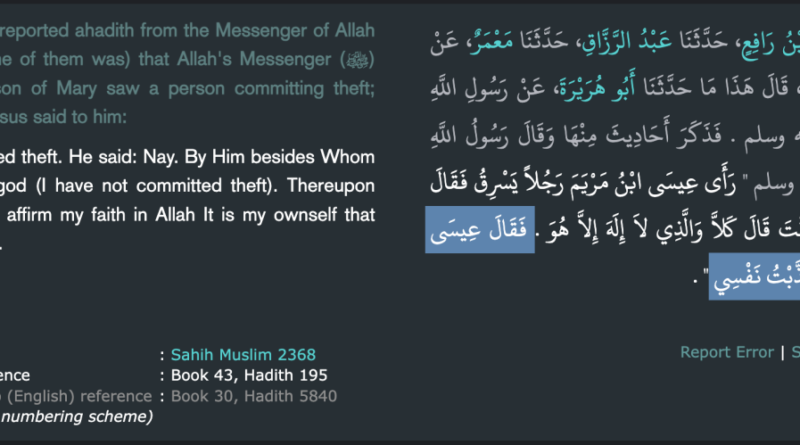
Muhammad ibn Rāfiʿ narrated to me: ʿAbd al-Razzāq narrated to us; Maʿmar narrated to us, from Hammām ibn Munabbih, who said: “This is what Abū Hurayra narrated to us from the Messenger of God.” He then mentioned a number of reports, among them that the Messenger of God said:
Jesus, son of Mary, saw a man stealing. Jesus said to him, “You stole?” The man said, “Never! By Him besides whom there is no god.” Jesus said, “I believe in God, and I have called myself a liar.”
حَدَّثَنِي مُحَمَّدُ بْنُ رَافِعٍ، حَدَّثَنَا عَبْدُ الرَّزَّاقِ، حَدَّثَنَا مَعْمَرٌ، عَنْ هَمَّامِ بْنِ مُنَبِّهٍ، قَالَ هَذَا مَا حَدَّثَنَا أَبُو هُرَيْرَةَ، عَنْ رَسُولِ اللَّهِ صلى الله عليه وسلم . فَذَكَرَ أَحَادِيثَ مِنْهَا وَقَالَ رَسُولُ اللَّهِ صلى الله عليه وسلم ” رَأَى عِيسَى ابْنُ مَرْيَمَ رَجُلاً يَسْرِقُ فَقَالَ لَهُ عِيسَى سَرَقْتَ قَالَ كَلاَّ وَالَّذِي لاَ إِلَهَ إِلاَّ هُوَ . فَقَالَ عِيسَى آمَنْتُ بِاللَّهِ وَكَذَّبْتُ نَفْسِي ” .
And ʿAbd Allāh ibn Muḥammad narrated to us; ʿAbd al-Razzāq narrated to us; Maʿmar informed us, from Hammām, from Abū Hurayra, from the Prophet, who said:
“Jesus son of Mary saw a man stealing, so he said to him, ‘Did you steal?’ He said, ‘No, by God, the One besides whom there is no god.’ Jesus said: ‘I believe in God, and I declare my eye to be a liar.’”
وَحَدَّثَنَا عَبْدُ اللَّهِ بْنُ مُحَمَّدٍ، حَدَّثَنَا عَبْدُ الرَّزَّاقِ، أَخْبَرَنَا مَعْمَرٌ، عَنْ هَمَّامٍ، عَنْ أَبِي هُرَيْرَةَ، عَنِ النَّبِيِّ صلى الله عليه وسلم قَالَ ” رَأَى عِيسَى ابْنُ مَرْيَمَ رَجُلاً يَسْرِقُ، فَقَالَ لَهُ أَسَرَقْتَ قَالَ كَلاَّ وَاللَّهِ الَّذِي لاَ إِلَهَ إِلاَّ هُوَ. فَقَالَ عِيسَى آمَنْتُ بِاللَّهِ وَكَذَّبْتُ عَيْنِي ”.
So in both versions, Jesus witnesses a crime with his own eyes. The culprit denies it with an oath. And the messenger, rather than standing by what he saw, declares himself or his eye the liar.
What the Word Actually Says
The verb kadhdhabtu comes from the root k-dh-b, the same root as kādhib and kadhdhāb, “liar.” In its intensive form, it means “I have declared (someone) to be a liar.” The object here is nafsī, “myself,” or aynī, “my eye,” according to Bukhari. The plain reading is that Jesus pronounces his own eyewitness testimony a lie.
Defenders of the report usually soften it. Jesus, they say, only “disbelieved his eyes” out of reverence for the oath of God’s name. But the softening relocates the problem without solving it. Under either rendering, a thief who swears falsely is rewarded with belief, an honest eyewitness is made to accuse himself, and a bare oath outweighs direct observation. A prophet is made to treat his own truthful perception as the lie, and a criminal’s claim as the truth.
That is a strange thing to attribute to any messenger of God. It becomes untenable when set beside the Quran, which addresses each of these matters directly.
Verification: Quran 17:36
The Quran gives the believer a standard for accepting information, and it is not trust in whoever speaks most confidently:
[17:36] You shall not accept any information, unless you verify it for yourself. I have given you the hearing, the eyesight, and the brain, and you are responsible for using them.
وَلَا تَقْفُ مَا لَيْسَ لَكَ بِهِۦ عِلْمٌ إِنَّ ٱلسَّمْعَ وَٱلْبَصَرَ وَٱلْفُؤَادَ كُلُّ أُو۟لَٰٓئِكَ كَانَ عَنْهُ مَسْـُٔولًا
The verse names sight, hearing, and reason as the very faculties for which each person will be held accountable. In the hadith, Jesus has verified the matter with exactly the faculty the Quran says will be questioned, and then he discards the result in favor of a claim he has no means of verifying. The verse condemns this act by name: setting aside what one has confirmed for what one has not.
Testimony: Quran 4:135
The Quran is equally firm about the duty of a witness:
[4:135] O you who believe, you shall be absolutely equitable, and observe GOD, when you serve as witnesses, even against yourselves, or your parents, or your relatives. Whether the accused is rich or poor, GOD takes care of both. Therefore, do not be biased by your personal wishes. If you deviate or disregard (this commandment), then GOD is fully Cognizant of everything you do.
يَٰٓأَيُّهَا ٱلَّذِينَ ءَامَنُوا۟ كُونُوا۟ قَوَّٰمِينَ بِٱلْقِسْطِ شُهَدَآءَ لِلَّهِ وَلَوْ عَلَىٰٓ أَنفُسِكُمْ أَوِ ٱلْوَٰلِدَيْنِ وَٱلْأَقْرَبِينَ إِن يَكُنْ غَنِيًّا أَوْ فَقِيرًا فَٱللَّهُ أَوْلَىٰ بِهِمَا فَلَا تَتَّبِعُوا۟ ٱلْهَوَىٰٓ أَن تَعْدِلُوا۟ وَإِن تَلْوُۥٓا۟ أَوْ تُعْرِضُوا۟ فَإِنَّ ٱللَّهَ كَانَ بِمَا تَعْمَلُونَ خَبِيرًا
The Quran demands that a witness testify truthfully even when it costs him personally. The hadith turns the principle upside down. Here the witness testifies against his own testimony, and in favor of the wrongdoer. The verse warns that to deviate from or disregard this commandment is to answer to God, who is fully aware of what is done. The hadith presents that same deviation as an act of faith.
Justice: Quran 5:8
The Quran also ties the witness to justice itself:
[5:8] O you who believe, you shall be absolutely equitable, and observe GOD, when you serve as witnesses. Do not be provoked by your conflicts with some people into committing injustice. You shall be absolutely equitable, for it is more righteous. You shall observe GOD. GOD is fully Cognizant of everything you do.
يَٰٓأَيُّهَا ٱلَّذِينَ ءَامَنُوا۟ كُونُوا۟ قَوَّٰمِينَ لِلَّهِ شُهَدَآءَ بِٱلْقِسْطِ وَلَا يَجْرِمَنَّكُمْ شَنَـَٔانُ قَوْمٍ عَلَىٰٓ أَلَّا تَعْدِلُوا۟ ٱعْدِلُوا۟ هُوَ أَقْرَبُ لِلتَّقْوَىٰ وَٱتَّقُوا۟ ٱللَّهَ إِنَّ ٱللَّهَ خَبِيرٌۢ بِمَا تَعْمَلُونَ
Consider who is wronged when an eyewitness retracts. The victim of the theft is the one who pays. Someone took what was not his, and the only person positioned to say so has withdrawn the statement because the thief invoked God’s name. Justice, in this story, belongs to whoever swears most readily, and a false oath becomes the most efficient instrument of acquittal. Verse 5:8 builds justice on truthful witness. The hadith dismantles it.
The Witness Himself: Quran 5:117
The strongest contrast comes from the Quran’s own portrait of Jesus. On the Day of Judgment he is asked about what his followers made of him, and he answers:
[5:117] “I told them only what You commanded me to say, that: ‘You shall worship GOD, my Lord and your Lord.’ I was a witness among them for as long as I lived with them. When You terminated my life on earth, You became the Watcher over them. You witness all things.
مَا قُلْتُ لَهُمْ إِلَّا مَا أَمَرْتَنِى بِهِۦٓ أَنِ ٱعْبُدُوا۟ ٱللَّهَ رَبِّى وَرَبَّكُمْ ۚ وَكُنتُ عَلَيْهِمْ شَهِيدًا مَّا دُمْتُ فِيهِمْ ۖ فَلَمَّا تَوَفَّيْتَنِى كُنتَ أَنتَ ٱلرَّقِيبَ عَلَيْهِمْ ۚ وَأَنتَ عَلَىٰ كُلِّ شَىْءٍ شَهِيدٌ
The Quran’s Jesus is a shahīd, a witness whose testimony stands before God. The hadith’s Jesus is a man who, upon seeing a crime, disqualifies himself as a witness and brands his own testimony a lie. These are not two angles on one man. They are two different men, and only one of them is the Jesus of the Quran.
Conclusion
The conflict here is not a matter of interpretive nuance. The Quran asks believers to trust verified perception, to testify truthfully even against themselves, to uphold justice without bias, and it honors Jesus as a faithful witness. This report has Jesus abandon verified perception, discredit his own testimony, release a thief on the strength of an oath, and call himself a liar. Where the two collide, the Quran’s own standard leaves no doubt about which must give way.
[6:19] Say, “Whose testimony is the greatest?” Say, “GOD’s. He is the witness between me and you that this Quran has been inspired to me, to preach it to you and whomever it reaches. Indeed, you bear witness that there are other gods beside GOD.” Say, “I do not testify as you do; there is only one god, and I disown your idolatry.”
قُلْ أَىُّ شَىْءٍ أَكْبَرُ شَهَٰدَةً قُلِ ٱللَّهُ شَهِيدٌۢ بَيْنِى وَبَيْنَكُمْ وَأُوحِىَ إِلَىَّ هَٰذَا ٱلْقُرْءَانُ لِأُنذِرَكُم بِهِۦ وَمَنۢ بَلَغَ أَئِنَّكُمْ لَتَشْهَدُونَ أَنَّ مَعَ ٱللَّهِ ءَالِهَةً أُخْرَىٰ قُل لَّآ أَشْهَدُ قُلْ إِنَّمَا هُوَ إِلَٰهٌ وَٰحِدٌ وَإِنَّنِى بَرِىٓءٌ مِّمَّا تُشْرِكُونَ