UK charges three times as much as other G7 countries for citizenship
Unlock the Editor’s Digest for free
Roula Khalaf, Editor of the FT, selects her favourite stories in this weekly newsletter.
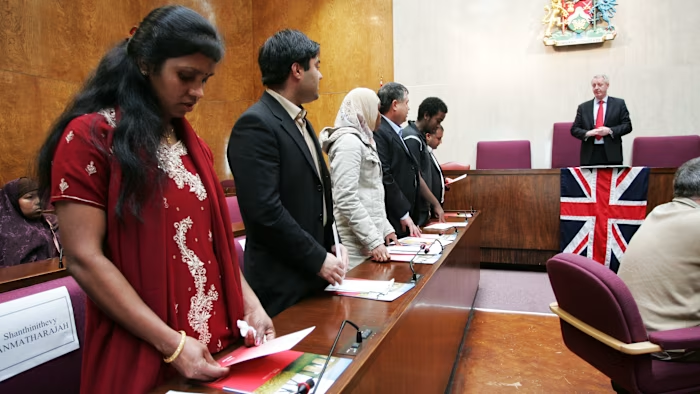
The UK charges three times as much as any other G7 country for citizenship, shutting many long-term residents out of full participation in civic life, according to new research.
The £1,839 cost of becoming a British citizen, including a £1,709 naturalisation fee and £130 charge for a citizenship ceremony, compares with a cost of just £562 in the US, the G7 country with the next highest fee. The Home Office estimates the cost of processing a citizenship application at just £324.
Citizenship applications have surged to a record high of 315,000 in the year to June, partly reflecting earlier increases in immigration but also a likely reaction to proposals from across the political spectrum to restrict or rescind the rights of non-citizens, including those who already hold settled status.
IPPR warned that the cost and complexity of applying constituted “a fundamental constraint on belonging,” potentially deterring hundreds of thousands of non-EU nationals who already have settled status from becoming citizens.
The think-tank said the high fees gave the impression that the Home Office saw citizenship as “primarily a source of income rather than a democratic institution core to the British way of life”.
Children born in the UK can also face challenges in becoming citizens, IPPR noted, pointing to the 10-year wait and £1,000 fee they may face where neither parent has citizenship or settled status.
Migrants typically qualify for indefinite leave to remain (ILR) after five years of residency in the UK, a status that unlocks access to benefits. They can apply for citizenship after a year with ILR — for non-Commonwealth nationals, the only way to gain full voting rights.
Government proposals to make lower-paid workers wait up to 15 years for ILR could therefore create “an expanding subclass of people who are governed without full political representation or social inclusion,” IPPR said.
“Transience is worse for integration,” said Marley Morris, an associate director at the think-tank, arguing that ministers “should be encouraging people to get to citizenship” rather than creating new barriers, such as the recent ban imposed on refugees who have arrived by irregular routes ever being naturalised.
IPPR argues there should be “clear, consistent pathways to citizenship for all long-term residents”, with no blanket bans and with the government softening its proposed settlement reforms so no one waits more than 10 years for ILR.
The think-tank also called for a revamp of the “Life in the UK test” prospective citizens must pass, which is often derided for forcing candidates to rote-learn trivia. IPPR argues the test should instead focus on UK rights and institutions, legal and political processes, and include a practical element of volunteering.
The House of Lords Justice and Home Affairs Committee called for an urgent review of this test in 2022, saying it was “full of obscure facts and subjective assertions” and ranged from trivia questions, such as where the founder of the first curry house had eloped to with his wife, to “offensive historical content”.