
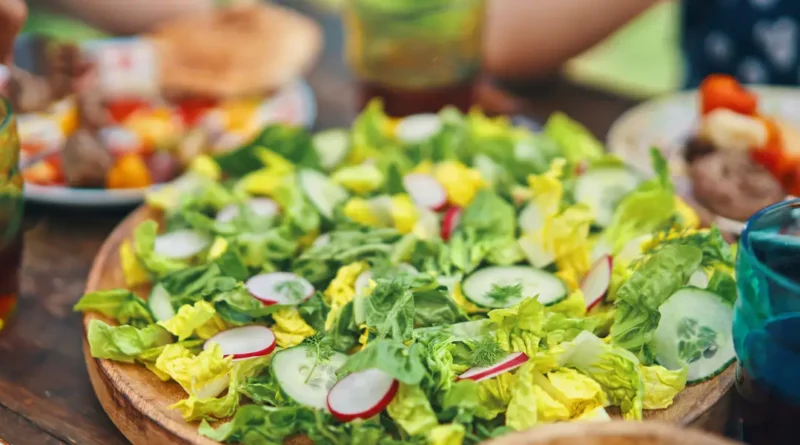
Still avoiding salads because of the cyclospora outbreak? Experts say you may need to wait a bit.
Is it safe to eat salad yet? On Friday, California-based salad juggernaut Taylor Farms announced it is “voluntarily” removing all of the iceberg lettuce it sources from central Mexico for the US market.
“No other Taylor Fresh Foods products across the country are impacted,” the company said.
It’s unclear whether this means that all of the contaminated produce in the multi-state cyclosporiasis outbreak has been cornered, but public health experts say that is unlikely. More than 8,260 confirmed cases of cyclosporiasis have been reported to state and federal health departments, according to data compiled by the Georgetown University Health Security Operations Center.
The bulk of the cases have been reported in Michigan, Ohio, Indiana, Illinois, New York, North Carolina, and Colorado, but that could simply be because those states have more robust public health surveillance than others.
The cyclospora parasite thrives in hot summer weather. Public health authorities say at worst, this outbreak could last until the end of August, but that’s a long, sweaty stretch of weather to face without any leafy greens in your diet.
In these hot summer months, it’s creating a conundrum for salad lovers nationwide: do I risk contracting a watery diarrhea-inducing parasite, assuming that the parasites have all been tossed out by now, or play it safe and cook everything?
The answer really depends on how much risk you’re comfortable with, your own health status and age, and where you live.
A three-tiered system for deciding whether to eat lettuce
If you pick lettuce from your own garden, or source it from a local farmer, you can feel a little more confident that it probably won’t make you sick. AlexRaths/Getty Images
Dr. Tyler Evans, an infectious disease doctor and the author of “Pandemics, Poverty, and Politics,” said that deciding whether or not you want to eat salad for dinner really depends on your risk tolerance, as well as where you live.
He’s based in California, where there isn’t much cyclosporiasis being reported, and said he just had salad at a Mexican restaurant.
“I’m a very risk-tolerant infectious disease doctor,” Evans said.
If you’re older, immunocompromised, pregnant, under the age of 2 (with a developing immune system), or have a medical condition, you may want to play things a little safer until the fall. Here’s a three-tiered system for thinking about how to approach your next meal:
Lowest risk of infection
Avoid lettuce entirely if you are risk-averse and focus on other vegetables that you can heat or grill. : Natasha Breen/REDA/Universal Images Group via Getty Images
To ensure you will definitely not contract cyclosporiasis, choose only vegetables that are cooked to at least 158 degrees Fahrenheit, the temperature that kills this parasite. If you like berriesmake jam. Craving veggies? Try grilled asparagus.
If you’re in a high-risk category, “I would completely refrain from not just lettuce or iceberg lettuce, but probably all leafy greens for the foreseeable future,” Evans said.
Medium risk
Buy a whole head of lettuce, peel off the outer layer, and wash it if you’re OK with some risk. Lettuce sativa
Buy whole heads of lettuce, remove and discard the outer layer of leaves, and wash them thoroughly under cold running water before consuming. You can also shop for lettuce grown locally at farmers’ markets. Keep an eye on your local case numbers to inform your decisions.
“In states or areas where there’s a higher incidence, then I think using the mantra to peel it, boil it, cook it, or forget it is a good idea,” Evans said.
Throwing caution to the wind
Where you live, where the lettuce is from, and how you prepare it all matter when it comes to staying healthy. d3sign/Getty Images
Eating raw, unwashed leafy greens, especially bagged pre-chopped lettuce and salad kits, which have been the most common source of cyclosporiasis outbreaks in recent years, may be risky.
Other vegetables that have been contaminated with the parasite in the past include raspberries, snap and snow peas, and fresh herbs (cilantro, basil, parsley). It’s possible that none of these foods are involved in the current outbreak, and that the risk is limited to only leafy greens, but we don’t know for sure.
“Once the temperatures start dipping, we should be in the clear again,” Evans said. “But the systems can do a lot better. There’s some degree of acceptable risk in terms of the seasonality outbreaks, but we can do better in terms of detecting and responding to these things.”