SpaceX's AI business is beating expectations | TechCrunch
SpaceX’s data centers and Grok agents have been more profitable than investors expected in second quarter of the year, as the company leaves its roots as a space company behind to focus on artificial intelligence, which now makes up 52% of its income.
Elon Musk’s deep tech conglomerate reported on Tuesday $14.6 billion in third-quarter revenue, according to its regulatory filing. That number was driven by growth in all segments, but especially it’s renamed “Super Intelligence” business line, which includes the recently-acquired Cursor coding tool, Grok bot, and most importantly, the company’s burgeoning neocloud business, which now boasts 1.7 GW of compute.
The top-line number was also boosted by about $1 billion in income related to the recovery of bitcoin prices and an unspecified related-party income that might be attributed to a SpaceX investment in another company.
The growing revenue is balanced against total capital expenditures of $19.6 billion, as SpaceX continues to build out a second data center project, Colossus II, and increase investment in Starship, the heavy lift rocket it sees as vital to deploying a new generation of Starlink satellites and developing orbital data centers.
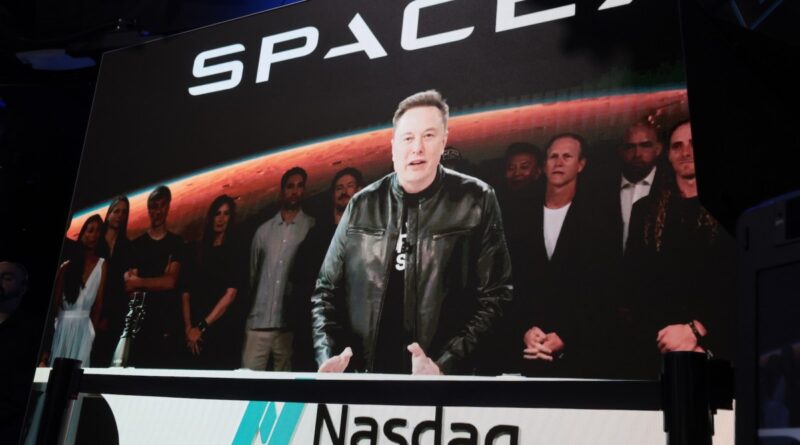
During a discussion of the results, Musk said he was spending four days a week in Memphis, TN, the site of Colossus II, working to bring the data center online.
“People are starting to realize [that] the constraint on deployment of of super intelligence is more in power and cooling and infrastructure than it is in chips,” Musk argued, saying that he had tasked a team of SpaceX engineers to solve that problem. “This is a bit like the New York Yankees playing in Little League. It’s not fair, but the net result is being able to deploy power cooling infrastructure at a rate that is vastly faster than any anyone else.”
Musk also said that the next test flight of the Starship rocket, expected in November, would see SpaceX attempt to recover both the first stage booster and the second-stage. Recovering both segments of the vehicle would be a “massive technology milestone,” Musk said, but the true first will be re-flying both stages.
SpaceX also saw growth in subscribers to its Starlink space internet network, to 13.6 million consumers, with Musk predicting that growth of AI agents would lead to more demand for connectivity.
In spite of those capital expenditures, the company’s revenue boost was substantial enough to push it back into profitability. SpaceX reported net income of $4.4 billion, a turnaround from the $1 billion loss in the same quarter last year. It will still have some catching up if it wants to remain profitable for the year, however. In the first nine months of the year, SpaceX still had a net income loss of $413 million.
CEO Elon Musk took a particularly bullish stance on the company’s Superintelligence business segment, predicting that SpaceX’s annual recurring revenue by the end of 2027 will be “somewhere between $500 billion and $1 trillion.”
This is a developing story. TechCrunch will update.
When you purchase through links in our articles, we may earn a small commission. This doesn’t affect our editorial independence.