Rubio hosts Libya’s Saddam Hifter as US pushes unity plan: What to know
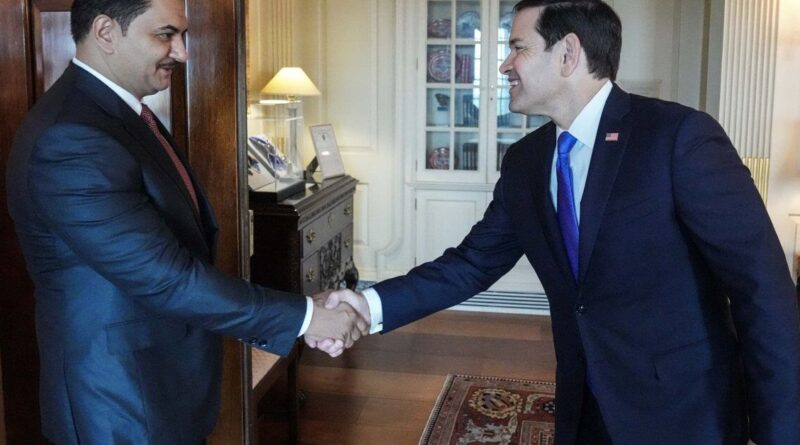
WASHINGTON — Secretary of State Marco Rubio met Monday with Saddam Hifter, the deputy commander of Libya’s eastern army, as the Trump administration pushes a governance plan that critics warn could further entrench the country’s ruling elites.
Hifter, the son of Libyan strongman Khalifa Hifter and heir apparent, spoke with Rubio about “possible avenues for cooperation to advance unity and peace in Libya,” according to a State Department readout of their meeting.
“The United States will remain at the forefront of diplomatic efforts to support Libyan unity and create the conditions for a democratically-elected government able to lead Libya forward,” the statement said.
Last week, Deputy Defense Minister Abdulsalam al-Zubi, the counterpart to Hifter in Libya’s Tripoli-based Government of National Unity, met with senior US officials in Washington, including Africa envoy Massad Boulos. The surge in diplomatic traffic comes as Boulos promotes a US-led power-sharing plan aimed at reunifying Libya’s two governments ahead of eventual elections.
“The main goal is to unify the Libyans, unify the land, unify the people, and unify the institutions,” Boulos said in an interview Saturday with Saudi news channel Al-Hadath.
The Trump administration has offered few details about its plan, but the main players are widely believed to be Prime Minister Abdul Hamid Dbeibah and his nephew Ibrahim Dbeibah in the western camp, and the Hifter family in the rival eastern camp. If an agreement is reached, Boulos said President Donald Trump could host a signing ceremony in Washington.
“These details are up to the Libyans themselves,” Boulos told Al-Hadath when asked about reports that Dbeibah would remain in power and Saddam Hifter would head an executive presidential council. “Of course, they are the two parties primarily concerned.”
The US initiative dates back to September 2025, when Boulos convened joint talks in Rome with the younger Hifter and Ibrahim Dbeibah. The Trump administration has since touted signs of progress toward a unified Libya, including two rival governments’ signing of a national unified budget and participation in a military exercise led by US Africa Command in April.
Boulos, a Lebanese American businessman and the father-in-law to Trump’s daughter Tiffany, has billed the US-led reunification plan as one that would “represent all Libyans fully, fairly and inclusively.” Critics say it hands power to a small group of unelected individuals.
“This isn’t inclusive at all,” said Emadeddin Badi, a Libya analyst and co-founder of Informmi political risk consultancy. “Ultimately the US administration can talk about elections, but I very much doubt that these stakeholders will walk the walk.”
The country erupted in civil war several years after the NATO-backed uprising in 2011 that toppled and killed longtime Libyan dictator Mohammar Gaddafi. Badi said the United States risks triggering renewed conflict if it moves too quickly to announce an agreement, a concern he said is shared among regional stakeholders, including Turkey and Egypt.
Since brokering a 2020 ceasefire between the Tripoli-based internationally recognized Government of National Accord and Gen. Khalifa Hifter’s self-styled Libyan National Army, the United Nations has tried repeatedly to hold nationwide elections. Polls originally planned for late 2021 were called off at the last minute amid disputes over who was eligible to run.
The impasse has left Libya with two rival administrations: A UN-brokered process in 2021 chose Dbeibah as prime minister of the internationally recognized government in Tripoli that rules western Libya.
In the country’s east, Prime Minister Ossama Hammad has headed a rival Libyan administration since his 2023 appointment by the Tobruk-based House of Representatives. The region is a Hifter stronghold, with human rights groups accusing his forces of routinely torturing and detaining opponents.
Boulos said in an X post on Sunday that the US initiative is a short-term one, meant to complement the UN’s existing long-term roadmap for presidential and legislative elections in Libya. Experts, however, warn it could weaken the UN process.
The US plan “takes ownership away from the Libyan population again,” Ben Fishman, a former National Security Council director for North Africa and now a senior fellow at the Washington Institute for Near East Policy.
“It taps these guys on the shoulder, and says, ‘You’re able to continue your roles,’” Fishman said. “The problem is, once these guys get power and get another something that reinforces their power, they’ll never let it go.”
Rubio’s meeting with the young Hifter comes days after his trip to the United Arab Emirates. Abu Dhabi wields strong influence in eastern Libya and has maintained close ties with Hifter since Gaddafi’s fall.