Prisoner Swap Between Belarus, Poland and Other Nations Frees 10
Belarus, a close ally of Russia, on Tuesday released five prisoners in exchange for two Russians and three others held by countries hostile to Moscow, in a swap of detainees that involved intelligence services from seven countries and a vital assist from the Trump Administration.
Those released by Belarus included Andrzej Poczobut, a Belarusian journalist of Polish ethnicity and critic of his country’s government. His imprisonment in 2021 caused outrage in Poland and worsened the already tense relations between the two neighbors, one effectively a Kremlin satellite and the other a NATO member and steadfast ally of Ukraine, deeply suspicious of Russia.
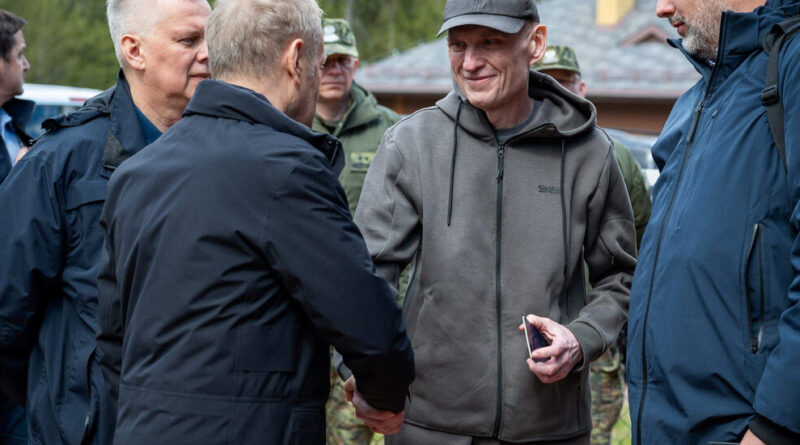
“Let’s rejoice, we have him!” Poland’s foreign minister, Radoslaw Sikorski, told a joint news conference in Warsaw with President Trump’s envoy for Belarus, John Coale, who helped negotiate the exchange. “After 1,860 days in a maximum-security prison, our heroic compatriot, martyr of freedom, Andrzej Poczobut, is safe and sound in Poland,” Sikorski added.
Mr. Coale said that Belarus had released three people connected to Poland — Mr. Poczobut, a Catholic monk accused of espionage, and a third person whose identity was not disclosed and who was accused by Belarus of cooperating with Polish services — along with two citizens of Moldova, a former Soviet republic bordering Ukraine and Romania.
Russia’s Federal Security Service, or F.S.B., said in a statement that the two Moldovans released were “officers of the Moldovan intelligence services,” arrested last year in Russia.
The five handed over to Belarus in exchange included Alexander Butyagin, a Russian antiquities scholar; Nina Popova, the wife of a Russian serviceman; and Alexander Belan, a Moldovan former senior security official who was arrested in Romania last year on charges of spying for Belarus’ K.G.B. intelligence service. No information was released about the other two people sent to Belarus.
Mr. Coale said that Belarus, Poland, Romania, Russia, Kazakhstan, Moldova and the United States were all involved in arranging the exchange.
The president of Romania, Nicusor Dan, credited the “transatlantic effort coordinated by the United States Department of State.”
The exchange marks another win for Mr. Trump’s policy of reaching out to Belarus’ strongman ruler, Aleksandr G. Lukashenko, and offering relief from some sanctions in return for the release of jailed political dissidents and foreigners swept up by his expansive and brutal security apparatus.
Many leading exiled opponents of Mr. Lukashenko have pushed for tougher sanctions against Belarus and advised against what they viewed as appeasement of Mr. Lukashenko, in power since 1994.
Mr. Trump’s envoy, Mr. Coale, said in Warsaw that he would return to Belarus in “two or three weeks” for further negotiations.
In December, Belarus freed more than 100 prisoners, including two opposition leaders and a Nobel laureate, as the Trump administration announced it would lift sanctions on potash fertilizer, one of Belarus’s largest exports.
Tom Rose, the United States ambassador in Warsaw, celebrated the latest prisoner swap as a “truly historic day,” saying “our partners in Poland worked side by side with us” to secure freedom for Mr. Poczobut, the best known of those released.
Relations between the Trump administration and Poland’s centrist prime minister, Donald Tusk, have been at times strained, largely because of Mr. Trump’s support for the winning right-wing candidate, Karol Nawrocki, in Poland’s presidential election last year, a bitter political foe of Mr. Tusk.
Overcoming their mutual hostility, Mr. Tusk’s government and Mr. Nawrocki united in celebrating the release of Mr. Poczobut, who is viewed by all political camps in Warsaw as a national hero for his work defending the interests of ethnic Poles living in Belarus, the western part of which belonged to Poland before World War II.
Mr. Butyagin, the antiquities scholar, had been a particularly high-profile Russian prisoner abroad. He was arrested last year in Poland on a Ukrainian warrant accusing him of illegally excavating at the site of an ancient Greek colony, Myrmekion, in Crimea, the Ukrainian region that Russia has occupied since 2014.
The arrest of Ms. Popova, the wife of a Russian soldier, had not been previously reported, but the F.S.B. said she had been detained last summer in Moldova and sentenced to one year in jail for bribing a Moldovan border guard.
Belarus’ state news agency Belta reported that the prisoner swap took place at the Pererov-Bialowieza border crossing between Belarus and Poland and was supervised by the Belarusian K.G.B. and by Poland’s foreign intelligence agency. It said intelligence services from five other countries were also involved.
Belarus said the K.G.B. had been working on the exchange for nearly a year “at the direction of the President of Belarus,” Mr. Lukashenko.