Kaaba Gets New Kiswa as Islamic Year 1448 Begins
Key Takeaways
- The new Kiswa, weighing about 1,415 kg, will be placed on the Kaaba on the night of 1 Muharram 1448 AH
- Production takes 10 to 11 months and involves 150 Saudi artisans at the King Abdulaziz Complex in Makkah
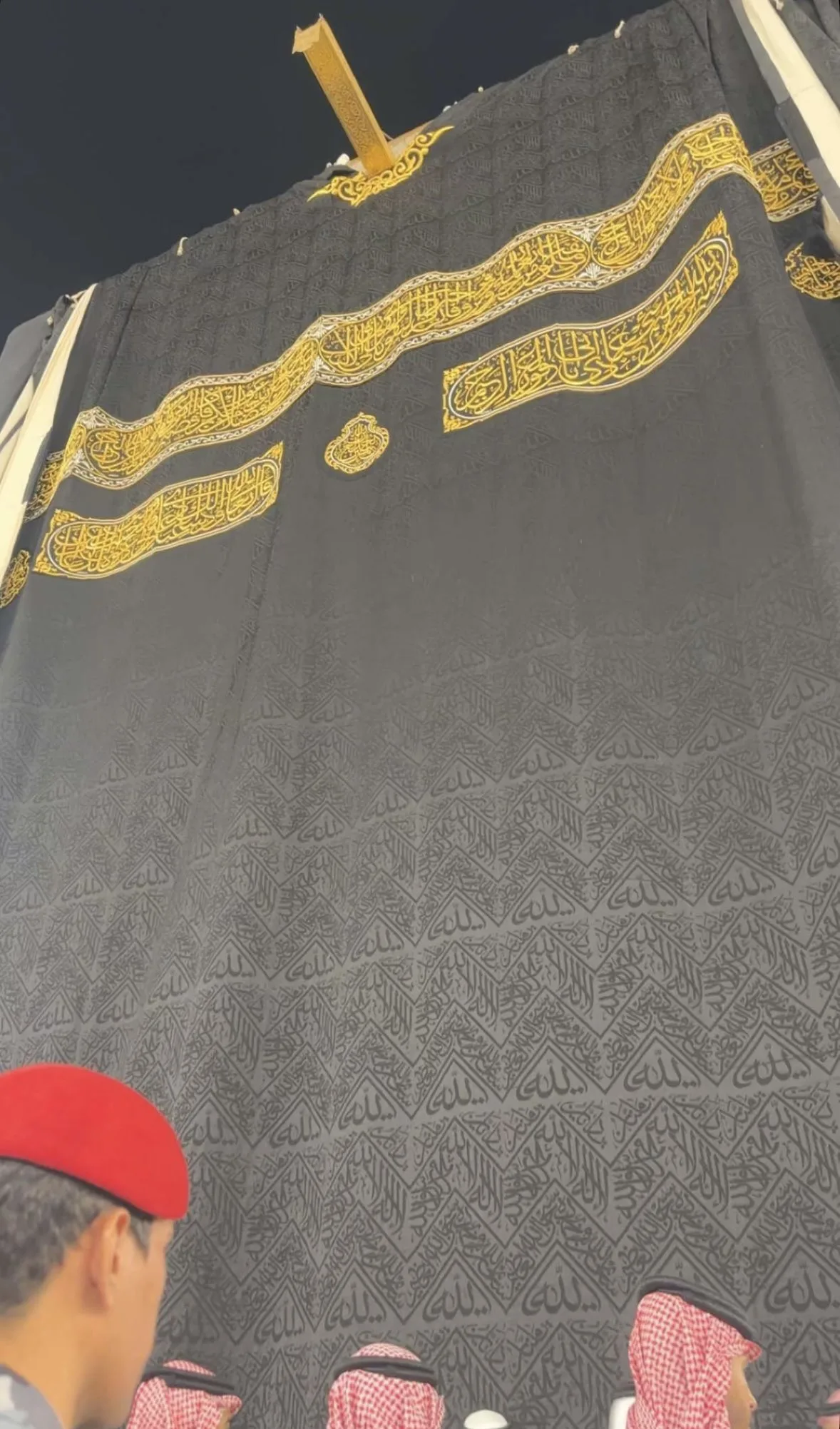
- The cover features 30 Quranic verses in Jali Thuluth script, embroidered with gold-plated silver and pure silver threads
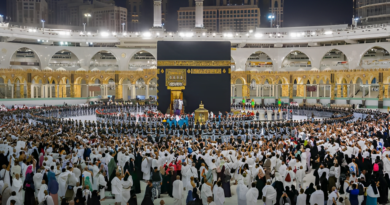
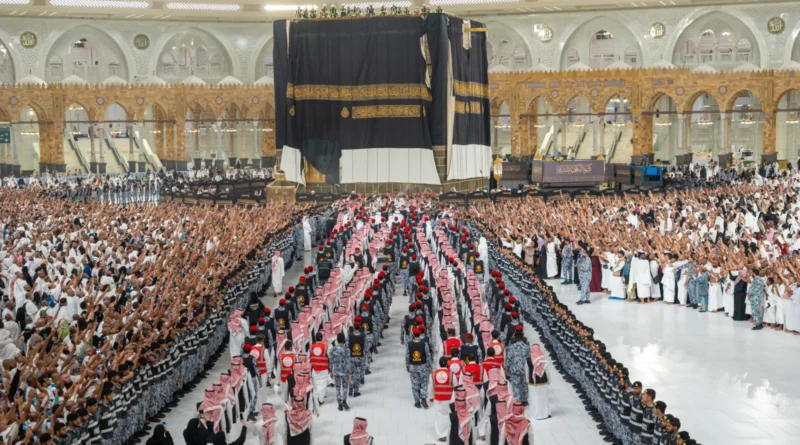
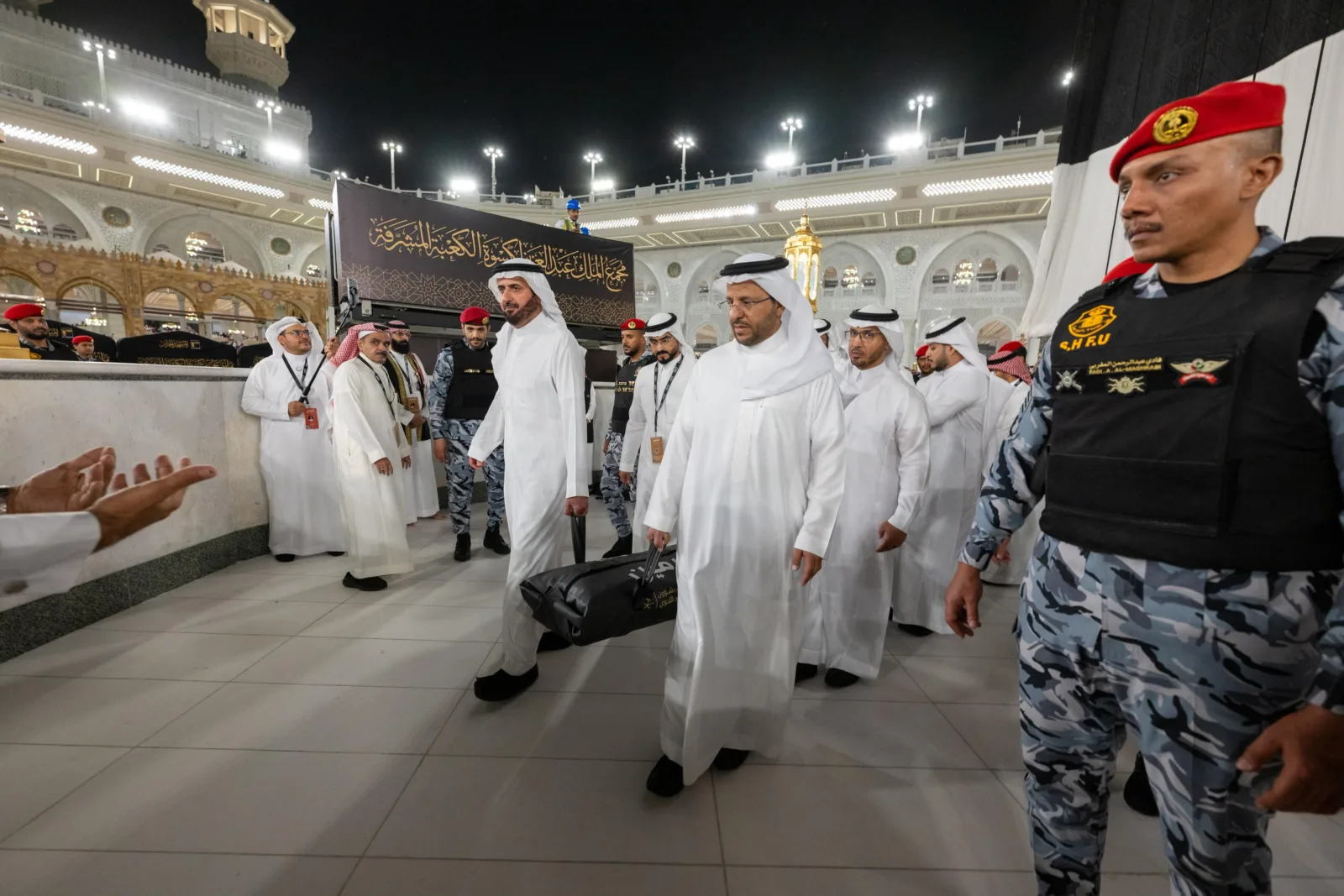
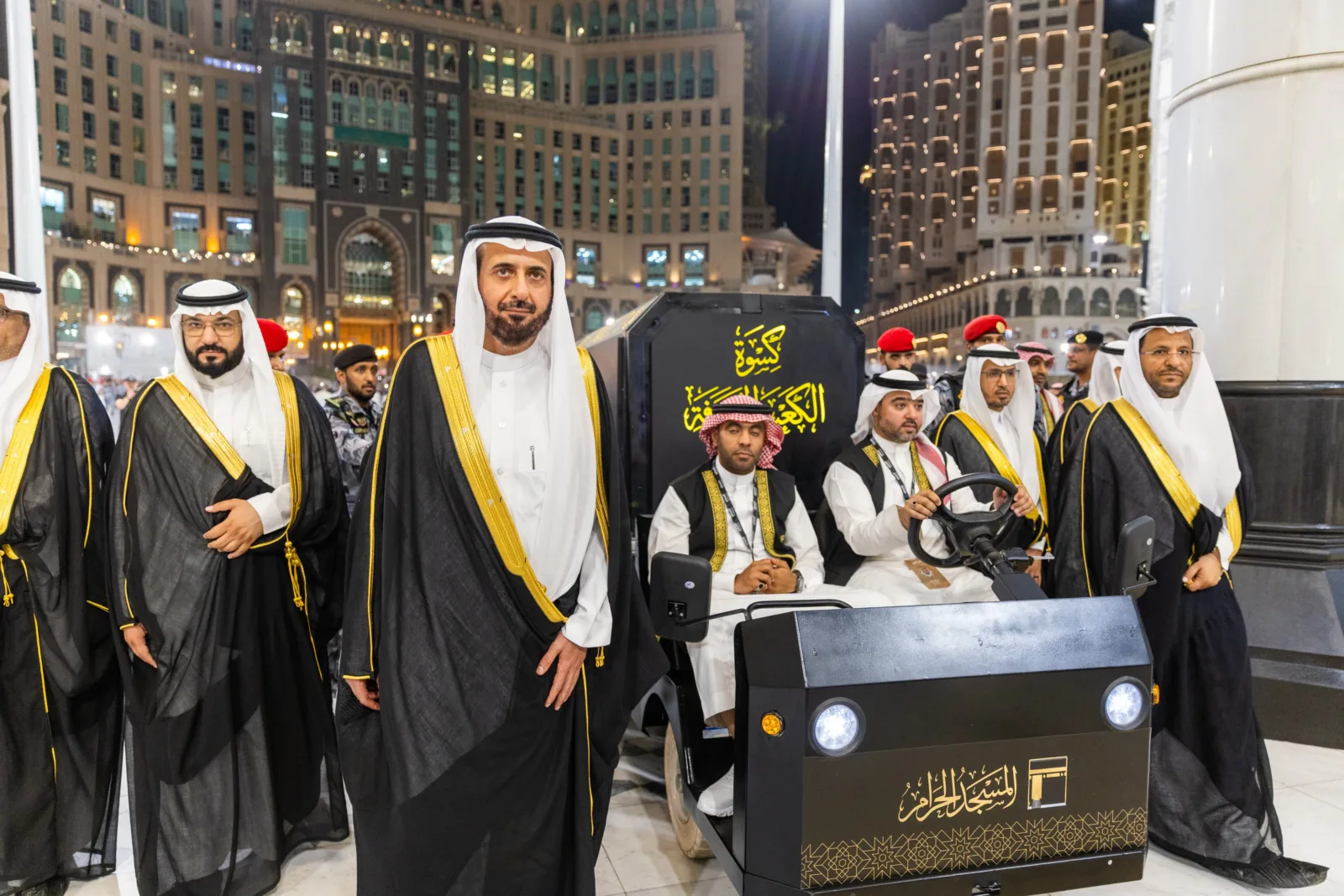
A new Kiswa, the black silk cover of the Holy Kaaba, will be placed on the Kaaba at Masjid al-Haram (Grand Mosque) on the night of 1 Muharram 1448 AH, marking the start of the new Hijri year.
The cover is made each year at the King Abdulaziz Complex for the Holy Kaaba’s Kiswa in Makkah.
How the Kiswa Is Made
Making the Kiswa takes 10 to 11 months and involves 150 Saudi artisans working across different departments.
The finished cover weighs around 1,415 kg and has two layers: an outer layer of black embroidered silk and an inner lining of off-white cotton.
The cover is made from 47 rolls of natural silk, woven into panels that cover the entire outside of the Kaaba. Each meter of the patterned fabric contains around 9,986 threads.
Gold and Silver Quranic Calligraphy
The Kiswa carries 30 Quranic verses written in Jali Thuluth script, embroidered using gold-plated silver and pure silver threads. The embroidery work uses:
| Material | Amount |
|---|---|
| Gold-plated silver thread | 120 kg |
| Silver thread | 60 kg |
| Pure silver | 10 kg |
Materials Used
The Kiswa is made from a combination of premium materials:
| Material | Amount |
|---|---|
| Natural silk | 850 kg |
| Black silk rolls | 47 |
| Raw cotton | 400–410 kg |
| Gold-plated silver | 120 kg |
| Pure silver | 10 kg |
Production Process
The Kiswa goes through seven stages before it is ready for installation: desalination of water used in processing, washing and dyeing the silk black, weaving the silk into fabric panels, printing Quranic verses and patterns to guide embroidery, assembling and sewing the panels, gold and silver embroidery of the inscriptions, and a final quality control check.
A specialised sewing machine, described as the world’s longest, is used to join the panels. Each silk panel measures about 14 meters long and 1 meter wide. The machine uses laser-guided technology for precise alignment and stitching.
Securing the Cover
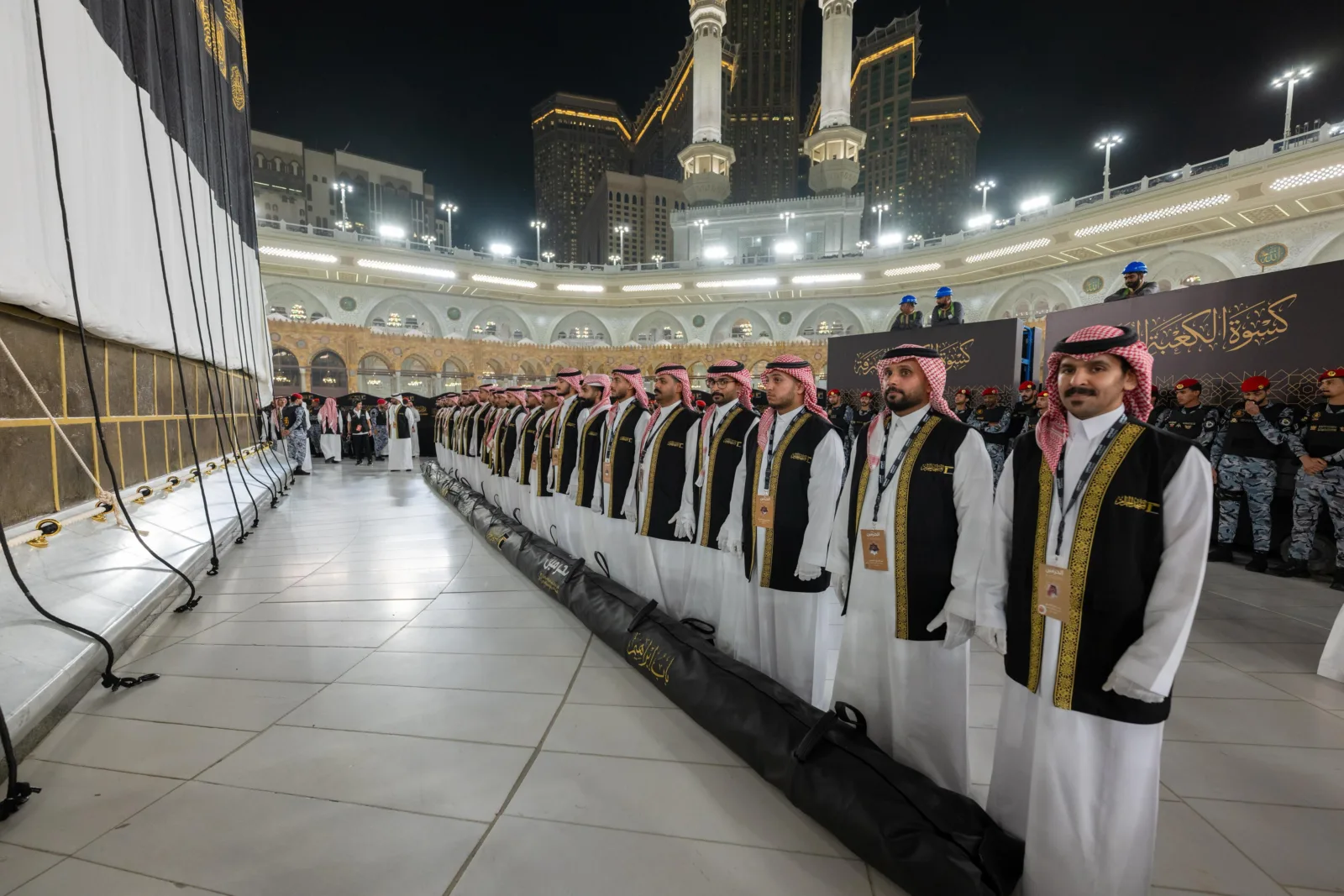
Once installed, the Kiswa is held in place on the Kaaba using around 100 ropes, keeping it secure throughout the year at Masjid al-Haram (Grand Mosque) despite weather and the large number of pilgrims.
Cost of Production
The Kiswa costs more than 25 million Saudi Riyals to produce each year.


![[Podcast] Shifa Saltagi Safadi and the Formula for Writing Muslamic Books](https://themuslimpress.com/wp-content/uploads/2026/06/Podcast-Shifa-Saltagi-Safadi-and-the-Formula-for-Writing-Muslamic-390x205.png)