Iran civilians learn assault rifle basics to fend off US
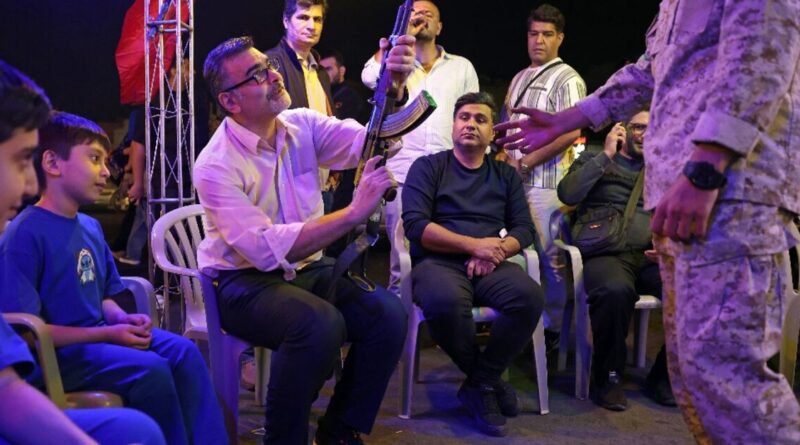
Gathered around a Revolutionary Guard in central Tehran, an audience of Iranians is learning to use an AK-47 assault rifle, in case it falls to them to defend the country from renewed US attacks.
For nearly half an hour, the soldier demonstrates different types of ammunition and how to assemble and disassemble the Kalashnikov using illustrated boards set up behind him on Haft-e Tir Square.
The authorities have set up military training booths across Tehran in recent days to teach the public the basics of weapons handling, as they seek to prepare Iranian society for the possibility of a return to fighting.
The city has been spared relentless strikes since the start of a ceasefire on April 8, which paused nearly 40 days of war with the United States and Israel, but fears remain that the fighting could restart at any moment.
“The response from people, from women and men, has been extraordinary. It is entirely voluntary,” said Guards soldier Nasser Sadeghi at the Haft-e Tir booth.
He added that the sessions which began over two weeks ago were preparing civilians from all walks of life for renewed fighting.
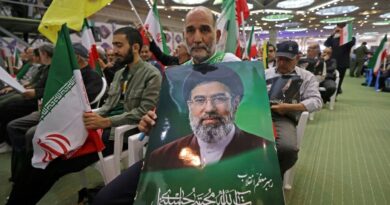
“The aim … is to promote the culture of martyrdom and avenging the blood of the leader,” he noted, referring to the late supreme leader Ali Khamenei, who was killed in the surprise US-Israeli strikes that began the war on February 28.
So far, the training only extends to using assault rifles, but Sadeghi said “God willing, in the coming days, depending on what higher authorities deem appropriate, other weapons will also be brought in for training”.
Their audiences include men with little previous military training as well as chador-clad women, some with head and wrist bands of the Iranian flag.
Onlookers including children and teenagers could also be seen posing for photographs with unloaded rifles.
– ‘Rightful revenge’ –
During the ceasefire, Iran and the United States have held just a single round of direct talks, which failed to secure a peace deal, and since then the two sides have been swapping proposals on a lasting settlement without a breakthrough.
On Monday, US President Donald Trump said he was planning a major new assault on Iran for the next day, but held off at the request of Gulf allies pushing for continued negotiations.
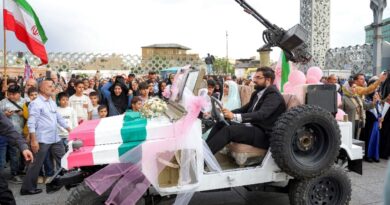
In Tehran, where government supporters hold near-nightly gatherings featuring patriotic celebrations, the preparations for a return to war continued.
“God willing, we will be able to use it against enemy aggression if one day they have bad intentions towards this land,” said Fardin Abbasi, a 40-year-old government employee, after attending a short session on the use of Kalashnikovs.
Fatemeh Hossein-Kalantar, a 47-year-old housewife dressed in a black chador, said she attended the training out of a desire to avenge Khamenei.
“We bring our children and teenagers alongside us so they can see military training, and whenever our leader, dearer than our lives, gives the command, we will all come to the field,” she told AFP.
She said the fighting should continue “until we take our rightful revenge for the blood of our dear leader.”
Nearby to the training booths, other stations offered tea, psychological counselling services and medical support, while loudspeakers broadcast speeches, chants, and eulogies for slain military commanders.
– ‘Our duty’ –
Videos circulating online in recent days have shown rows of women in black chadors assembling and dismantling rifles during similar training sessions.
Iranian state television has embraced the effort, even inviting a Guards member on air to teach a television host how to aim and fire an assault rifle.
In a widely circulated video, the host fires the weapon while inside the TV studio.
Back at Haft-e Tir Square, Mahnaz, a 39-year-old mother of three, said learning to use guns had become necessary under the current circumstances.
“In my opinion, in these circumstances that America has created for us, where they do not spare women, children, young or old, it is our human duty to at least learn shooting and learn how to work with weapons,” she told AFP.
“So that, if necessary, we can easily use them,” she added.