In a frontline Lebanese orphanage, girls strive for a normal life
By Zohra Bensemra, Raghed Waked and Maya Gebeily
TEBNIN, Lebanon, Nov 5 (Reuters) – Deep in war-ravaged southern Lebanon, just a few hundred metres from territory occupied by Israeli troops, Inaya Sultan is trying very hard to be a normal 13-year-old.
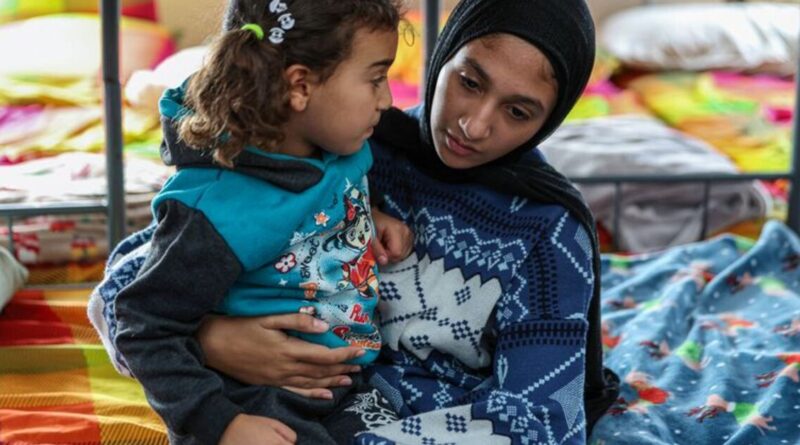
She makes beaded bracelets for her 4-year-old half-sister Malak,dreams of studying medicine and spends time with the girls she affectionately calls her “besties” who live with her in an orphanage in the southern town ofTebnin.
Founded in 1978 during the Israeli military’s last occupation of southern Lebanon, the orphanage is a refuge for girls who have lost one or both parents, or whose families are too poor to care for them.
‘I DON’T CRY IN FRONT OF MY SISTER’
Inaya and Malak’s father, a paramedic, was killed in an Israeli strike on their southern hometown in March, less than two weeks into the war that erupted between Israel and armed group Hezbollah in parallel with US-Israeli strikes on Iran.
Both now live at theTebnin orphanage, where around 40 other girls strive to create an oasis of warmth and normality close to the so-called “Yellow Line” demarcating Israel’s occupation zone in southern Lebanon.
By day,the girls attend school inTebnin, with uniforms, schoolbags and lunches provided by the orphanage.
At night, Inaya tucks Malak into bed. “Sometimes when there’s a strike, she’ll hug me and say look, they hit baba (daddy),” Inaya said.
“When I feel like I want to cry, I cry a bit and I let it out a little – but I don’t cry in front of my sister,” she said.”Otherwise Malak will start crying too and telling me that she wants baba and asking me why I’m crying. So I keep quiet for her sake.”
Inaya says Malak wants to become a firefighter or a paramedic to follow in their father’s footsteps.
‘IN EVERY CORNER I HAVE A MEMORY’
More than 4,000 people have been killed by Israeli strikes in Lebanon since March, including more than 700 paramedics, children and women, according to Lebanon’s health ministry. The toll does not otherwise distinguish between civilians and militants.
Israel says it seized a self-declared “security zone” in southern Lebanon to protect its citizens from cross-border militant strikes. The Israeli military has said it does not deliberately target civilian infrastructure but accuses Hezbollah of placing military equipment in civilian areas, an assertion Hezbollah denies.
While hostilities have eased since a June ceasefire, Israeli troops still occupy swathes of the south where they have flattened dozens of towns. Their campaign has damaged bridges, hospitals, schools and other public infrastructure.
The realities of war are hard to escape at the orphanage, which was damaged by an Israeli strike on an adjacent building during the 2024 Israel-Hezbollah war.
The girls had been evacuated and were safe. Since then, the orphanage has scraped together funds to repair only one floor, turning the common areas into bedrooms as the upper floor was too badly hit.
The basement, once a theatre where the girls sang in a choir or hosted guests, also remains in ruins.
“It really made me sad, because every moment in every room, in every corner, I have a memory,” said 19-year-old Shereen Saad, who has spent most of her life in the orphanage.
Saad is studying interior design at a local university and hoping to continue with a graduate degree in Italy – plans, she said, that could easily be scuppered by conflict.
“I don’t want to promise myself a lot as things might not work out the way I want.”
‘LIFE NEEDS TO CONTINUE’
Fatima Jaffal, the orphanage’s 30-year-old head caretaker, told Reuters the girls were evacuated again in this year’s war, and returned to find Israeli troops stationed less than a kilometre away and their days pierced by the booms of Israeli air strikes and home demolitions.
Months later, much of that had begun to seem normal, she said.
“We can’t stop our lives, waiting to see if things might work out,” Jaffal said. “Life needs to continue, and we’re much stronger than this.”
Her hometown of Rshaf liesinside Israel’s occupation zone, and the orphanage is as much her home as it is the girls’.
“What challenges might they face, if they weren’t here? This place is hugely important. It protects the girls, secures their future and their social lives,” she said.
Ali Saad, the orphanage’s director, said the institution itself was struggling.
Lebanon’s 2019 financial collapse meant state funding had dwindled, and frequent donations from United Nations peacekeepers in south Lebanon will disappear when theirmandate ends later this year.
The threat of more fighting looms large, too.
“We want to be able to repair the orphanage – if we repair it and find someone to help us, will it be damaged again? Is the war over?”
Click on to see a related photo essay
(Editing by Andrew Heavens)