
GM wants your EV to help power the grid as AI strains electricity demand
General Motors wants to use the parked EV in your garage to power the energy grid and potentially lower your utility bills.
The legacy automaker is pitching EV batteries as a power source that could help utility companies manage surging electricity demand, as households see rate increases and the US sees historic levels of energy consumption amid the AI data center build-out.
In an open letter to utility executives and energy lawmakers on Tuesday, GM called on utility agencies, regulators, and automakers for a “public-private collaboration” that could make it easier for EV drivers to send power back to the grid. Stakeholders would work out logistics like customer enrollment, incentives, and rate structures, the company said.
“The growth and consumption of electricity in the US has been at historic highs,” Kurt Kelty, GM’s vice president of battery and sustainability, told Business Insider. “We’ve never had such a high growth rate in electricity for probably a hundred years or so. That’s partly being driven by the AI data center growth.”
The US Energy Information Administration said in January that it expects electricity use to rise 1% this year and 3% in 2027, marking the strongest four-year stretch of demand growth since 2000. The agency said “demand from large computing centers” was behind the surge.
A Business Insider analysis of US data center permits found that if all facilities permitted through 2025 came online, they could consume between 224.3 terawatt-hours and 358.8 terawatt-hours of electricity a year. At the midpoint, that’s more than the total electricity use by any US state outside Texas in 2024.
To ease grid demand, GM said it could leverage bidirectional charging technology, which allows power to flow into and out of the EV. The company said it has more than 250,000 bidirectional EVs on US roads and is committed to building that capability across its entire EV portfolio.
With a quarter of a million EVs, GM said that amounts to power for about 120,000 homes for up to one week or all of San Francisco for one day.
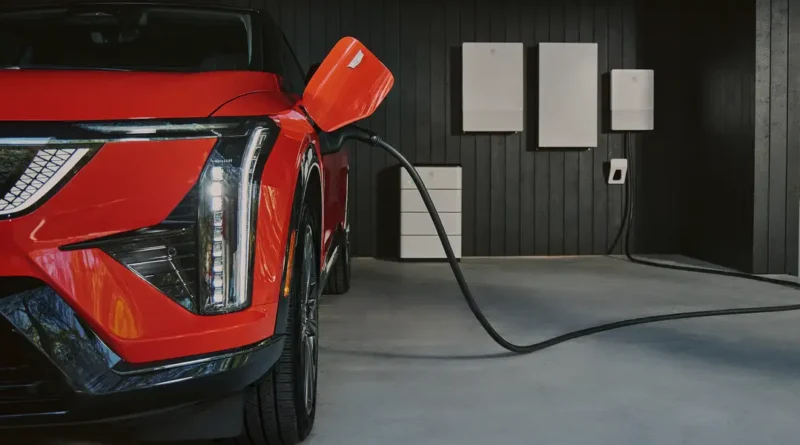
GM’s energy home system Courtesy of GM
Kelty described the future customer experience as a kind of “buy low, sell high” scenario for electricity.
A driver could come home from work, plug in, and let the EV discharge power during peak demand times, such as late afternoon or evening. Then the car could recharge later at night, when electricity is cheaper.
Kelty added that this process wouldn’t happen every day and that utility companies may only need the extra support 20 or 30 days out of the year. The EV would also not be fully discharged each time.
“It’s not that much extra wear and tear on the battery,” he said, adding that the battery would still be covered under warranty as long as customers followed a GM-specific program.
Whether customers will see returns through credits, lower utility bills, or a cheaper EV at initial purchase is all on the table, Kelty said.
The idea is still in its early phases. GM said it’s now testing “vehicle-to-grid” programs with utility agencies, including PG&E in northern California and DTE Energy in Michigan.
Tesla has a similar concept with Powershare, which allows Cybertruck owners to use the truck’s battery to power a home and, in some regions, support the grid. However, the technology is currently only centered on the Cybertruck.
“The big thing we’re looking at is we want to sell more EVs,” Kelty said. “We want to reduce fossil fuel consumption. That’s the direction we want to go.”