Factbox-Who are the leading candidates in Israel's election?
By Maayan Lubell
JERUSALEM, Oct 26 (Reuters) – Prime Minister Benjamin Netanyahu has long looked on course to lose power in Israel’s election, but the race has narrowed as the vote approaches and his rivals have no clear path to power.
Votes will be cast on Tuesday for parties, and seats in parliament will be allocated to individuals on party lists according to proportional representation.
Here are details of some of the leading candidates in Israel’s first parliamentary election since the Hamas attack on October 7, 2023 that plunged the Middle East into turmoil, with Israel going to war in Lebanon and Gaza and launching airstrikes against Iran.
BENJAMIN NETANYAHU
In power for much of the time since 2009, after a first stint as prime minister in the 1990s, Netanyahu has become the face of Israel abroad and a polarising figure at home.
Supporters hail Netanyahu as “King Bibi” and see him as the strong leader Israel needs to defend itself in a hostile region. But, wanted by the International Criminal Court over alleged war crimes in Gaza which he rejects and on trial in Israel on corruption charges which he denies, he is fighting for his political life.
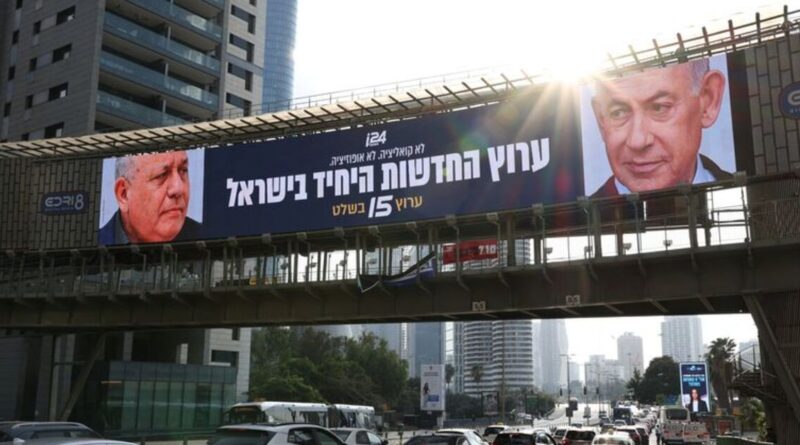
Opinion polls have pointed to a sharp drop for his Likud party since the October 7 attack, which shattered Netanyahu’s security credentials. His government’s policies on matters of religion and state have also been unpopular among many Israelis.
But Netanyahu, 77, is a consummate political survivor. He has said he wants to form a “broad national” government after the election, if he wins. In the event of a stalemate, he could remain a caretaker prime minister for many months.
NETANYAHU’S TOP RIVALS
* Former military chief Gadi Eisenkot, who lost a son in Gaza combat. Eisenkot, 66, has projected an image as a political outsider, soldier and security hawk whose humble background and family sacrifices stand in vivid contrast to Netanyahu’s decades in high office and lingering corruption cases. He heads a new centrist party called Yashar, Hebrew for “straight” or “honest”.
* Former Prime Minister Naftali Bennett, 54, a right-wing former commando, former Netanyahu aide and high-tech millionaire who has joined forces with centrist former premier Yair Lapid. Their new party is called Together and its messages have focused on healing a traumatised nation and getting the country back on track. Their alliance, despite being on opposite ends of the political spectrum, ousted Netanyahu in a 2021 election.
* Former Defence Minister Avigdor Lieberman, 68, was once a close ally of Netanyahu. Even more hawkish than his former boss, Lieberman quit Netanyahu’s government in 2018, accusing the prime minister of being too soft on Palestinian militants in Gaza, and has become one of Netanyahu’s sharpest critics. His party, Israel Our Home, draws much of its support from the country’s ex-Soviet immigrant community.
* Former general Yair Golan, 64, hailed for his rescue of people from one of the Hamas October 7 attack sites, leads the Democrats, founded on the moribund remnants of Israel’s historical Labour party and smaller left-wing Meretz.
CANDIDATES ON NETANYAHU’S SIDE
Finance Minister Bezalel Smotrich, 46, and National Security Minister Itamar Ben-Gvir, 50, have both drawn intense international scrutiny for their far-right policies toward the Palestinians.
Smotrich has spearheaded Israel’s rapid expansion of West Bank settlements, voicing his hope that it would ‘bury’ the idea of a Palestinian state.
Ben-Gvir, who was convicted in 2007 of racist incitement against Arabs, has promoted capital punishment for convicted Palestinian militants, toughened prison conditions for jailed Palestinians and easier gun ownership for Israelis.
Both men have advocated for the expulsion of Palestinians from the Gaza Strip and Israel resettling the enclave.
ULTRA-ORTHODOX ALLIES
Netanyahu has relied on two ultra-Orthodox Jewish parties, United Torah Judaism and Shas, for his political survival for years. Their demands for their community to be mostly exempt from compulsory military service, along with their low participation in the work force and reliance on state benefits, have angered many Israelis, all the more so at a time of war.
POTENTIAL KEY PLAYERS
Parties which are not clearly aligned with either side could tip the balance in favour of Netanyahu or his rivals. They include Raam and the Joint List, the two parties that represent Israel’s 20% Arab minority. Along with them are a new right-wing party called People of Israel and a centre-right party called The Reservists, both of which have been wavering in opinion polls.
(Reporting by Maayan Lubell, Editing by Timothy Heritage)