
Elon Musk and Big Tech have a lot riding on the midterms. Angry voters could upend their plans.
Americans are angry about affordability. The 2026 midterms will show who else will join President Donald Trump in paying the price.
Trump has become so unpopular that the map of competitive races extends to Texas, Ohio, and even Kansas. Once considered unlikely, Democrats could sweep Republicans out of Congress.
With even one house, Democrats can create headaches that stretch far beyond the White House. The very tech and business elite that cozied up to Trump ahead of his return to power may soon find themselves in the thick of congressional investigations. SpaceX CEO Elon Musk has already made it clear that he’s ready for a fight.
Here are the storylines we’ll be watching as the midterm elections unfold.
Cost of living
Most registered voters in an October Gallup survey said the economy would be either very or extremely important to their vote. Forty-two percent said gas prices would be extremely important to their decision. Americans are shelling out more at the gas pump than they were a year ago, as the Iran war has pushed up prices.
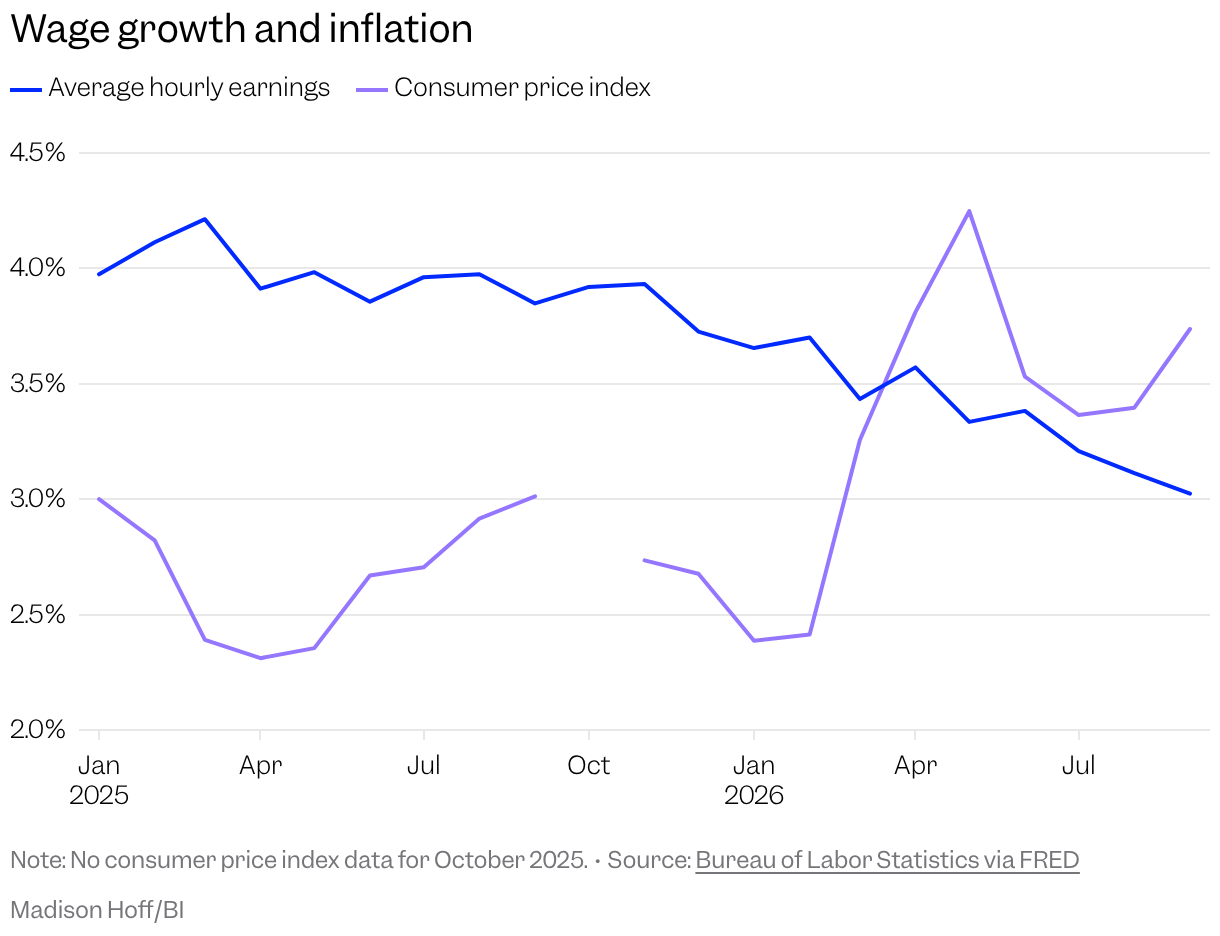
Other polls suggest the cost of living is a crucial issue. Consumer spending is still strong in the US, but that’s partly because higher prices are driving up nominal totals. Plus, inflation is eating away at raises. Prices have risen faster year over year than average hourly earnings for six consecutive months.
AI backlash
Trump may be unpopular, but building data centers is becoming an even harder sell. Polls show AI is not the top issue in the midterms, but ask a voter about building a data center in their community, and you’re liable to get an earful.
Across the country, candidates from both parties are racing to portray their opponents as too supportive of data center construction.
This may just be the beginning. Some in tech are worried that the backlash brewing now will boil over once the 2028 presidential primaries get underway.
Mark Schiefelbein/AP
Elon Musk’s gigantic bet
Everything is bigger in Texas, including Elon Musk’s checks. The SpaceX CEO has donated at least $448 million, a historic sum. Of that total, more than $215 million has gone to America PAC, his allied super PAC.
Musk’s donations have been rerouted to help Texas Attorney General Ken Paxton’s Senate campaign. Polls show Paxton in danger of losing, a potential result that would make it extremely difficult for Republicans to hold their majority.
When he’s not cutting checks, Musk is using his megaphone on X to repeatedly blast Democrats and boost Paxton at all hours of the day.
“It would be game over for America,” Musk wrote on X on October 30, warning what could happen if Republicans lose ground during the midterms ahead of the 2028 presidential election.
Some of the other major donors
Richard and Elizabeth Uihlein, the billionaire founders of Uline, have donated $150 million, mostly to Restoration of America, a pro-Republican super PAC. Jeff Yass, the cofounder of the global trading and technology firm Susquehanna International Group, has donated $110 million, including $30 million to a group supporting Vivek Ramaswamy’s Ohio gubernatorial campaign. Rounding out the $100 million + club is George Soros, for years one of the biggest Democratic megadonors, who has given $102 million, mostly to Democracy PAC, a Soros-linked super PAC that supports Democratic candidates.
Google cofounder Sergey Brin has given $102 million — not in support of federal candidates but rather in hopes of stopping California’s proposed one-time 5% tax on billionaires. Brin is part of a handful of tech elites who have cut large checks ahead of the midterms.
Ben Horowitz & Marc Andreessen, two legendary venture capitalists, have donated over $92 million combined, mostly to a super PAC that supports candidates friendly to the AI industry. OpenAI President Greg Brockman and his wife, Anna, have donated $50 million, half of which went to the same pro-AI super PAC.
Races to watch
Kevin Dietsch/Getty Images
Ohio Senate: Former Sen. Sherrod Brown, an Ohio Democrat, has zeroed in on Sen. Jon Husted’s previous support for data center development in one of the closest-watched Senate races. Husted has said the issue should be left to communities and no longer supports offering tax incentives for new data center construction. If Democrats want to flip the US Senate, they’ll need to win in places like Ohio. The Cook Political Report rates the race as a “Toss-Up.”
Texas Senate: Texas Attorney General Ken Paxton, a Republican, is trying to avoid losing a Senate seat that could decide control of the chamber. Musk has donated $158 million to the Senate Republicans’ allied super PAC, which in turn was donated to a pro-Paxton super PAC. Thanks in large part to Musk’s donations, the Texas Senate race is now the most expensive non-presidential campaign in US history. Democratic State Rep. James Talarico has blasted Musk, saying the world’s richest man “is trying to buy this Senate seat.” The Cook Political Report rates the race as a “Toss-Up.”
Jeff Kowalsky/ AFP via Getty Images
Michigan Senate: The focus of the Michigan Senate race is on just about everything else, but don’t overlook AI. Democratic nominee Abdul El-Sayed, a former Wayne County health official, has echoed Sen. Bernie Sanders throughout the campaign. El-Sayed’s AI platform is not different. Like Sanders (and Trump), he wants the US government to have equity in frontier labs.
El-Sayed also wants to force big companies like Microsoft to divest from AI giants like OpenAI. While that policy is unlikely to pass, El-Sayed has made it clear that if he wins, he intends to play a king-making role in the 2028 Democratic presidential primaries, where Michigan will loom large.
Former Congressman Mike Rogers, the Republican hopeful, has called for a pause on data center development in the state. If Republicans want to hold the majority, Rogers will almost certainly need to flip the seat. The Cook Political Report rates the race as a “Toss-Up.”
Win McNamee/Getty Images
California wealth tax: California may make some history of its own. Despite Gov. Gavin Newsom’s opposition, advocates were able to get a one-time 5% wealth tax on those with assets over $1 billion on the ballot. If it passes, California, home to the most billionaires, would be the first state in the country to impose such a tax.
The proposal has divided the tech community. Google cofounder Sergey Brin has spent over $100 million to try to stop it. Given California’s size and its history of counting votes, it could be days before news organizations can project whether the initiative passed. Complicating matters, Brin and other opponents are supporting competing initiatives that would eventually neuter the wealth tax, provided they received more votes.
Michigan 7th: Rep. Tom Barrett, a Michigan Republican, is seeking reelection in a southern Michigan district centered around Lansing. William Lawrence, a cofounder of the progressive climate-focused organization Sunrise Movement, has tried to tie Barrett to a proposed $1 billion hyperscale data center near Mason, Michigan. Barrett has said that local officials should be able to make decisions about data centers, contrasting his views with Lawrence’s support of a data center moratorium. Cook Political Report rates the race as a “Toss-Up.”
Ohio 9th: Republicans’ hopes to defy history and retain their majority run squarely through Rep. Marcy Kaptur, a 22-term Ohio Democrat, and her northwestern Ohio district that stretches from the Indiana border to just west of Cleveland. Kaptur has criticized state Rep. Derek Merrin for voting in favor of tax incentives for data center development. (Merrin has said Kaptur is “lying” about his record, but as part of a sweeping 2017 budget law, Ohio lawmakers voted to extend the deadline for certain data centers to qualify for tax incentives.) Cook Political Report rates the district as “Lean Democrat.”
Pennsylvania 1st: Rep. Brian Fitzpatrick, a five-term Pennsylvania Republican, romped to reelection two years ago but is now fighting to hang onto his seat. Bucks County commissioner Bob Harvie, the Democratic challenger, focused his first ad of the general election on his call for a data center moratorium. He also blasted Fitzpatrick over the Republican’s previous support for a massive Amazon data center in Falls County. The southeastern Pennsylvania district, which includes all of Bucks County, was one of just three districts that are held by a GOP congressman despite also voting for Vice President Kamala Harris. Cook Political Report pegs the race as “Toss-Up.”
Wisconsin 3rd: Rep. Derrick Van Orden, a two-term Wisconsin Republican, is trying to hold on to his western Wisconsin district, which includes Eau Claire and La Crosse. Democratic nominee Rebecca Cooke, a former political consultant who now works as a waitress, has echoed Sen. Bernie Sanders’ call for a federal moratorium on data center development. She has also hammered Van Orden over data centers, who has responded in turn by accusing Cooke of working too closely with tech groups. Democrats have a good chance to flip the seat, which the Cook Political Report rates as just slightly Republican (R+3). In its latest projections, the organization says Van Orden’s seat is now “Lean Democrat.”