Can ‘super intelligence’ and a non-binding safety pact solve AI’s image problem? | TechCrunch
President Donald Trump hosted many of the biggest names in artificial intelligence this week — in part to announce that the U.S. government isn’t calling it artificial intelligence anymore. Now it’s super intelligence.
On the latest episode of TechCrunch’s Equity podcast, Kirsten Korosec, Sean O’Kane, and I discussed the motivation behind the meeting and what effect it might have on the AI industry. We were all pretty skeptical that the “Joint Commitment on Frontier Responsibilities” that the executives signed will amount to much, especially since — as Sean noted — it’s “deeply non-binding,” at least from a legal prospective. (Instead, Trump said he considers it “morally binding.”)
Kirsten suggested that the meeting’s real significance may have been as “a rebranding effort around AI.” (An effort that continued this weekend with Trump’s announcement of a new Super Intelligence Force.) For her, the big message was, “AI is going to kill us, it’s scary, it is going to take jobs — but super intelligence is not.”
Keep reading for a preview of our conversation, edited for length and clarity.
Anthony Ha: Officially, by order of the president of the United States, it’s not artificial intelligence anymore, it’s super intelligence. We were talking about this last week, because this is something [Trump has] been hinting at — he doesn’t do hints, he’s been saying [it] for a while. But now it’s signed into executive order. If you’re an official U.S. representative, you are supposed to say super intelligence, not artificial intelligence.
And this was also part of this broader announcement around AI safety, which I think is both interesting for this pact that was announced, but also the fact that it happened at all. It seemed to have come together fairly quickly, because just two weeks ago, a week ago, President Trump was saying, “We don’t need any of this, we need to lead in AI, we can’t constrain it in any way, we don’t need any regulation, anyone who’s saying that there’s any danger from AI is essentially a Chinese or Democratic plant.” And yet all these AI CEOs got together with him earlier this week and signed this pact.
Kirsten Korosec: Leading up to that, we should say, not only was there pushback on regulation, and we can talk about whether this executive order even does any of that — I would say no, there’s a little bit of theater there — but the important and interesting thing is that just days ago, Anthropic was really in the doghouse, if you will, in terms of what was happening behind the scenes with President Trump.
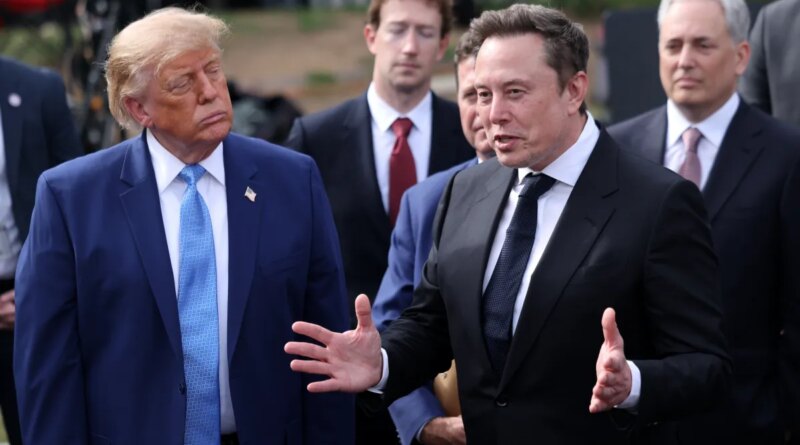
That all changed when [Anthropic CEO] Dario Amodei was invited to a 10 p.m. dinner. He had this sit-down, and then just days later, we had this luncheon, and at this luncheon, we have pretty much every tech power broker from every major tech company that exists. So Mark Zuckerberg was there, Jeff Bezos was there, Elon Musk was there, Dario of course was there, they were all there.
I’m wondering if any of you watched the press conference that happened afterwards, which there’s been many, many memes about, because of the interesting, funny behavior when you bring a bunch of tech CEOs together.
But I guess my bigger question for both of you is: What does this all mean? And does it mean anything?
Sean O’Kane: How much time do you have? First off, sure, they had dinner, Trump and Dario. If you read the Time magazine interview that Trump just did, your guess is as good as mine as to how informed he was that that dinner was even going to be happening, which is a strange reality to live in, but it’s just the one we inhabit.
I will also say one other thing that makes me skeptical — surprise, surprise — of how repaired the relationship is between the administration and Anthropic, is that for as much as there are clearly people trying to put those two groups together, the Defense Department is still very adamant that Anthropic is terrible and woke and and a national security risk. Emil Michael goes off on Anthropic every other day on X, it seems. I think there’s still some distance there despite Dario showing up to this thing.
As far as the agreement and all of that, let’s be real, they misspelled the United States on the agreement that they all signed. It is also just deeply non-binding. I mean, it is completely voluntary. I think my favorite aspect about it was that Trump described it as quote “morally binding,” which is just a level of abstraction and terminology that I’ve never heard of before.
Anthony: In terms of Anthropic and their relationship with the Trump administration, there’s been a sort of a lot of reporting, especially during that big blow up with the Defense Department, that different parts of the White House had different relationships with Anthropic. The Treasury Secretary seemed to be a big fan, whereas the Defense Department — definitely not big fans, or at least unhappy with some of the conditions that Anthropic were trying to put on the use of their technology.
In that sense, it feels like nothing has necessarily changed. There are people in the White House who want to use Anthropic’s technology, want them involved in these decisions, and others who really, really, really, really don’t.
In terms of the agreement, it seems not super meaningful. What is meaningful is just the fact that they felt that this was something worth doing. As indicated by the fact that they misspelled United States, it seemed like they rushed to put all of this together. [But] the fact that this kind of gesture was needed seems significant, even if I don’t think the agreement itself is going to lead to any major changes.
Kirsten: I do think that there was one important thing that happened. And to me, this is the point of it, which was a rebranding exercise around AI. “AI is going to kill us, it’s scary, it is going to take jobs, but super intelligence is not.” This isn’t my personal belief. To me, that was the message.
When you purchase through links in our articles, we may earn a small commission. This doesn’t affect our editorial independence.