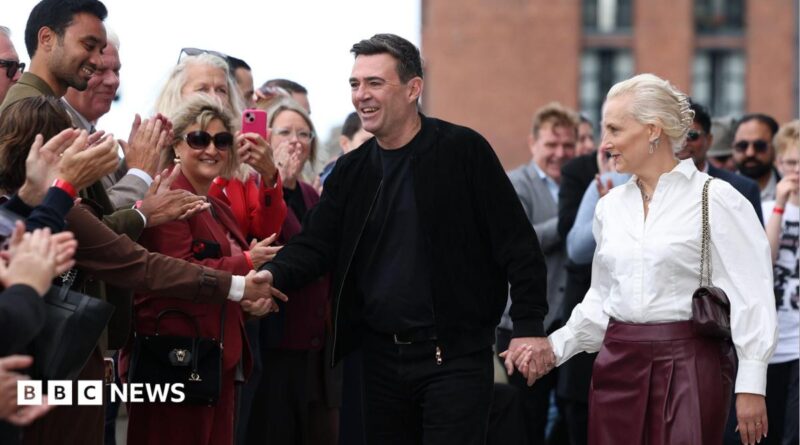
Andy Burnham announces scheme to help first-time buyers
The “Your First Home” policy is similar to initiatives from previous governments, including the coalition’s Help To Buy scheme, introduced in 2013 by then-Chancellor George Osborne.
It expanded a previous scheme, known as FirstBuy, which was aimed solely at first-time buyers.
Help to Buy initially enabled all purchasers to put down a 5% deposit on a newly built home, with a value of up to a £600,000.
Up to 20% of the cost of the home was funded by a shared equity loan, which was interest-free for the first five years.
The first version of the programme was active until 2021. A second iteration of the scheme, which ran until 2023, restricted access to first-time buyers and applied regional-level price caps to the properties that could be bought.
An evaluation of the scheme, external found more than 387,000 properties were purchased through it, of which 328,000 were by first-time buyers.
In its conclusion, the report noted Help to Buy was “effective in supporting people into home ownership in some areas, but did not remove affordability barriers for first-time buyers in areas that were already relatively expensive”.
Rayner said “Your First Home” would “build on the lessons learned from previous schemes, while retaining the benefits”.
The Home Builders Federation welcomed the proposals, saying it had “long called for action to improve access to home ownership”.
“Our analysis shows a well-designed scheme can make a meaningful difference for households struggling to get on to the property ladder,” it added.
Conservative shadow housing secretary Katie Lam accused Labour of wanting first-time buyers to “take on even more debt to afford the few homes that have been built”.
She added taxpayers would take a “stake in their homes” and be “picking up the bill for months”.
Lam said: “Slapping another levy on developers risks pushing up the price of new homes too.
“This is a colossal admission of failure. This Labour government is making homes harder to build, then asking buyers to borrow more to pay for them.”
Lam said the Conservatives want to scrap stamp duty, “back British house builders” and ensure that houses are “built in the places that people actually want to live”.
Rayner told the BBC earlier this month that there was only a “slim chance” the government would meet its target of building 1.5m homes in England by the next election, but said she was “not giving it up”.
Data up to June this year suggested the government was behind on the rate of construction needed to meet the goal, which housebuilders have previously warned was too optimistic.
BBC Verify analysis showed a decline in the number of new houses being built during Labour’s first year in power – continuing a fall that began under the Conservatives.