
The 25 colleges where students study the most hours a week, ranked
Depending on which college you attend, you might spend more time hitting the books than your peers elsewhere.
Many of the colleges on this list — which ranks schools by how much students study — have rigorous curricula, small class sizes, and an interdisciplinary approach to learning.
The list is from the Princeton Review’s “The Best 391 Colleges,” which surveyed 172,000 students at 392 colleges about their experiences and was published in August 2026.
The following ranking was compiled from college student responses to the question: “How many out-of-class hours do you spend studying each day?”
Based on the responses, the Princeton Review published a list of the 25 schools where students study the most, but did not share the average number of study hours reported by students at each college.
The results are based on students’ self-reported study hours, so they reflect respondents’ estimates rather than time that has been independently tracked.
Here are the 25 colleges where students reported studying the most outside class, ranked from No. 25 to No. 1.
25. Wesleyan University
Susan Vineyard/Getty Images
Wesleyan University prides itself on its open curriculum and experimental approach to education.
Students told the Princeton Review that, as a result, many people “double major and often they major in two pretty unrelated fields.”
24. Hillsdale College
Chris duMond/Getty Images
All students at Hillsdale College study a classical liberal arts core curriculum and choose from a range of majors, from art to physics.
One respondent said that “students are dedicated to their schoolwork, but also constantly seeking to balance their spiritual, physical, and social lives.”
23. St John’s College (New Mexico campus)
Courtesy of St. John’s College
St John’s College is well known for its curriculum that revolves around the “Great Books,” a reading list organized into classes and year groups.
One student told the Princeton Review that “just as many students spend their Friday nights studying Aristotle or field theory or law (for fun!) as they do going to parties.”
22. Bryn Mawr College
Bo Shen/Getty Images/iStockphoto
Bryn Mawr offers 37 majors, ranging from linguistics to astronomy and astrophysics, and 48 minors.
One respondent said Bryn Mawr is a college “where you will work harder than you thought was possible, you’ll learn more than you’ve ever learned before, and you’ll feel…welcomed every step of the way.”
21. Rice University
hapabapa/Getty Images
Rice University offers over 50 undergraduate majors across disciplines such as business, humanities, and natural sciences. Its student-to-faculty ratio for undergraduates is 6-to-1.
One student told the Princeton Review: “People work on the weekdays and during the day on weekends, and then on Friday and Saturday everyone does something fun, whether partying or spending time with friends.”
20. The University of Chicago
Raymond Boyd/Getty Images
The University of Chicago is a research-intensive university that offers almost 70 majors and 60 minors at the undergraduate level, and over 100 at the graduate level.
Owing to its academically rigorous curriculum, students said campus life “involves a lot of studying, doing homework, and going to classes, [and] discussion sections.”
19. Washington University in St. Louis
Philip Rozenski/Getty Images
Washington University in St. Louis has nine different schools, including the School of Medicine and the Olin Business School. It also offers opportunities for interdisciplinary studies.
A student told the Princeton Review that the classes are “very rigorous and challenging.”
18. Lafayette College
CynthiaAnnF/Getty Images
Lafayette College, located in Easton, Pennsylvania, offers degree programs in both engineering and the liberal arts, and prides itself on this interdisciplinary curriculum.
The students “tend to be athletic, very preppy, and serious about their education,” according to the Princeton Review.
17. College of the Atlantic
Courtesy of College of the Atlantic
All students at College of the Atlantic in Bar Harbor, Maine, earn a human ecology degree, a program they curate themselves based on their interests.
As a result, students told the Princeton Review that the school “attracts a self-selected group of passionate, driven, and deeply curious individuals who are committed to interdisciplinary learning and environmental and social justice.”
16. Centre College
Courtesy of Centre College
Public speaking, writing, community engagement, and experiential learning all form part of Centre College’s general education curriculum. Located in Danville, Kentucky, the school offers majors across a range of arts and sciences disciplines.
Students told the Princeton Review that the “academic rigor is great preparation for graduate school and fellowships.”
15. Bowdoin College
Catherine Robotis/UCG/Universal Images Group via Getty Images
Brunswick, Maine’s Bowdoin College, prides itself on face-to-face, specialized learning. Chalkboards are still in use, and every first-year student has to complete a writing seminar.
Survey respondents said students are generally “academically competitive” yet supportive.
14. Amherst College
Suzanne Kreiter/The Boston Globe via Getty Images
Amherst College in Massachusetts offers students 43 majors and an open curriculum. With a student-to-faculty ratio of 7:1, class sizes are small, and students and professors are close.
Students in the survey said the open curriculum provides a lot of “space and freedom to take a variety of classes” and that it’s an “academically rigorous undergraduate education.”
13. Middlebury College
Sanghwan Kim/Getty Images
Middlebury College offers a liberal arts and sciences education, with nearly half of every graduating class majoring in more than one subject.
Students described their professors as “truly top-notch” and that the “academics are reputed to be ‘very intense.'”
12. Grinnell College
Wolterk/Getty Images
With no general education requirements or core curriculum, Grinnell College in Iowa allows students to curate their own curricula.
However, if you think this makes academic life a breeze, think again. In the survey, students at Grinnell told the Princeton Review that it is a “very academically oriented” school and that they spend a lot of time studying.
11. Wellesley College
Photographer name/Education Images/Universal Images Group via Getty Images
Wellesley College in Massachusetts describes itself as “one of the most academically challenging institutions of higher education in the country.”
The survey responses reflect this, with one student saying that Wellesley’s “workload is not for the faint of heart.” Another added, “Even when classes are stressful, there is a beautiful campus that sparks happiness at random moments.”
10. Rose-Hulman Institute of Technology
Courtesy of the Rose-Hulman Institute of Technology
The Rose-Hulman Institute of Technology, in Terre Haute, Indiana, has been ranked as having the No. 1 undergraduate engineering program for 27 consecutive years by the US News & World Report.
Students told the Princeton Review that they fill their “days with studying and homework,” but that there is a “great support system, both socially and academically.”
9. Carleton College
Wolfgang Kaehler/Avalon/Universal Images Group via Getty Images
Carleton College prides itself on an academically rigorous liberal arts education. The academic year comprises three terms, which a student said: “can become overwhelming.”
Students added that there is a “very strong sense of community where your peers and teachers all want to support you and help you reach your fullest potential.”
8. Reed College
Png-Studio/Getty Images
Portland’s Reed College offers 38 majors — 13 of which are interdisciplinary. Humanities 110 is a yearlong course where students are introduced to humanistic inquiry.
According to the students themselves, “Reedies are invested in the learning process” and “academically driven.”
7. Williams College
Gerald Zaffuts/Getty Images
Williams College, in Williamstown, Massachusetts, offers more than 50 areas of study, from Chinese to mathematics.
The students themselves said they are “always busy, always a little bit stressed” in the survey, but that the college offers a “perfect combination of…liberal arts and research opportunities; neither one has to be sacrificed.”
6. Claremont McKenna College
Myung J. Chun / Los Angeles Times via Getty Images
Claremont McKenna College is known for its research and teaching in economics and government. It offers a major in philosophy, politics, and economics modeled on the famous Oxford University course.
Students told the Princeton Review that the curriculum is “very challenging but rewarding.”
5. Princeton University
Leonid Andronov/Getty Images
As a member of the Ivy League, it may not be surprising that surveyed students said Princeton is an “intellectually challenging place.”
They added that there is a “tendency to overwork” but that nearly everyone is also talented at something outside the classroom.
4. Franklin W. Olin College of Engineering
Suzanne Kreiter/The Boston Globe via Getty Images
The Franklin W. Olin College of Engineering in Needham, Massachusetts, emphasizes a project-based curriculum in which, from semester one, students work on real-world engineering solutions.
Students told the Princeton Review, “academically, classes are challenging, but there are many resources.”
3. Harvey Mudd College
Jim Brown/Getty Images
Harvey Mudd College in Claremont, California, is unique among liberal arts colleges; its mission is to educate the next generation of STEM leaders.
The school’s core curriculum includes courses in engineering, mathematics, biology, and computer science, as well as college writing and a critical inquiry class.
Students surveyed said “the course load is rigorous,” yet “rewarding.”
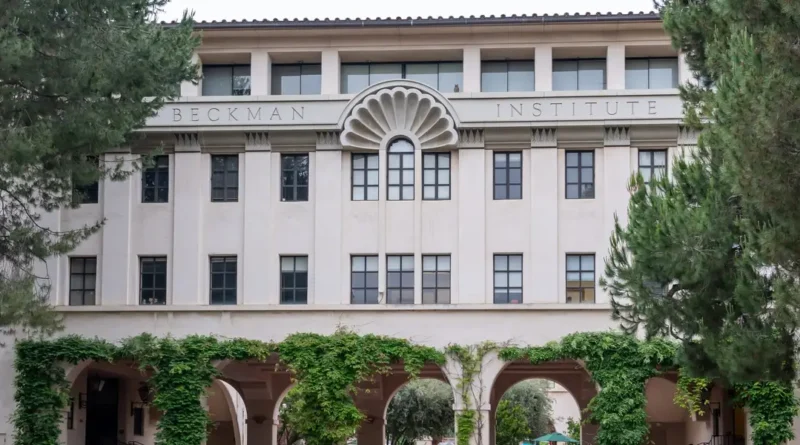
2. California Institute of Technology
JHVEPhoto/Getty Images
With a student-to-faculty ratio of only 3:1, the California Institute of Technology has small class sizes and a rigorous academic curriculum.
Pasadena’s Caltech is great at “keeping students occupied and entertained while at the same time cramming a ridiculous amount of information into our heads,” one of the surveyed students told the Princeton Review.
1. Massachusetts Institute of Technology
Erica Denhoff/Icon Sportswire via Getty Images
Massachusetts Institute of Technology has topped the QS World University Rankings for 15 years in a row, and is renowned for its STEM teaching and research.
MIT students told the Princeton Review that the academics “definitely push [you] beyond your comfort level.”
