Between Hypermobility and ADHD: Jenni’s unique Path – The Writing Yogini
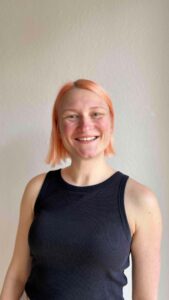
From a child who loved to move, through challenging years in her professional life, to burnout, a fresh start, and specialization: Jennis’s journey to yoga and ultimately to functional yoga is shaped by personal experiences, continuous learning, and a desire to rethink movement. Today, she combines in-depth anatomical knowledge with the depth of yoga philosophy, creating an approach that opens up new possibilities, especially for people with individual physical and neurological needs. In this interview, she talks about her journey, her work, and her vision for a more inclusive, sustainable approach to movement.
How did you get into exercise, yoga, and functional yoga in particular?
Even as a child, I always had a strong urge to move, and thanks to my parents, I was able to try many different sports, from ballet and karate to cheerleading. After graduating from high school and starting my career, this passion unfortunately took a back seat. Between the ages of 20 and 30, while working in advertising agencies, I barely had any free time for sports. Yet it would have done me a world of good, both physically and mentally.
In my late 20s, I left my job at the time due to burnout and had already started working out again at the gym and discovered yoga. This led me to my first yoga teacher training and the start of my freelance career as a yoga teacher in 2018. Although I was no longer working in my old profession and was already a certified yoga teacher, I still regularly dealt with joint inflammation and injuries. In 2020, everything changed again, and during the early days of the pandemic, after much research, I discovered Lara Heimann and LYT Yoga. Lara is a physical therapist who worked for many years in rehabilitation clinics, and her method is based on this knowledge. During the pandemic, I completed a second 200-hour online training with her and was able to build a strong foundation of anatomical knowledge.
That was the starting point for me to continue learning more about anatomy in motion, biomechanics, and the influence of breathing and the nervous system. I am now a 500-hour certified LYT trainer and have further trained with other instructors in strength training and nervous system regulation for people with hypermobility. The next strength training advanced course is already in the works. Over the past few years, I have been diagnosed with hypermobility (HSD) and ADHD, and I now specialize in these areas in my work. Functional Yoga is my way of sharing this knowledge and making yoga more accessible, as I know firsthand what it’s like to be limited by chronic pain, injuries, and hypermobility.
What inspired you to co-found MOTIVITY with Jenifer Platz?
We met through Lara Heimann and LYT Yoga during the height of the pandemic. At the time, there were very few LYT teachers in Germany, and Jenny had already completed the LYT training before I did. It’s a wonderful coincidence that we both live in the same city, have almost identical names, and share the same aspirationsJ We both dreamed of building our own studio and sharing our passion for healthy and accessible movement. That’s how we came together, and since 2022, we’ve been able to offer Functional Yoga, Pilates, and training at our Motivity Studio.
How would you describe your own teaching style—and what sets it apart from traditional yoga?
It’s important to me that I bring yoga philosophy to life in my classes. I try to offer insights into how the philosophy can be reflected upon and lived out in today’s world—both on the yoga mat and in everyday life. The physical asana practice focuses less on flexibility, stretching, or achieving “complete/full” poses, and more on stability and mobility in the movements and finding the individual alignment of the poses based on one’s own anatomy.
In my sequences, I draw inspiration from everyday movements and integrate them with the asanas. It is important to me to encourage self-efficacy in the people in my classes. I provide guidance on “how I move” and “why I move the way I do,” and I regularly use yoga props to explore the exercises, whether in beginner or advanced classes. I also do not use hands-on assistance— —to help people go deeper or further into a pose. In my view, the range of motion that a person can hold using their own strength is sufficient.

Functional Yoga combines yoga with scientifically grounded movement principles—how would you explain that to a layperson in three sentences?
I want to share yoga as a holistic practice for body, mind, and soul, combined with the latest anatomical and scientifically grounded knowledge from kinesiology. The combination of these two worlds intertwines and supports you in learning more about your body and understanding it better, as well as finding a mindful path to yourself.
You also lead training programs and teacher training courses—what is particularly important to you when teaching aspiring teachers?
Every person is unique, and our bodies and needs are just as individual. In my training programs, it’s important to me that participants first apply this to themselves by learning solid anatomical knowledge, and that as teachers, they can guide people in a more individualized and sustainable way.
You’ve spoken publicly about your journey with ADHD and your experiences with yoga and movement—how does that shape your teaching and your approach?
By raising awareness about neurodiversity, such as ADHD, I can help support people with similar needs and clarify that there is nothing wrong with us if typical meditation and breathing exercises aren’t a good fit for our brains and nervous systems. In particular, sitting still during meditation or Savasana is often a challenge and doesn’t simply require more practice or longer sessions, but rather a different approach.
That’s why I like to encourage “stimming” (repetitive movements or touch) in my classes, which is a huge help for neurodivergent brains when it comes to focus and regulation. For example, rocking back and forth while sitting, rubbing your fingertips, or rolling your pelvis while lying down. Anyone who wants to can incorporate this into their poses—or not.
How important is the balance between activity, rest, and mindfulness to you—and how do you incorporate that into your own life?
I’m still getting to know myself better since my late ADHD diagnosis and am trying to figure out what’s good for me, what helps me regulate, and what are learned patterns that aren’t good for me. I definitely need regular vigorous exercise and therefore love strength training. That brings me peace. Outings in nature with my husband and our dog do me just as much good. When I start having trouble sleeping again, I know—at the very latest—that I need to be a bit more mindful of myself in my daily life. Basically, it’s a constant challenge for me to find balance in everyday life with ADHD and chronic health issues like HSD, since my body and nervous system react intensely to many things.

What’s a tip or ritual you’d recommend to anyone who wants to deepen their movement or yoga practice?
Keep learning, especially from people who have similar issues and interests.
What is your vision for yourself in the coming years—and what impact do you want to make in the world through movement?
The focus of my work as a yoga teacher and trainer will be on using my knowledge to support people with symptomatic hypermobility (HSD / hEDS) and neurodivergence. Unfortunately, many yoga techniques and training methods do not take into account the anatomical differences from neurotypical people, which are necessary for supporting hypermobile and neurodivergent individuals. Yoga and strength training can be very helpful and valuable for us, but they must be adapted to meet our specific needs.
Many thanks for your time, Jenni, and all the best for you!
Curious for more? You can find more info on Jenni and her classes here.