Healing Ourselves to Death
There is something uncomfortable going on.
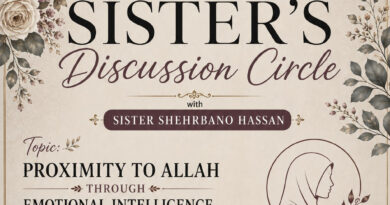
We find ourselves in the age of The Muslimah Trauma Industry, where the myopic focus on “personal healing” and “trauma recovery” regularly sells out stadiums of Muslim female attendees looking for relief from internal distress. The content presented to them is a heady mixture of modern psychology terms, therapy-speak, and clinical jargon with the veneer of Islamic themes to coat it all.
Often “apt” secular psychological concepts are borrowed and interjected into Qur’ānic exegesis and hadīth interpretation — importing ideas to awkwardly marry together wholly different paradigms. Popular Muslim speakers use psychiatric language as the self-soothing vehicle through which to understand ourselves and our dīn.
Many of the attendees are genuinely nursing their own internal pain and often feel like they have found a way to deeply understand themselves, perhaps in ways that were long stigmatised and taboo in cultural and community spaces. There is great benefit to be gleaned for believers to reflect and work on the blocks that hinder their spiritual potential.
But like always, you can have too much of a good thing.
And this “good thing” is an industry that has tipped into an exploitation of vulnerability with endless focus on the self to the point of spiritual immobility. The tool has now become the lifestyle, the lifestyle then becomes at least a cloak, if not an entire identity. The ones delivering the tools are rarely bonafide scholars but Muslim motivational speakers, lifestyle influencers, and simply skilled orators.
Many of the leading voices in the “healing industry” orate on a limited range of recurrent and overlapping themes covering:
- Healing trauma
- Wounds we carry
- Spiritual narcissism
- Generational traumas
- Toxic generational patterns
- Ending emotional avoidance
- Exploring internal emptiness
- Explaining psychological fatigue
- Establishing emotional boundaries
- Dealing with emotional shut downs
- Breakdown of internal negative self talk
- Intentionally overwriting reactive trauma
- Inner journeys, renewal, emotional healing
- Forcing inner abundance and clinical gratitude
- Deconstructing self-worth, community pressure
- Protecting oneself from emotional over reliance
- Overcoming emotional and psychological sabotage
- Analysing what disrupts the natural healing process.
This new comfort industry offers therapeutic lectures as a collective “service”, leaving struggling individuals who may indeed need professional help with a generic series of advice without monitoring, supervision, or practical implementation points. Even those who thought themselves generally well may start questioning whether they have wounds that now need analysing. Vulnerability is the new currency, complex issues get reduced into content, and the healing culture fast becomes a sinkhole of misinformation, manufactured fragility, and needless suffering.
“Traumatised” as an identity
The sheer popularity of this content is undoubtable; hundreds of thousands of Western Muslim females are drawn to the spiritual healing industry for a plethora of reasons. Maybe they feel seen. Maybe they feel validated. Maybe they feel they have been given permission to confront all that was long unspoken. Many of these good intentions can lead a person seeking relief and support into creating a self-soothing identity of victimhood.
Islam is pragmatic, balanced, and real — it does not encourage the extreme stoicism of denying all human realities. However, crucially, it does not enable pain to become an identity that bleeds through into a perpetual pathology. We are all becoming weaker for it. Managing oneself is meant to teach the skills and mindset to emerge stronger and function practically as an individual and as part of a collective.
While self-reflection is helpful, too much of it can often backfire. Turning your attention completely inward can trap you in a loop of seeing more of what you focus on. One’s perspective can fast become distorted, fuelling a rumination that fixates on problems over solutions.
Your past pains can transform into being the core of who you are, and how you see yourself. This drives helplessness and anchors you into the consequences of past events. This trauma identity fundamentally stunts personal growth and, as creatures of habit, as humans we default to the familiar.
Pain, grief, and human tragedy are all native to the Qur’ān and the Sīrah, and we have many explicit accounts of how hardship and the subsequent growth from it was managed. Considering oneself simply traumatised can even shield people from genuine accountability — and the difficult, hard work of muhāsabah (self-accountability). This includes identifying your own role in past events, patterns, and areas of weakness. When the pain of an incident is inflated to the point of a new identity, it not only erodes your own emotional resilience but entire perspective. We run the serious risk of medicalising routine life events, viewing stress and hardship as a disorder needing treatment, and thereby pathologising normal human experiences.
Is the comfort of another course on “wounds we carry” or “filling the void” stalling us from genuine progress? Are we paralysed within the quick highs of external validation — delivered to an audience of 500 women with a book signing thrown in, so we never face the harder, long-term work?
Self-knowledge vs. self-centrism
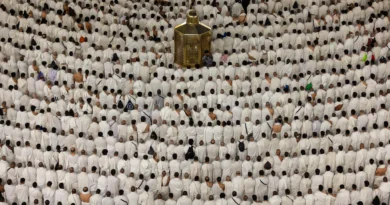
Like it or not, us Muslims in the West are living in a self-centric capitalist culture. This undoubtedly impacts our understanding of our faith, and the solutions we seek. The very knowledge we consume is delivered through consumerist models. We are no longer scholars and students gathered by candlelight in intimate masjid settings, but massive arenas with QR codes to enter and stratified ticketing options offering VIP access and luxury add-ons. Rightly or wrongly, this is where we are.
The paradox of “Islamic healing culture” is that in our quest to understand ourselves, we may be missing the foundational that makes us whole: service and purposeful engagement with the world around us. Sometimes the best way to get out of your head is to get into the world. If our lens is forever pointed inwards, are we able to carry the perspective of our hardship in a world filled with tribulation, both domestically and globally? Has our crippling individual grief left little strength for us to advocate for the Ummah at large? Have we, the most materially comfortable and knowledge-savvy of all global Muslim communities, become the most inert?
The self-focus of this culture deeply misunderstands the entirely different paradigm with which believing Muslims approach not only the world, but the health of our soul and purposeful living. Sometimes the best way to heal ourselves is to help heal others. To be of service to ourselves is to be of service to others. There is a strong spiritual consequence of Allah returning the khayr you put out by aiding you in the time you need it most.
In a hadīth narrated by Abu Hurayrah (radiy Allahu ‘anhu), the Messenger ﷺ was reported to have said,
Whoever helps ease one in difficulty. Allah will make it easy for him in this world and the Hereafter.” [1]
And in another narration,
Allah continues to fulfil the needs of the servant as long as he fulfils the needs of his brother.” [2]
Endless self-analysis can fast become debilitating, and a symptom of the secular individualistic culture we have all been impacted by. Chasing wellbeing by taking on the task of “just understanding ourselves” is often a bottomless pit of “self-discovery”. Unregulated, this intense self-focus can morph into spiritual navel-gazing and inadvertent ego-centrism. Perspective is an easy thing to lose, and our inner self is a deep place to get lost in. Our problems can soon become the centre of our world, and the dīn becomes scarcely bigger than our broken heart.
Resting on faulty foundations
Is wellbeing an entitlement at all?
The core of Dunya is tribulation, it is the natural starting point, default setting, and not an aberration. We have effective mechanisms — via the Qur’ān and Sunnah — that help us manage human hardship, rather than pathologise it.
This life was never sold to us as a place of happiness, justice, or wellbeing. This does not mean that we succumb to pain and fester in darkness. However, we must strive to bring goodness and relief to ourselves and others. When the good times are rolling, life is stable, and relationships with friends and family are strong… then each of these things are a major blessing and favour upon us, not an entitlement.
This reframing allows us to adjust our expectations and move within the parameters of the world as it is, not the world that we assume should exist. It also reminds us of our own collective responsibility to relieve others who are facing exactly what we know the Dunya will deliver to them. Focusing on personal harm causes Islamic healing frameworks to misinterpret life problems as psychiatric crises. Adversity and social dislocation undoubtedly contribute to our distress, but the way this industry frames the suffering ends up amplifying the pain.
Now encouraging gratitude is gaslighting. Giving advice is minimising. This becomes the shield that stops us from being able to take accountability, admit our own agency, and get more comfortable with critiquing the most negative parts of ourselves and our choices.
When dealing with the Dunya’s hardships, what is the standard, goal, or aim behind the Islamic healing industry? Are we trying to feel good all the time, and reach an unshakeable level of resilience? Is it more useful to understand difficulties as the unfortunate, yet inevitable reality of the Dunya? How we view ourselves, our lives, and indeed our problems is to do with the framing, language, and terms we use to hold them. If that language isn’t borne from a real-world application of faith and the paradigms within it, then we are in a potential free-for-all where we allow the constructs of external industries to explain ourselves back to us.
Real issues require real, deep, nuanced support with professionals. Mental health is a multi-dimensional issue that cannot be reduced to soundbites or one-hour motivational speeches, no matter how packed the auditorium or how insatiable the audience’s appetite is. In the absence of complex mental health problems, struggling individuals need help that is targeted, tailored, and temporary. One research study even found that a single solution-focused session was associated with improvements in hopelessness, agency, and psychological distress. [3] This is not a call to pretend problems do not exist, but to treat our struggles in a proportionate, tailored, and empowering way.
The tools that already exist within the Qur’ān and Sunnah imbibe within them perspective, balance, and an encouraging way to move forward. The awkward marriage of contemporary therapy jargon and Islamic “spiritual” advice has now created an ever-confusing landscape where skilled speakers are treated as spiritual authorities, and traditional knowledge is selectively filtered through shifting Western therapeutic trends. We become weaker for it. The result is a more fragile faith, less resilient believers, and a mindset that no longer seeks to transform the self, but merely remains flaccid in the current, defenceless against the next cultural shift.
The path to strength is not found in endlessly reinterpreting revelation through the lens of the age, but in allowing revelation to reshape the age within us.
Source: Islam21c
Notes
[1] Sahīh Muslim, 2,699; https://sunnah.com/muslim:2699a
[2] al-Mu’jam al-Kabīr lil-Tabarānī, 4,802
[3] Schleider, J. L., Sung, J., Bugatti, M., Mullarkey, M. C., & Smith, A. C. (2020). Open pilot trial of a single-session consultation service for clients on psychotherapy wait-lists. Administration and Policy in Mental Health and Mental Health Services Research, 47(6), 1011–1025. doi.org