Cyclospora: What to Know, What to Eat, & How to Shop
If you’ve been seeing headlines about Cyclospora, you may be wondering what it is—and whether it’s still safe to enjoy fresh summer produce. Cyclospora is a tiny parasite that can contaminate certain fresh fruits and veggies and cause a nasty intestinal illness (think: diarrhea 💩). But good news: you do NOT have to break up with fruits and veggies. You just have to be a little smarter than the parasite.
This guide covers exactly what I’m personally doing right now: the foods I’m skipping, the foods I’m choosing instead, how I’m shopping, and the best way to wash produce. Hoping this helps to keep you and your family safe! 💖
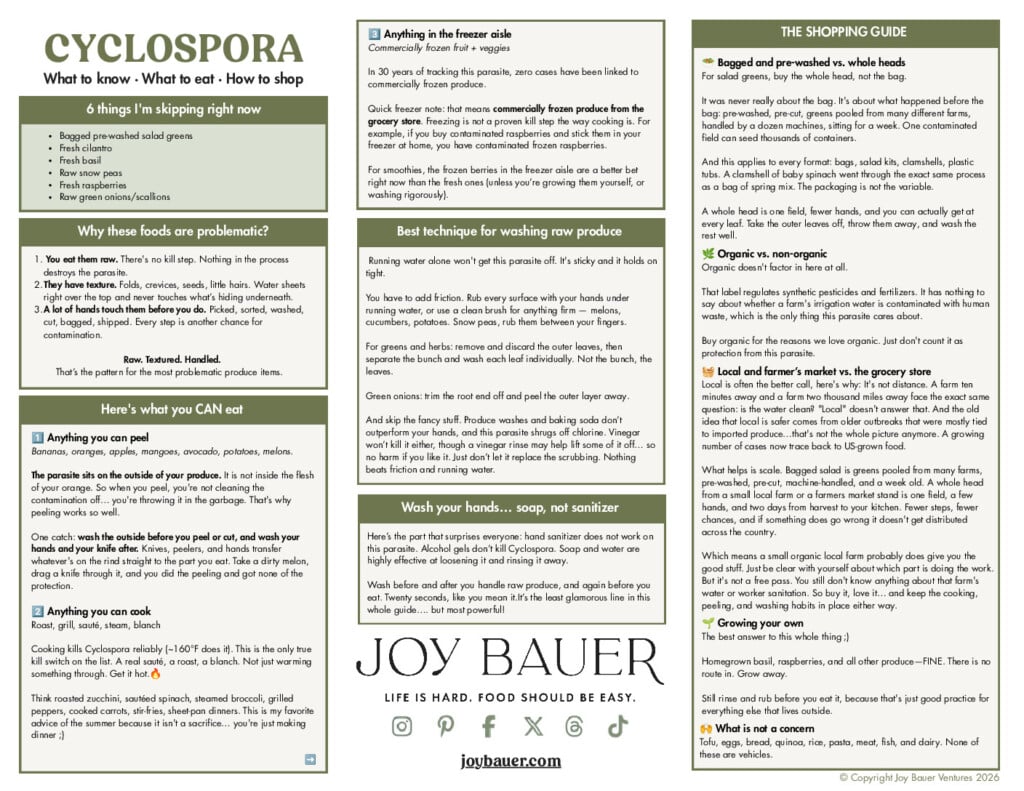
The 6 Foods I’m Skipping Right Now
During periods when Cyclospora is making headlines, these are the foods I personally choose to avoid raw:
- Bagged pre-washed salad greens
- Fresh cilantro
- Fresh basil
- Raw snow peas
- Fresh raspberries
- Raw green onions (scallions)
Why these foods?
They all have three things in common:
1. They’re eaten raw. There’s no cooking step to destroy the parasite before you eat them.
2. They have lots of texture. Folds, crevices, seeds, tiny hairs, and uneven surfaces make it harder for water to reach every nook and cranny.
3. They pass through many hands. They’re harvested, sorted, washed, cut, packaged, and shipped before they reach your kitchen. Every additional handling step creates another opportunity for contamination.
Raw. Textured. Highly handled.
That’s the pattern behind the produce items most commonly linked to Cyclospora concerns.
What I AM Eating Instead
Fortunately, there are plenty of delicious options.
1. Anything you can peel
Think:
- Bananas
- Oranges
- Apples
- Mangoes
- Avocados
- Potatoes
- Melons
Cyclospora sits on the outside of produce—not inside the flesh. When you peel produce, you’re removing the outer surface where contamination would be.
One important reminder: Always wash the outside first, then wash your hands and knife after peeling. Otherwise, you can transfer contamination from the peel onto the edible portion.
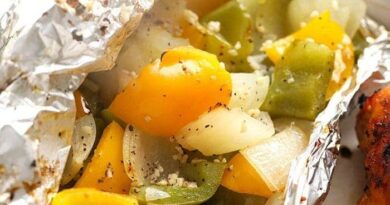
2. Anything you can cook
This is my favorite advice because it doesn’t feel restrictive—you’re just making dinner!
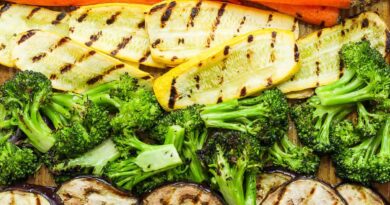
Cooking is the only true “kill step” for Cyclospora. Roasting, sautéing, steaming, grilling, blanching, and stir-frying all make produce a much safer choice.
Some favorites include:
- Roasted zucchini
- Sautéed spinach
- Steamed broccoli
- Grilled peppers
- Cooked carrots
- Sheet-pan vegetables
- Stir-fries
3. Commercially frozen fruits and vegetables
Frozen produce from the grocery store is another smart option.
Over decades of tracking Cyclospora, commercially frozen produce has not been linked to outbreaks. One important distinction: this refers to produce that was commercially frozen—not fresh produce you freeze yourself at home. Freezing isn’t a proven way to kill the parasite.
If I’m making smoothies right now, I’m reaching for frozen berries from the freezer aisle.
The Best Way to Wash Produce
One of the biggest misconceptions is that running produce under water is enough.
Cyclospora clings tightly to produce, so friction is your friend.
- Rub every surface firmly with your hands under running water.
- Use a clean produce brush for firm fruits and vegetables like melons, cucumbers, and potatoes.
- Rub snow peas between your fingers.
- Separate leafy greens and wash each leaf individually.
- Remove the outer leaves of lettuce and herbs.
- Trim the root end from green onions and peel away the outer layer.
Don’t waste your money on specialty produce washes. Baking soda, vinegar, and commercial produce washes haven’t been shown to outperform good old-fashioned friction under running water.
Soap—Not Hand Sanitizer
Here’s something that surprises a lot of people:
Hand sanitizer doesn’t work well against Cyclospora.
Instead, wash your hands thoroughly with soap and water before handling produce, after preparing it, and before eating.
It’s one of the simplest—and most effective—ways to reduce your risk.
Shopping Smarter
Choose whole heads over bagged greens
Instead of bagged salad mixes or clamshell greens, buy whole heads of lettuce whenever possible.
Whole heads typically go through less processing, involve fewer handling steps, and allow you to remove the outer leaves and thoroughly wash the remaining ones yourself.
Organic vs. conventional
Organic doesn’t offer protection against Cyclospora.
The organic label relates to farming practices—not whether irrigation water was contaminated. Buy organic for the reasons you normally would, but don’t assume it’s safer from this particular parasite.
Local and farmers markets
Local produce can sometimes be a good choice because it often passes through fewer handling and distribution steps.
That said, local isn’t automatically safer. Water quality and sanitation practices matter much more than distance traveled, so the same washing, peeling, and cooking recommendations still apply.
Growing your own?
Go for it!
Homegrown produce isn’t associated with the same commercial supply chain concerns, though it’s still a good idea to rinse everything before eating.
Foods You Don’t Need to Worry About
Cyclospora isn’t associated with:
- Meat
- Poultry
- Fish
- Eggs
- Dairy
- Rice
- Pasta
- Bread
- Quinoa
- Tofu
These foods aren’t considered vehicles for this parasite.