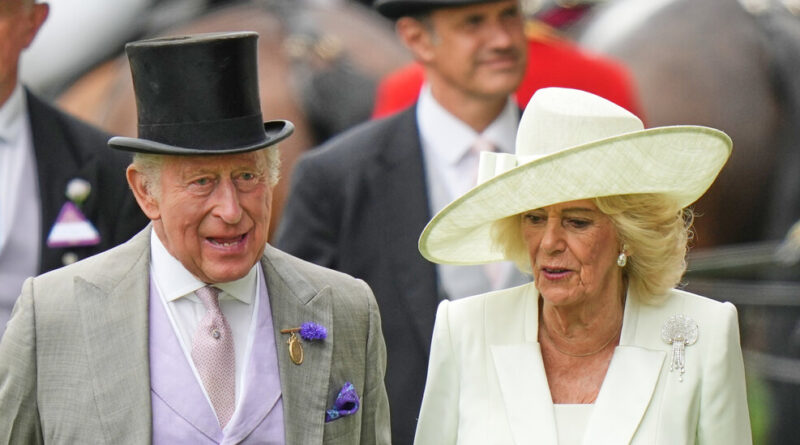
King Charles III Has Paid More Than $39.6 Million in Taxes, Palace Discloses in a U.K. First
King Charles III released details of his personal income taxes on Thursday, becoming the first British monarch to do so amid public demands for more transparency from the royal family.
Since ascending to the throne, the king has paid more than 30 million pounds — around $39.5 million — in taxes, Buckingham Palace confirmed in an annual briefing on royal finances. The palace also revealed that King Charles and Queen Camilla will not make Buckingham Palace, long the official London residence of the monarchy, their home once a decade-long refurbishment project is completed there next year.
More details will be published on Friday morning, including a new document summarizing the various sources of royal finances, “as part of the Royal Household’s commitment to transparency,” the palace said in a statement.
Thursday’s statement on the financial assessment includes a look at the sovereign grant, the public money that pays for the monarch’s official duties and the royal palaces.
For centuriesnet profits from the Crown Estate, the huge collection of land and offshore assets in the United Kingdom that belongs to the reigning monarch, has been passed to the government in return for a fixed yearly payment to finance the royal family and its duties. Since 2012, this payment has taken the form of the sovereign grantwhich is calculated as a percentage of the estate’s profits.
The sovereign grant for the year from 2025 to 2026 rose to 132.1 million pounds, or around $174 million, benchmarked against the revenue of the Crown Estate. Over half of the grant, some 67.5 million pounds, was allocated to preserving and protecting the occupied royal palaces, the palace said.
Charles previously released details of the taxes he paid while he was the Prince of Wales, but this is the first time that a sitting British monarch has revealed the taxes he or she paid on personal income.
Anti-monarchy campaigners, lawmakers and members of the public have long called for more transparency from the royal family over its financial arrangements. That pressure has intensified since a scandal involving King Charles’s younger brother Andrew Mountbatten-Windsor and his friendship with the convicted sex offender Jeffrey Epstein.
The official duties of the king and other working royals are funded through the sovereign grant. But when Charles succeeded his mother to the throne upon her death in 2022, he inherited a large, undisclosed personal fortune that added to the immense wealth he had already accumulated. In 2023, the Treasury published a document detailing how the king would pay his taxes, which he does on a voluntary basis, as laws on how taxes are paid do not apply to the sovereign.
The king pays income, capital gains tax and inheritance tax, the agreement shows. His private sources of income, like investments and trading profits, are taxed. He also pays taxes on the “privy purse” — independent funds used to cover official duties that are not financed by taxpayers, and the ruler’s personal living and private expenses.
Most of the privy purse funding comes from earnings from the Duchy of Lancaster, a large land estate held by the reigning monarch and passed down through generations.
Queen Elizabeth II was the first British monarch to pay taxes, and she began doing so only in 1992. At the time, The New York Times described the decision as a “well-timed public relations initiative to defuse festering resentment over the royal wealth and lifestyle among Britain’s recession-weary public.”
The announcement on Thursday comes at another fraught moment for the British royals, with increasing public scrutiny about their wealth. Public polling suggests that while most British residents (55 percent) support the monarchy, that number is the lowest it’s been in three decades.
After the details of the king’s personal taxes were published, the anti-monarchy group Republic issued a statement criticizing the palace for not disclosing the his total income.
”Another hike for Charles, more spin and gloss and more misdirection on taxes,” Graham Smith, the chief executive of Republic, wrote. “This is the way with royal reporting, the more they reveal the more questions are raised.”
Prince William, the king’s son and first in line to the throne, also released tax details in a separate briefing, reporting that since becoming the Prince of Wales in September 2022, he has paid more than £20 million, or $26.4 million.
The reconstruction project at Buckingham Palace was intended to modernize essential building services. The palace has been considered the principal official residence of the British sovereign since Queen Victoria’s accession in 1837, but Queen Elizabeth spent little time there in her final years.
King Charles official London residence has remained nearby Clarence House, where he has lived since 2003, even after he became the monarch, because of the work taking place at Buckingham Palace.
“His Majesty retains huge affection for Buckingham Palace and a deep respect for its role in royal and public life,” a palace spokesperson said. “It will remain a working home, but we are seeking to widen public access precisely to maximize the national benefit of a publicly funded building.”