A Lull in Fighting Gave Time to Bury Their Dead
The latest war between Hezbollah and Israel has devastated parts of Lebanon, wiping out entire villages, destroying livelihoods and killing thousands.
More than 3,000 Lebanese have been killed since the war broke out in March, the Lebanese Health Ministry said on Monday.
A tenuous cease-fire went into effect on April 17, but Israel and Hezbollah, the Iran-backed Lebanese militant group, have traded daily fire since then. The fighting has escalated in recent weeks.
Late Friday and early Saturday, dozens of Israeli airstrikes pounded Lebanon, killing and injuring several people, Lebanon’s national news agency said, exposing the mounting strain on the cease-fire.
Still, the relative calm of the truce’s early days ushered in a period of mourning. Many seized on the lull to return to villages in southern Lebanon that they had fled and to bury their dead.
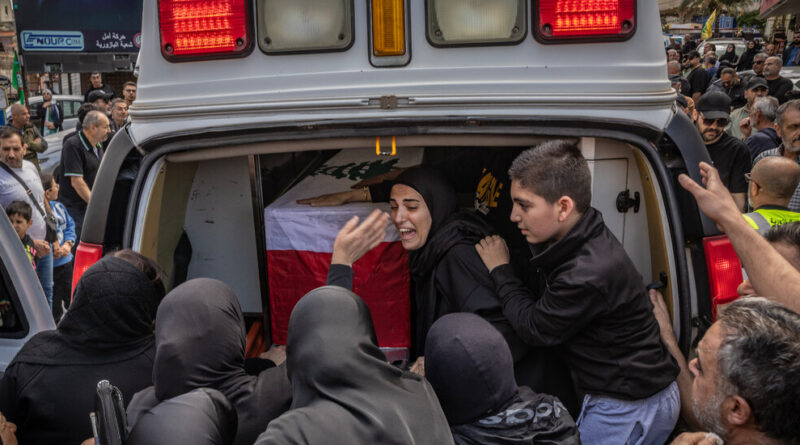
For weeks, ambulances arrived in southern towns carrying bodies of fighters and civilians for mass funerals. Women clambered around the vehicles, wailing as verses of the Quran rang out over loudspeakers.
At times, as emergency workers flung open the back doors of ambulances, grief-stricken mourners lunged forward and threw themselves on top of the coffins.
Many of those killed had been buried weeks earlier in temporary graves, their villages impossible to reach amid fighting.
Their bodies were placed in plywood coffins, lowered in trenches in fields and plots of dirt in the capital, Beirut, and a southern city, Tyre. Each grave was marked by little more than a cinder block with a number spray painted in red.
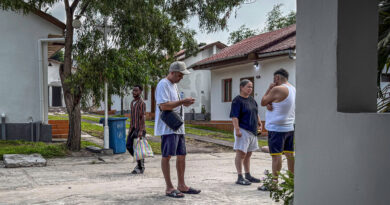
As families who had fled north first flooded back in the days after the cease-fire, they visited the temporary graves of their loved ones in Tyre for the first time. Some planted flowers and raised Hezbollah flags.
“I’m looking for my father. They told me he’s buried here,” one young woman, Zeinab Yazoun, 27, said as she frantically scanned the photos next to the graves.
Beside her another woman, Nahida Borji, wailed over the grave of her brother, a Hezbollah fighter.
“My life, my soul, I’m waiting for you,” she cried. “My brother, answer me: Why did you leave me?”
After the truce went into effect, teams of emergency workers began the grim task of exhuming the dead from temporary cemeteries. In Tyre, the workers maneuvered an excavator and shovels, working carefully so as not to damage the plywood coffins.
“The coffin is right there. Go deeper!” one man yelled at the excavator driver, Ahmad Ghannem. He pulled the machine’s arm around and plunged it back into the hardened earth.
As the plywood came into view, the man waved off Mr. Ghannem and began picking away at the dirt with a shovel.
After the men pulled the coffins out of the ground, they sprayed them with perfume to mask the stench of decaying corpses, wrapped them in plastic tarps and covered them with either Lebanese or Hezbollah flags.
Many of the funerals were for Hezbollah fighters who hail from the south, where the group draws most of its support.
Hezbollah has not said how many of its estimated tens of thousands of fighters have been killed since the war began.
But more than 100 were buried in funerals announced in public bulletins, a window into the war’s toll on the group.
Nearly 300 women, more than 200 children and five Lebanese journalists have been killed in Israeli strikes since the war began, according to the Lebanese authorities. Israel has said that 18 military personnel and two civilians have been killed as a result of Hezbollah’s attacks.
More than 100 emergency medical services and health care workers have also been killed during the war, according to the Lebanese Health Ministry, which has recorded more than 140 Israeli attacks on ambulances and medical facilities. The Israeli military did not directly respond to detailed questions, but said in a statement that it “does not intentionally target medical personnel” and “takes all feasible measures to mitigate harm to uninvolved individuals.”
Rescue workers affiliated with Hezbollah and the Lebanese Red Cross, the Lebanon Civil Defense, and other local emergency services have come under attack.
Not everyone who was killed could be buried in their hometowns.
Israeli forces have seized a belt of Lebanese territory along the border, stretching up to six miles deep, and have destroyed the villages within it.
Beyond the Israeli-occupied territory, Israeli strikes have also destroyed local cemeteries — making burials in those villages impossible.
Now, as the cease-fire frays further, thousands of Lebanese wait to see whether the living or the dead will ever be able to return home.
Sarah Chaayto, Hwaida Saad and Johnatan Reiss contributed reporting.