China Confirms It Will Buy 200 Boeing Planes
The Chinese Ministry of Commerce on Wednesday confirmed that Beijing had agreed to buy 200 Boeing planes, in what will be the largest single sale of the American manufacturer’s aircraft to China in nearly a decade.
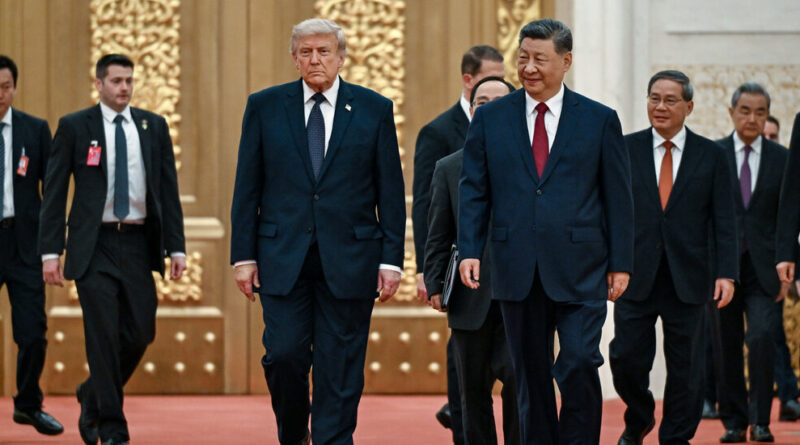
The deal came out of President Trump’s summit with Chinese leader Xi Jinping in Beijing last week. Mr. Trump and Boeing had announced that Beijing would reopen its market to the American company, but Chinese officials had initially avoided comment.
That came on Wednesday. “Aviation is a key area for deepening mutually beneficial cooperation between China and the United States,” a statement released by the Ministry of Commerce said.
Mr. Trump told reporters last Friday on his return flight to Washington that China had agreed to purchase “approximately 400, 450 engines, 200 planes and a promise of up to 750 if they do a good job.”
Kelly Ortberg, Boeing’s chief executive, was among the delegation of American business executives who accompanied Mr. Trump to Beijing. “We expect further commitments will follow after this initial tranche,” the company said in a statement after the summit.
Boeing has long sought to re-enter the Chinese market. Nearly one in seven planes in use today flies in China.
But the company’s relationship with Beijing flagged after the worldwide grounding of the Boeing 737 MAX aircraft following two crashes less than five months apart, which killed a total of 346 people. In 2020, citing the global coronavirus pandemic, China canceled an unfilled order of 29 737 MAX jets.
Boeing began delivering aircraft to China again in 2024, but that stalled last year amid the escalation of Mr. Trump’s tariffs.
It is still unclear what aircraft models Beijing has agreed to purchase.
The two-day summit between Mr. Trump and Mr. Xi yielded little in the way of major breakthroughs, though the American president brought home a handful of other trade deals. Jamieson Greer, the U.S. trade representative, said in an interview with Bloomberg News after the summit that he also expected China to agree to purchase more American agricultural products.
But key sources of friction were left unresolved. The spokesperson for China’s commerce ministry alluded to one of them on Saturday, telling reporters in Beijing that the U.S. and China had discussed specific tariff rates during the summit.
The spokesperson said that China hoped the United States would “honor its commitments and ensure that” the level of U.S. tariffs on China would “not exceed the level stipulated” at a meeting last fall in South Korea, when the two sides had agreed to a truce on tariff rates.
It is the second time a Chinese official said tariffs were part of discussions last week. Mr. Trump, for his part, has told reporters “We didn’t discuss tariffs.”
Alexandra Stevenson contributed reporting, and Li You contributed research.