
Hantavirus Patients Land in Amsterdam With More Cruise Ship Evacuations Planned
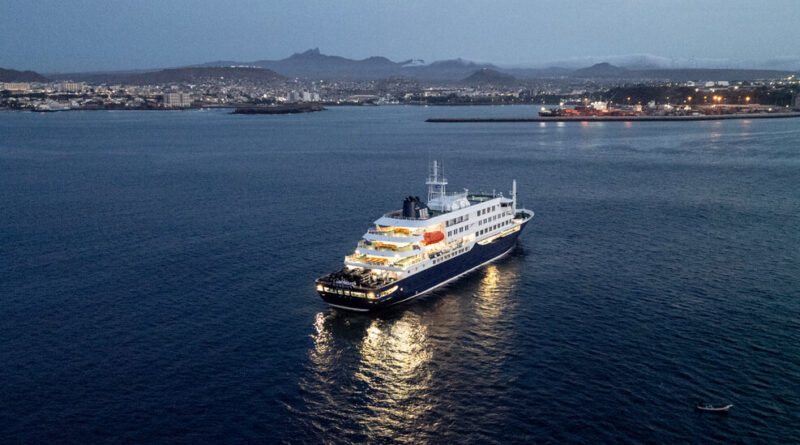
Infected people aboard the MV Hondius, a Dutch cruise ship with a deadly outbreak of hantavirus, have started to be evacuated from the ship and brought to hospitals in Europe.
Two patients have landed in the Netherlands, where they are receiving medical treatment, according to a statement from Oceanwide Expeditions, the Dutch company operating the cruise. Two of the evacuated patients had “acute” symptoms, according to the Dutch foreign ministry.
Another patient was evacuated on a separate flight, the company said. That flight is experiencing a delay and the patient is in stable condition, the company said.
Since April 11, three passengers who were aboard the Hondius have died and five other people have been sickened after showing symptoms of the hantavirus, a rare family of viruses carried by rodents, according to the World Health Organization.
Most hantavirus strains cannot spread person to person, but the Andes strain, which has been identified in this outbreak, can move between people, according to Bryce Warner, a research scientist at the Vaccine and Infectious Disease Organization at the University of Saskatchewan who has extensively researched hantavirus. But the virus does not spread easily, requiring repeated close contact, he added.
The evacuees included the ship’s doctor, a 56-year-old Briton, as well as a 41-year-old Dutch citizen who also worked on the ship, according to Spanish officials and Oceanwide. The third evacuee was a 65-year-old German passenger who had been in close contact with one of the people who died.
Other passengers were hunkered down on board as officials in Spain on Wednesday laid out a contentious plan to receive the ship with 150 people in the Canary Islands, over the objections of local leaders.
There were some Americans on the ship who have already returned home. Two Georgia residents are being monitored by the Georgia Department of Public Health, it said in a statement.
“The individuals are currently in good health and show no signs of infection,” the department said. The residents are following recommendations from the Centers for Disease Control and Prevention.
The California Department of Public Health was notified by the C.D.C. that California residents had been on the MV Hondius as well, said Robert Barsanti, a spokesman for the department. The agency is assisting local health authorities with monitoring, he said.
“There is no information that the California residents are ill or infected,” Mr. Barsanti said. “At this time, the risk to public health in California is low.”
The C.D.C. tracks hantavirus cases in the United States. There were 26 cases in 2023, the most recent year with available data. The center has tracked cases since 1993 and has counted a total of 890 in the country since then.
The ship left Cape Verde on Wednesday afternoon and was headed north, according to Oceanwide. It is expected to arrive in three or four days. Three additional medical professionals have boarded the ship to assist, the company said.
Mónica García, the Spanish health minister, said during a news conference on Wednesday that the Hondius would sail to a port in Tenerife, one of Spain’s Canary Islands. From there, she said, passengers would be able to return home if they are medically fit to travel.
Fernando Clavijo, who leads the regional government of the Canary Islands, objected to the ship’s docking there, though his government could do little to prevent it.
“There is no information that justifies why the vessel must sail for three days to the Canary Islands,” Mr. Clavijo said in a radio interview.
Spain’s central government, which has authority over its ports and the handling of potential infections from overseas, was clear that the ship was coming. “We are not going to get into the political controversy, I believe it’s not the time,” Ms. García said during the news conference, in response to Mr. Clavijo’s comments.
Got a confidential news tip? The New York Times would like to hear from readers who want to share messages and materials with our journalists.
The remaining passengers are revisiting Covid-19 protocols as they sanitize their hands repeatedly and await their next socially distanced meal. Evacuations are expected to begin on Monday, according to a spokesman for the Spanish Interior Ministry.
Spanish passengers will be transferred to a hospital in Madrid, the spokesman said. Passengers from other European Union countries will be offered the opportunity to evacuate their own citizens, the spokesman said. If the country does not coordinate the evacuation, the European Commission will take charge.
A meeting will be held Thursday to discuss the evacuations of passengers from “third countries,” the spokesman said.
The UK Health Security Agency said two people who were on board the ship and had returned to Britain on their own are self-isolating, according to a statement from the agency. Neither person is reporting symptoms, the agency said.
The British government is preparing for passengers to return to the country once the ship docks, where they will be isolated with regular testing, the agency said.
“At this stage, the overall public health risk remains low,” Tedros Adhanom Ghebreyesus, director-general of the W.H.O., said on social media.
The National Institute for Communicable Diseases in South Africa said that all three confirmed cases involved the Andes virusa type of hantavirus that is primarily found in South America and is the only type known to spread between people. But the variant does not spread between people incidentally, and requires close, sustained contact, as might occur aboard a cruise ship.
South Africa’s health minister, Aaron Motsoaledi, said on Wednesday that the authorities in his country had identified 62 people — including medical and airport workers — who had contact with ill passengers from the ship.
So far, health officials have tracked down 42 people though contact-tracing, all of whom are currently under observation, but had not been placed in isolation. They are still working to reach the remaining 20.
The MV Hondius departed from Argentina in early April with about 150 passengers and crew members. Antarctica, the Falkland Islands, South Georgia Island, Nightingale Island, Tristan da Cunha, St. Helena and Ascension were among the planned stops on its route.
After the outbreak began, the ship headed to Cape Verde, where officials did not allow passengers to disembark.
Those on board were doing their best to keep busy, some watching movies in their cabins, according to accounts from passengers in interviews and social media posts.
Passengers are encouraged to practice social distancing and wear masks. For meals, they are told to sit in every other chair in the dining room. Hand sanitizer dispensers have been placed around the ship.
“Our days have been close to normal, just waiting for authorities to find a solution,” Kasem Hato, a Jordanian travel influencer who posts online as Ibn Hatutta, said in an email. “But morale on the ship is high and we’re keeping ourselves busy with reading, watching movies, having hot drinks and that kind of things.”
The first fatality on the ship was a 70-year-old Dutch man who died while aboard on April 11. The man’s 69-year-old wife became ill and died on April 26 in Johannesburg while attempting to fly home to the Netherlands. The third fatality was a German passenger who died on May 2.
So far the virus has been confirmed in three of the cases: the 69-year-old woman, another passenger who was taken to a hospital in South Africa in critical condition, and a man who had disembarked the cruise and was receiving care in a hospital in Zurich.
The Argentine government is investigating the possibility that the infection originated in the Dutch couple, said Federico Lada, a spokesman from the Argentine health ministry, on Wednesday.
They arrived in Argentina in November and spent over a month in the country, and then over the next few months made a series of border crossings between Argentina and Chile, according to a statement from the Argentine health ministry.
After crossing from Argentina into Uruguay earlier in March, they returned to Argentina on March 27. On April 1, the couple left Argentina, the health ministry said.
Investigators will travel to areas the couple visited to capture and analyze rodents, the health ministry said.
Mr. Lada also said investigators would examine a possibility described by The Associated Press that the couple had contracted the virus during a bird-watching outing at a garbage dump in the Argentine city of Ushuaia. He confirmed that the couple visited the location.
Yvette Cooper, Britain’s foreign secretary, said in a statement on Wednesday that her office was in contact with British national aboard the ship and was working to get them “safely home with proper protection for public health.”
KLM Royal Dutch Airlines said on Wednesday that the Dutch woman who died from the virus boarded a flight to Amsterdam in Johannesburg on April 25, but, “due to the passenger’s medical condition at the time, the crew decided not to allow the passenger to travel on the flight.” Local health officials in the Netherlands have alerted passengers from the flight as a precaution, the airline said.
Carlos Barragan, Keith Bradsher, Emma Bubola, Max Kim, Zima Matiwane, Nina Agrawal contributed reporting.