Iran weighs US response to peace plan after warning against military action
Iran’s Revolutionary Guards on Sunday said the United States faced a choice between an “impossible” military operation or a deal with Tehran, after President Donald Trump disparaged Iran’s latest peace proposal.
Negotiations between the two countries have been deadlocked since a ceasefire came into effect on April 8, with only one round of direct peace talks held so far.
Iran’s foreign ministry said Tehran had submitted a 14-point plan “focused on ending the war” and that Washington had already responded to it in a message to Pakistani mediators.
“We are reviewing this and will take whatever response is necessary regarding it,” spokesman Esmaeil Baqaei told state television.
Trump, however, had already dismissed the offer.
“I will soon be reviewing the plan that Iran has just sent to us, but can’t imagine that it would be acceptable in that they have not yet paid a big enough price for what they have done to Humanity, and the World, over the last 47 years,” Trump said, in a post on his Truth Social platform.
US news website Axios reported, citing two sources briefed on the proposal, that it set “a one-month deadline for negotiations on a deal to reopen the Strait of Hormuz, end the US naval blockade and permanently end the war in Iran and in Lebanon”.
In a statement on Sunday, the Revolutionary Guards sought to put the onus back on Trump, saying he must choose between “an impossible operation or a bad deal with the Islamic Republic of Iran”.
“The room for US decision-making has narrowed,” they said.
Washington’s European allies are concerned that the longer the strait remains closed the more their economies will suffer, and German Foreign Minister Johann Wadephul demanded it be reopened.
In a call with his Iranian counterpart Abbas Araghchi, Wadephul stressed that Germany supported a negotiated solution but that “Iran must completely and verifiably renounce nuclear weapons and immediately open the Strait of Hormuz.”
– ‘If they misbehave’ –
In a brief interview with reporters in West Palm Beach, Florida, on Saturday, the US president declined to specify what could trigger new American military action.
“If they misbehave, if they do something bad, but right now, we’ll see,” he said. “But it’s a possibility that could happen, certainly.”
Treasury Secretary Scott Bessent said the US naval blockade was only part of a broader economic embargo.
“We are suffocating the regime, and they are not able to pay their soldiers. This is a real economic blockade, and it is in all parts of government — all hands on deck,” he said, in a Fox News interview.
In yet more bellicose rhetoric, Mohsen Rezaei, a military adviser to Iran’s Supreme Leader Mojtaba Khamenei, said Iranian forces would sink US ships.
“The US is the only pirate in the world that possesses aircraft carriers. Our ability to confront pirates is no less than our ability to sink warships. Prepare to face a graveyard of your carriers and forces,” he posted on X.
There is no evidence that Iran has sunk any US military vessels during the war.
Axios reported earlier in the week that Trump’s envoy Steve Witkoff had asked for Tehran’s nuclear programme to be put back on the negotiating table.
But Iran’s mission to the UN pointed to the massive US nuclear arsenal, accusing Washington on Saturday of “hypocritical behaviour” towards Iran’s own atomic ambitions.
– ‘Trying to endure’ –
Iran has maintained a stranglehold on the Strait of Hormuz since the war began, choking off major flows of oil, gas and fertiliser to the world economy, while the United States has imposed a counter-blockade on Iranian ports.
Oil prices are about 50 percent above pre-war levels.
The deputy speaker of Iran’s parliament, Ali Nikzad, said that under draft legislation being considered for managing the strait, 30 percent of tolls collected would go towards military infrastructure, with the rest earmarked for “economic development”.
“Managing the Strait of Hormuz is more important than acquiring nuclear weapons,” he said.
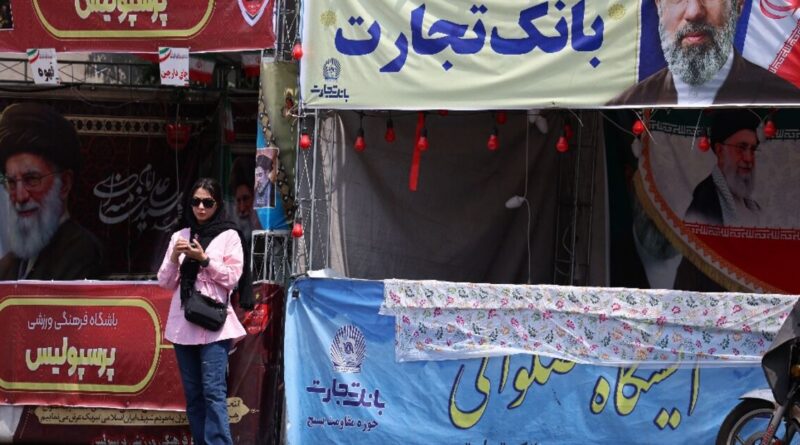
In Iran, the war’s economic toll is deepening, with oil exports curtailed and inflation surging past 50 percent.
“Everyone is trying to endure it, but… they are falling apart,” 40-year-old Amir, a Tehran resident, told an AFP reporter based outside the country.
“We still have not seen much of the economic effects because everyone had a bit of savings. They had some gold and dollars for a rainy day. When they run out, things will change.”
burs-dcp/axn/dc/jsa