Goldman traders wrongfooted as Iran war upended interest rate expectations
Unlock the Editor’s Digest for free
Roula Khalaf, Editor of the FT, selects her favourite stories in this weekly newsletter.
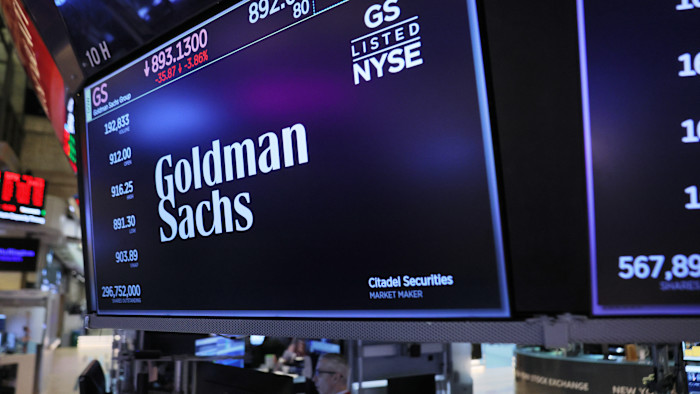
Goldman Sachs’ fixed-income traders were wrongfooted when the Iran war upended monetary policy expectations, inflicting substantial losses on the bank from positions about the trajectory of global interest rates.
Goldman’s rates desk was the main driver of the bank’s disappointing performance in fixed income, commodity and currency trading in the first quarter, said people familiar with the matter.
The FICC unit posted a 10 per cent drop in revenues, widely missing the 10 per cent rise analysts forecast and trailing double-digit gains at rivals JPMorgan Chase, Citigroup and Morgan Stanley.
Goldman is among the dominant players on Wall Street in fixed income trading, and its much weaker than expected results have been closely scrutinised by analysts and investors.
Denis Coleman, Goldman’s finance chief, had told analysts this week that lower revenues in interest rates and mortgage trading were the result of a “tougher market-making backdrop” and this was offset partially by strength in currency and commodity trading.
Goldman declined further comment.
The bank’s positioning around what would happen to interest rates should there be a US economic slowdown was a key driver of the weak results.
Goldman held positions linked to technology and AI, which would have been expected to suffer in a weaker economic climate, the people familiar with the matter said. As a counterweight, the bank also had positions that would have paid out if the Federal Reserve were to cut interest rates, a likely move in the event of sputtering growth.
However, the Iran war, which began at the end of February, upended those positions by raising the threat of higher inflation and slower growth.
This pushed markets to price in the risk that the Fed, as well as the Bank of England and the European Central Bank, could raise borrowing costs, punishing the positions that Goldman had taken.
During the market tumult sparked by the conflict, Goldman also helped clients liquidate their positions, trading activity that also incurred some losses for the bank, some of the people said.
John Waldron, Goldman’s president, said at a Semafor conference on Wednesday that “it was actually a very good fixed income quarter”. He noted that in periods when there is “a lot of volatility” in rates and commodities, “you can get in traffic where, where things don’t go your way at any given moment in time”.
Following the 2008 financial crisis, many bank trading desks on Wall Street have pared back the amount of directional market risk they take, focusing more on financing and facilitating trades for clients.
Goldman has also grown its financing business. But it is still known as one bank that is typically willing to take more market risk than peers. The rates unit has a reputation for taking larger risks among the company’s trading desks.
The business is spearheaded by Anshul Sehgal, co-head of Goldman’s FICC group. Ashok Varadhan, Sehgal’s boss and the company’s most senior trader, was a former rates trader.
This more aggressive risk-taking can lead to lucrative returns when the positions pay off but can lead to underperformance when the market turns in unexpected ways.
The lacklustre quarter for FICC took some of the shine off Goldman reporting its highest quarterly profits in five years. The bank’s equities trading business delivered record revenues of $5.3bn, benefiting from some of the same wild market swings that had caught out the FICC business.